Arts & Entertainment Critics’ Pick Winners: Best in the Nest 2025
The best in Charlotte's arts scenes as chosen by Nerve critics

Creatives continue to act as the heart and soul of our city, and therefore the heart and soul of Queen City Nerve.
Back to all categories
Winners: Download your award graphics here
Support our work by becoming a Nerve Member
LIFETIME ACHIEVEMENT: Morris Costumes
Morris Costumes launched 60 years ago, but the story of the iconic family business — still going strong at a 20,000-square-facility on Monroe Road — is linked to the storied history of its co-founder Philip Morris.
Philip’s grandson Sean Morris currently runs the business, which includes Morris Costumes’ 20,000-square-foot retail shop on Monroe Road and more than 250 seasonal Halloween Express stores. The shop at 4300 Monroe Road, built by the family in 1988 on the site of a former Red Lobster restaurant, is not just a hot spot for Halloween costumes.
A visit to the store reveals rows of bunny suits and passion play Roman armor for Easter, seasonal attire and Santa suits for Christmas and much more. The company has licensing agreements for popular franchise costumes including Marvel, Michael Myers, Toy Story and Harry Potter while also specializing in magic tricks, animatronic figures, tuxedos, dancewear and theatrical makeup.
“We rent costumes [to] all the theatre departments from CPCC to UNC Charlotte,” Sean says. “Even movie studios reach out to us on a regular basis to rent [costumes].”
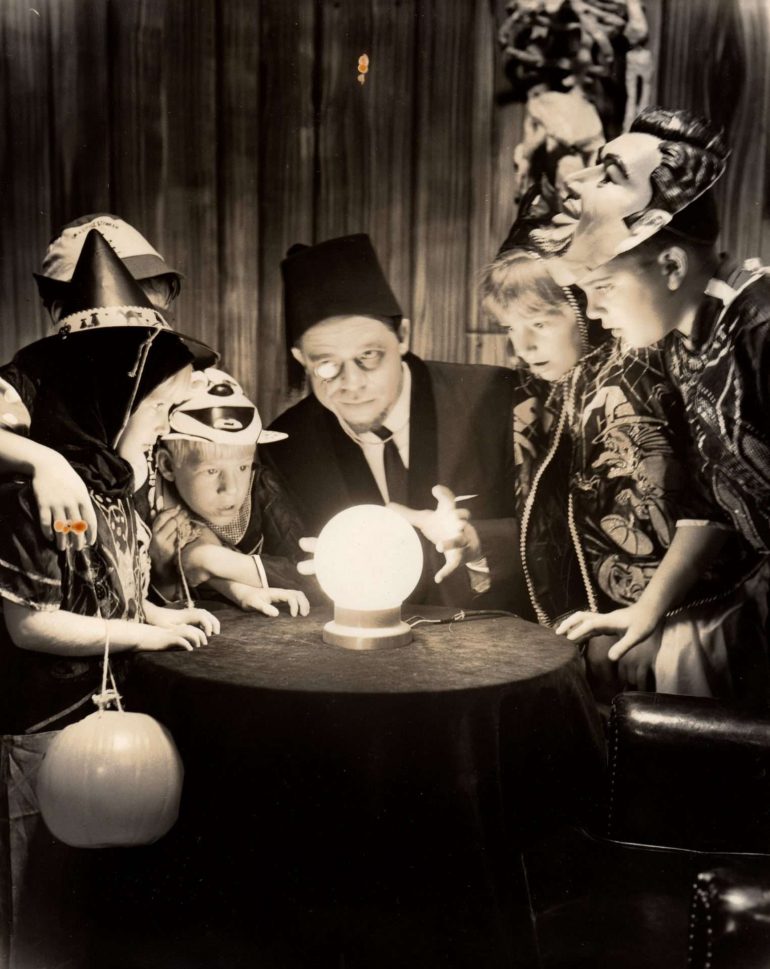
But focusing on the Queen City-based costume empire Philip Morris bequeathed to his family can be deceiving.
It merely scratches the surface of the master showman’s achievements over more than six decades in show business. The elder Morris was a scary stage magician, a circus ringmaster, a TV horror movie host and an unwitting contributor to one of the greatest scientific hoaxes in history.
In the 1950s, Philip and his wife Amy launched a traveling spook show that succeeded in scaring the shit out of audiences up and down the east coast. After Philip donned a gorilla suit and climbed a billboard at the intersection of Trade and Tryon streets, he earned a stint presenting movies and performing magic on Dr. Evil’s Horror Theatre (1962-67) on WBTV.
Philip, who died in 2017, said he sold a gorilla suit in 1967 to Roger Patterson, who used the costume to fake footage of Bigfoot stalking through the Northern California woods in a shaky black-and-white film. To this day, Bigfoot believers cite the film as evidence that Sasquatch is real.
BEST CREATIVE: Perrine DeShields-Jenkins
“Art is all around you,” said Perrine DeShield-Jenkins. “There are so many talented people in arm’s reach on a regular basis that make some really cool things that have really great visions and a really strong creative perspective.”
Professor P, as she’s also known, capitalized on that cultural wealth when she put together Superfine at the Gantt: Exploring Black Dandyism in May. Featuring an interactive exhibit, panel discussions, photo activations, a rooftop party and runway show, the event celebrated Black people’s indelible contributions to fashion while highlighting local Black designers tailoring their version of the dandy aesthetic today.
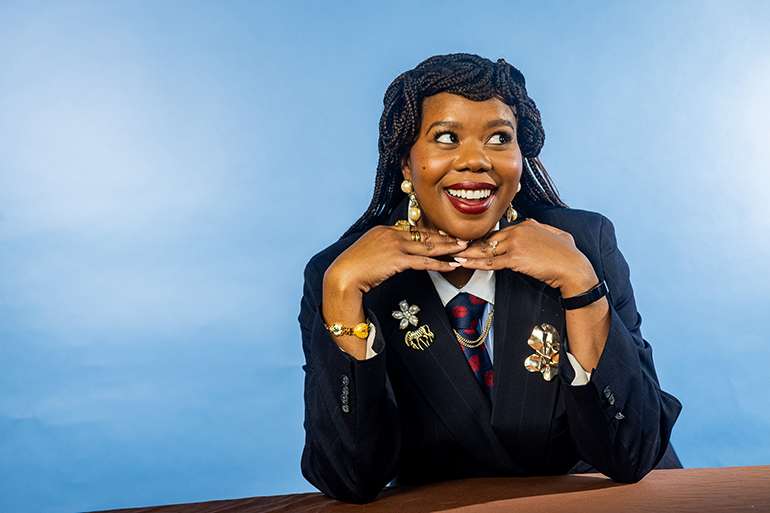
“We’re excited about the event because it gives us an opportunity to really showcase not only some amazing Black fashion designers and brands that are here in Charlotte, but also just the Black creative community in so many different facets and platforms,” DeShield-Jenkins told Queen City Nerve in the lead-up to Superfine. “As Andre 3000 has said, ‘The South got something to say.’”
In addition to showcasing her fellow local Black creatives, DeShield-Jenkins said she saw the event as an opportunity to connect the dots from where Black dandyism started, what it truly represents and how it has evolved over the years.
“Black people are fly,” she said. “We’re the flyest, to be honest. So, we deserve.”
While Superfine was brought together with plenty of help from her friends, this professor of fashion marketing and management, curator, stylist, owner of Eclecs Creative Agency, and cofounder of iAMfashion certainly deserves flowers all on her own.
BEST MURALIST: Jamil Dyair Steele
First things first, Jamil Dyair Steele is a delightful personage. If you come upon the man in public, do yourself a favor and say hello, then bask in the glow. At times soft-spoken and shy, Steele is also impish, mischievous and funny. He’s a charmer, but he’s also building a reputation for his work as a muralist with a distinct style, voice and function as a citizen artist.
Steele is an activist and a historian, an educator and a pure creator working for the joy of making a blank surface sing with color and shape, leaving Charlotte more beautiful than it was before.
At odds with the neo-surrealist compositions that have been en vogue in street art circles for the last decade, Steele’s work is straightforward and community-based without losing its imaginative punch. A great example is Steele’s West End Gateway mural, an epic both in scale and spirit that spans the length of West Trade Street’s I-77 underpass.
BEST MULTIDISCIPLINARY ARTIST: Carla Nathan
Carla Nathan describes herself as “an Interdisciplinary Creatress” who utilizes different mediums “as vehicles of self-expression.”
“Each piece is a distinct embodiment of life’s playful, ever-evolving, and mysterious aspects,” she wrote on her website, Crane Seven. “Inspired by her vast wisdom and effortless beauty, I create to unravel these threads that tie us to the Earth and one another, inviting all who engage with the artwork to embrace the juiciness of our human experience.”
Her pieces range from sculptures and paintings to fabric pieces and handbags. She uses paints, woods, metals, fabrics, paper and other materials to achieve her spiritual works, working to channel the spirituality embodied in the crane, which she views as an angelic messenger.
BEST TEXTILE ARTIST: Zaire McPhearson
Zaire McPhearson discovered she loved crafting original art pieces in the third grade while working on a project about the ancient Aztec civilization. Once she understood that she had a love for crafting art pieces and telling stories, she continued her journey throughout middle and high school and into adulthood.
“The driving force behind my creative journey is a deep commitment to telling the stories of Black people, ensuring they have a voice that resonates authentically,” she told Canvas Rebel. “As a Black woman, my own experiences become integral to the narrative, infusing my artwork with a profound sense of authenticity.”
McPhearson has shown her work in a solo exhibition called A Fall From Grace at Central Piedmont Community College; has been a featured artist at the McColl Center, Goodyear Arts and SouthEnd ARTS; and had residencies with ArtPop Street Gallery and the Immersive Van Gogh Experience.
While her textile pieces are some of her most intriguing, McPhearson has an impressive catalog in multiple mediums including painting, virtual collage, photography and sculpture.
BEST ABSTRACT ARTIST: Chalice Meikle
A SCAD alum who set up shop in Charlotte in 2015, Chalice Meikle has built an impressive body of work over the last decade with paintings and photography as well as more conceptual works that highlight the artist’s interest in creativity and community engagement as healing modalities.
Her paintings and photographs are defiantly non-representational, and at first glance it is the sense of color at play that catches the eye. Play is the operative word here, as Meikle’s compositions dance between maelstrom and mandala, with palpable energy and movement animating the bold (bordering on psychedelic) chromatics.
These works have a spiritual urgency to them, and time spent with them pays dividends. You might stumble upon Meikle’s work at large scale in the wild, so to speak. As a member of the 2025 Art Pop cohort, her multi-variation piece “Figure It Out” is on billboards around the city.
BEST LANDSCAPE ARTIST: Elizabeth Bradford
As development closes in on the farm that has been in her family for generations, Davidson artist Elizabeth Bradford continues to create and chronicle the disappearing landscapes around her.
Bradford’s large canvases, displayed in her solo show Warp Weft Water Weeds, at Davidson College’s Van Every/Smith Galleries in March, celebrate untamed nature with a riot of bold acrylic paint, vibrant colors, intricate details and interlocking geometric shapes.
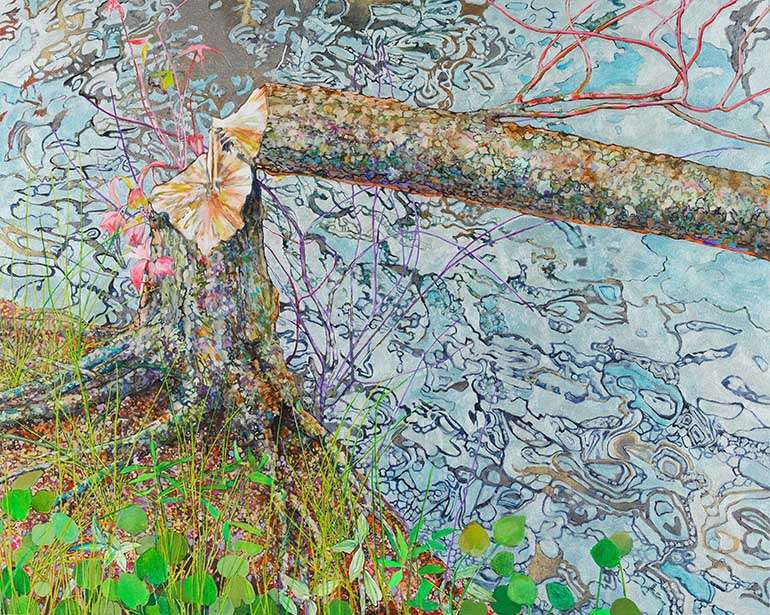
The artist’s zoomed-in hyper focus imbues scenes we often overlook — creek beds, riverbanks and thickets of weeds — with a fragile alien beauty.
“[My] paintings are records of things that I consider cures for pain,” Bradford says. “If I’m really grieved and I go out into the wilderness, it just shrinks problems down to their proper scale, thrown up against the enormity of the wild world.”
If there’s a message in her work, it’s one of responsibility and reverence.
“We are the very fortunate inheritors of a spectacular world, and I want people to realize that … we’re in charge of taking care of it,” Bradford says.
BEST INDIGENOUS ART: Teresa Dunlap
The Charlotte region’s oldest cultural tradition predates practically everything we’ve learned about our city’s heritage. Thomas Spratt settling near what is now Elizabeth, the fabled (and likely fabulist) Mecklenburg Declaration of Independence, and British General Cornwallis calling The Queen City “a hornets’ nest” of rebellion as he fled the area — all are just recent blips on the radar screen, pebbles crushed by the rolling wheel of time compared to this curio of Charlotte’s real heritage.
The irony is that all who live in the Carolinas today can appreciate this millennia-old tradition because it has been maintained under adversity by a people who have been oppressed, dismissed and ignored for centuries. Perhaps this historic treasure trove has also been overlooked because it began with utilitarian intent; it is distinctive blue-gray-colored pottery, including jars and jugs, used to gather water from the Catawba River by members of the Catawba Indian Nation for thousands of years.
Catawba Nation member Teresa Dunlap carries on these traditions with her works of art that mix the ancient practices of Catawba pottery, basketry and hand embroidery. She credits fellow Catawba artist Caroleen Sanders as well as Eastern Band of Cherokee Indian artists Nancy Basket, Gabriel Crow, and Michelle and Waylon Long with helping her hone her skills, which have been passed down over countless generations. All of her works utilize clay, pine needles and splints hand-harvested from natural materials.
Dunlap showcased her work as part of the I x AM: Indigenous Ancestral Memory exhibit at the Hickory Museum of Art this year, though her talents are on display at any time through her company, Stitch & Coil Designs.
BEST CHRONICLER: David French
We all have at least one friend (probably more) with a David French hanging proudly in their house. The beloved Charlotte artist has spent nearly two decades documenting the city’s changing landscape through his signature style of whimsical realism.
His paintings capture the storefronts, streetscapes, and neighborhood landmarks that define Charlotte’s identity, many of which have vanished amid waves of redevelopment. French’s work serves as both art and archive, preserving the city’s visual history while sparking nostalgia for the places that shaped it.
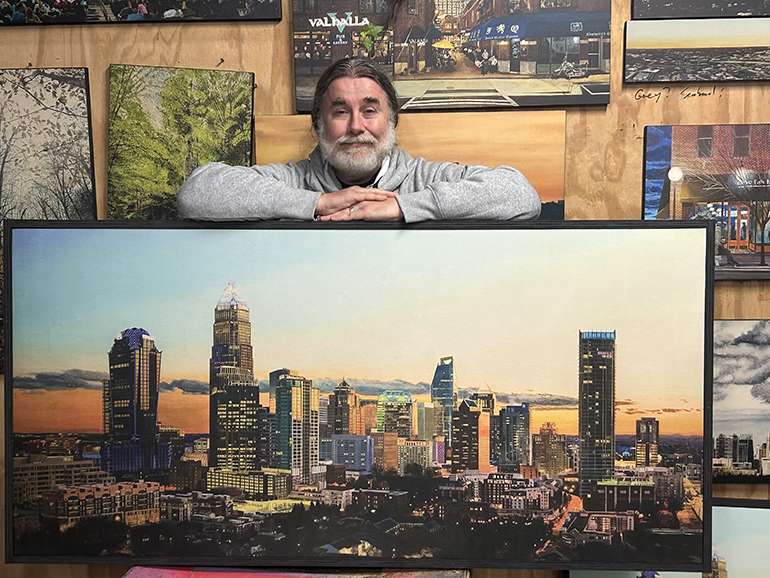
By focusing on the ordinary rather than the monumental, he celebrates the small businesses, fading signage and historic corners that give Charlotte its soul.
“They’re places that we all miss, and they’re places near and dear to the heart,” he told Queen City Nerve in January, “places you don’t know meant so much until they’re gone.”
As growth continues to reshape the Queen City, French’s paintings stand as vivid reminders of what makes it home and why those memories matter long after the skyline changes.
BEST SPOKEN-WORD POET: Miss Mia Mac
As a rising presence in Charlotte’s poetry and DJ scenes, Mia McCullough has emerged from her chrysalis, using her voice to shape spaces, uplift others and transform her trials into triumph.
Performing as Miss Mia Mac, McCullough has been testing the full wingspan of her creative voice, debuting in April 2024 at Release Therapy Open Mic, held every Wednesday night at Red@28th. Since then, she’s appeared as both a featured poet and DJ at multiple events throughout 2025, including her first spoken-word contest.
While Miss Mia Mac’s presence has become a familiar force on open mic stages, stepping into the spotlight where her work would be judged against others was something entirely new to her. That opportunity came in February when she competed in Poetry in Motion, a high-energy spoken-word competition hosted by Charlotte-based poet and community leader Frank Expression.
“I kept telling myself that nervousness and excitement release the same hormone,” McCullough said. “And after I performed, I felt like I released a weight I didn’t know I was carrying.”
Placing third, her experience at Poetry in Motion marked a turning point for McCullough — both personally and within the broader landscape. It confirmed what many had already begun to see: Miss Mia Mac wasn’t just a name on the sign-up list, she was one to watch.
BEST ONLINE SHOWCASE: It’s All Leather
DJ Pauly Guwop brought the power of hip-hop’s golden age into Charlotte’s present with his digital publication, It’s All Leather, Vol. 1. Launched exclusively on Instagram in January, It’s All Leather paid homage to Avirex, a brand that has shown love to hip-hop artists since the late 1980s.
The project was “an editorial style photo-interview series expounding upon the presence [and] legacy of fine leather goods brands and their impact on the south – specifically North Carolina,” Guwop said in an Instagram post.
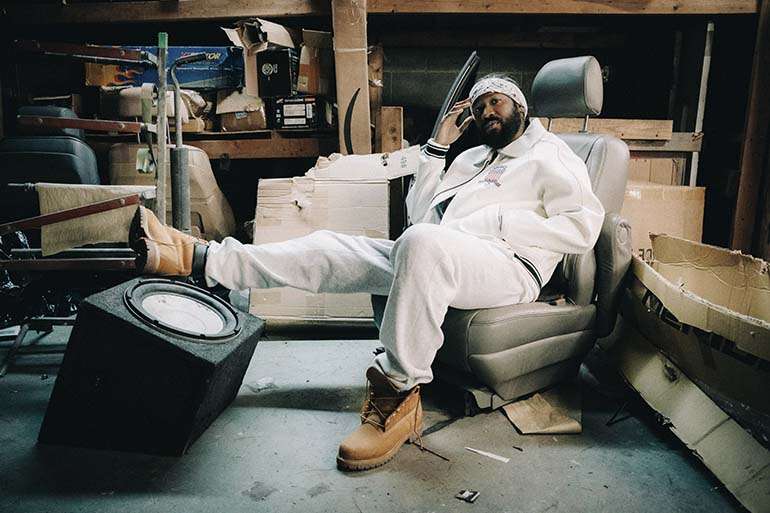
Shot by photographers like Mike Jones, Keilan Armon, Linus, Marc Prosper and Guwop himself, It’s All Leather challenged the bicoastal chauvinism of the fashion industry, centering Southern aesthetics while featuring four Charlotte artists: Cyanca, Reuben Vincent, Lute, and Fetty P. Franklin.
The result was a sprawling editorial that featured four of Charlotte’s most distinct voices in hip-hop and R&B.
Guwop’s partnership with Avirex highlighted hip-hop fashion’s legacy. In spite of a 50-year history that has largely ignored fashion trends outside of New York and LA, Guwop showed that the South is still talking, and it’s time for the major brands to listen.
BEST ARTS PARTNERSHIP: Charlotte Is Creative & Novant Health
Charlotte is Creative partnered with Novant Health Presbyterian Medical Center in the Elizabeth neighborhood to launch A Slice of Life: The Art of Everyday exhibit in May. The exhibit, still on display in the hospital’s cafeteria through Nov. 10, is just one of many projects underway as part of Novant’s new Art of Remarkable Care initiative.
The health care company announced the initiative’s launch in April with a $500,000 investment to explore the connection between art and healing. In A Slice of Life, 30 local artists draw from the everyday moments and mementos that one may brush off as the dust, debris or detritus of monotony and instead focus in on its beauty and grace.
“Art is powerful; it can inspire healing, and when paired with the incredible expertise of our doctors and nurses, it can be transformative,” Dr. Sid Fletcher, senior vice president of the Novant system and president in the Charlotte region, said. “This initiative … is part of our larger commitment to ensure our patients thrive.”
BEST POP-UP: Books on the House
In 2023, Kathleen Varner and Jesse Brown launched Books on the House, a mobile bookstore that provides books to residents free of charge. The idea for the nonprofit came after Brown, who wasn’t a lifelong reader, discovered a passion for reading during his time in college. It wasn’t that he didn’t like to read as a child, he explained to Queen City Nerve, it was that he didn’t have access to books.
Housed in a renovated go-kart trailer that can hold between 1,500-2,000 books, the idea behind Books on the House is to help increase literacy in the Charlotte area by making books more accessible.
“We realized that we wanted to help youth and children with reading and literacy, but it then escalated into, it really needs to be for everyone because we’re both very strongly committed to having free book access for all of everyone,” Varner said.
Brown and Varner hope that, for folks who can’t build their own personal libraries, whether it’s because they are living paycheck to paycheck or struggling with homelessness, by helping them build such a collection it can open doors elsewhere.
“On a day-to-day basis, Jessie and I are out there, and we hear stories from people about how it just impacted and changed their lives,” Varner said. “Like a book, a random book that someone had donated, they found, and it has just changed their trajectory of where they were going in which place. I know it’s weird to say that we focus on the access almost solely and the representation of the books, but that’s the foundation. That’s the root of it all.”
BEST FILM: ‘Long December’
Long December tells the tale of Gabe Lovell, an up-and-coming musician stuck between the responsibilities placed upon him as a new father in need of money and his ongoing pursuit of stardom, plugging along for next to nothing on the DIY scene.
Inspired by John Carney’s 2007 Irish Oscar-winning romantic musical Once, writer and director Thomas Torrey’s project has drawn comparisons not only to that source of inspiration but also the famed musical A Star Is Born.
If we had to give it a label, we’d call it an Americana musical in the neorealist style (mention of Christmas optional).
Filmed on location in the Charlotte area at venues including Connolly’s on 5th and Booth Playhouse, the movie stars a mix of veteran actors and bona fide musicians who had never acted on screen before filming started.

The film centers one such musician; Stephen Williams playing Gabe, the singer-songwriter struggling to provide for his family, supplementing his wife’s Etsy income with gigs playing Christmas covers for uninterested mall patrons.
Williams is known in the Charlotte music scene as vocalist and guitarist with local Americana four-piece Jude Moses. He stars alongside real-life brother-in-law and platinum-selling singer-songwriter John Mark McMillan, who plays Gabe’s famous cousin and sometime band leader.
The film is not based on Williams’ life, however, but instead on Torrey’s experience with a large-budget film he was set to direct but ended up falling apart due to COVID-19.
“I wrote it quickly and, of course, infused it with all the creative themes that I was dealing with of an artist wondering if his break is around the corner,” he told us following the film’s premiere at Connolly’s in December 2024. “I wanted to make it a music film and shoot it here in Charlotte where I live and where my friends live and use my friends as cast and crew and just make a very community homegrown film.”
BEST FILM EVENT: 1CLT Film Festival
The inaugural 1CLT Film Festival in 2020 was a brainchild of CineOdyssey Film Festival founder Tre’ McGriff, who was inspired by a similar concept in New York. He reached out to Charlotte Film Festival co-director Jay Morong and other local film organizations and camps to put on a virtual film festival in an effort to unite the community while raising funds for local nonprofits. This year, organizers finally brought the fest back in person.
Dedicated to knocking down the silos separating the city’s film scene and communities, 1CLT provided a platform for regional, national and international filmmakers to showcase their work and amplify the voices of underrepresented filmmakers.
Participating film organizations like The Black Girls Film Camp, Charlotte Asian Film Festival, Cine Casual and Charlotte Jewish Film Festival screened films that represent what each organization stands for and/or celebrates.
For instance, The Charlotte Latino Film Festival’s block featured a short film celebrating the Carolina Migrant Network’s five years of immigrant advocacy. Charlotte’s LGBTQ+ film festival Reel Out Charlotte explored the personal journey of a late-blooming trans woman in Clementine.
The festival was also a free event that gave people the opportunity to take a chance on films they wouldn’t normally pay to see.
BEST EXHIBIT: Central Impact
When Josh Frazier opened the original Black Sheep Skate Shop in a space he sublet from the Charlotte Art League on Camden Road in what was then the underdeveloped neighborhood of South End in 2003, his immediate vision didn’t go much farther than providing gear to Charlotte’s fledgling skate scene.
What he hadn’t imagined was that, more than two decades later, he’d be curating a skateboarding exhibit at the Mint Museum, one of Charlotte’s most prestigious arts institutions.
The Sept. 20 opening of Central Impact, a collaborative exhibit curated by Black Sheep and national skateboarding nonprofit Deckaid at Mint Museum – Randolph that serves as a national retrospective and collectors’ archive while also showcasing Charlotte and the South’s strong skating culture, marked that unexpected milestone for Frazier.
“I felt like we were sneaking in the back door in some respects,” Frazier told Queen City Nerve following the opening. “I never expected to be in the Mint Museum. It’s the first art museum in North Carolina and the premier museum in the area, so we were thrilled to get in there.”
As a leading figure of Charlotte’s skate scene for the past quarter-century, Frazier capitalized on the moment.
On the night of the opening, hundreds of local skaters and supporters showed up to Moo & Brew across from Black Sheep’s store on Lamar Avenue for the premiere of 5301 CLT’s latest full-length skate video, It’s Always Something, the third such film sponsored by Black Sheep.
The shop also released its new collaboration with Converse, which is featured in the exhibit itself along with past Nike collabs, and an open skate session at Kilborne DIY, the east Charlotte spot borne of the displacement from Eastland that led to the formation of the Charlotte Skate Foundation (CSF).
With a segment of Central Impact also dedicated to Kilborne DIY, proceeds from the exhibit will go to CSF, which advocates for, creates, maintains and preserves public facilities for skateboarding in the greater Charlotte area.
BEST IMMERSIVE EXHIBIT: Chromatic Roots
Chromatic Roots, a multi-sensory, immersive exhibit that blends installation art, storytelling and interactive world building, opened in August in the lower floors of the Arts+ Community Campus facility at the former Plaza Presbyterian Church on The Plaza.
Held in collaboration with art gallery and studio Activation Studios, also located on the former church campus, the Chromatic Roots installation explored the fight against apathy and stagnation through the playful narrative of a missing janitor.
Local creatives like Rebecca Lips, ARKO, Luvly Moon, Krystle Baller, project manager Cat Babbie and 30 additional visual and sounds artists contributed to the installation, incorporating everything from fiber and textile arts to interactive and engaging lighting technologies.
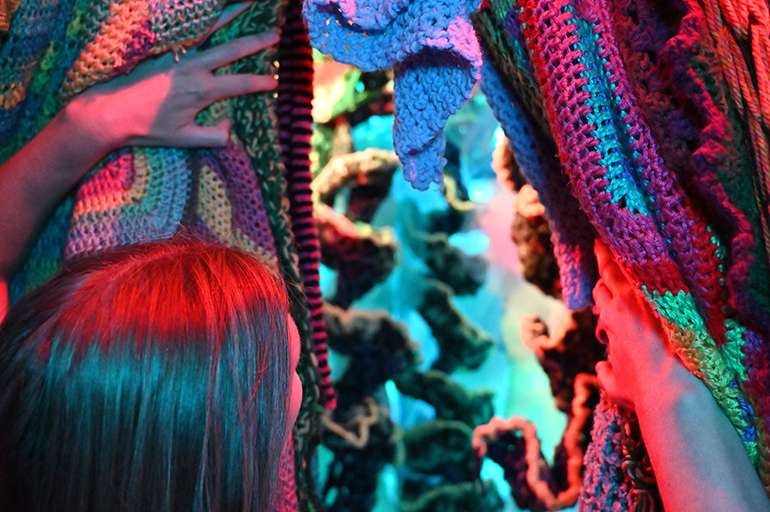
The exhibit invited audiences to explore creativity through workshops, performances and participatory installations, collecting passport stamps to mark their progress while “considering the impact of cultural stagnation, disconnection and the need to express our collective struggle through art and technology.
Baller, working under the name krystilization, fashioned the story of the janitor while producing a soundscape for the installation, which the talented local musician and instructor then turned into an impressive debut album as a solo artist.
“Everything just lined up for this moment in time and the album itself,” Baller told us. “The journey of the janitor, I wrote the story and then started seeing myself in the story of things that I’ve gone through, of dealing with grief, dealing with loss, of finding joy in these spaces and finding a childlike sense of wonder, and that’s the feeling that I wanted to invoke with the music.”
BEST HISTORICAL ART EXHIBIT: Meck Dec 250
The Mecklenburg Declaration of Independence, known locally as the mythical “Meck Dec,” was allegedly signed on May 20, 1775. The document, purportedly declaring Mecklenburg County’s independence from Great Britain, predates the national Declaration of Independence by 15 months — if it exists, which is yet to be proven.
Regardless of its veracity of lack thereof, the document holds a special place in the imagination of Mecklenburgers. It served as the focal point of The Charlotte Museum of History’s May exhibit, Meck Dec 250, which marked the semiquincentennial anniversary of its signing.
The exhibit displayed original documents and artifacts from the Revolutionary Period, plus modern Meck Dec memorabilia. It also documented the many ways that Charlotteans observed and celebrated Meck Dec Day over the years, from visits by presidents Taft, Wilson, Eisenhower and Ford to commemorative milk cartons.
When Meck Dec 250 opened, exhibit curator Nolan Dahm explained how historian Pamela Grundy’s 2021 Queen City Nerve op-ed on titled “Rethinking the Meck Dec,” in which the author of Legacy: Three Centuries of Black History in Charlotte pointed out that many of the document’s signers denied independence and liberty to the people of African descent whom they had enslaved, helped inspire the way he approached the exhibit.
He noted that the Meck Dec has been employed as a political symbol for everything from North Carolina’s secession from the Union at the start of the Civil War to Civil Rights protests in the 1960s.
BEST EXHIBIT FROM A NON-LOCAL ARTIST: Covered in Black | Patron Saints of a Black Boy
When Yvonne Bynoe was first commissioned to put together a trio of art exhibits for UNC Charlotte, she thought as much about the end as the beginning. Having completed two exhibits in her Southern Black Portraiture series, Bynoe wrapped up her run with the final exhibit, Covered in Black | Patron Saints of a Black Boy, in June.
For the Charlotte-based curator, there was no way to tell the story she wanted to tell without including the Black church, and Rashaun Rucker was the perfect artist to help her get that message across. A North Carolina native now based in Detroit, Rucker’s work connects Christian iconography, Black spirituality and notions of ancestry through a wide range of mediums including photographs, prints, objects and drawings.
“I didn’t find [Rucker’s work] to be the traditional Christian story,” Bynoe said. “I like the whole concept that this was an individual looking at people in their lives — community members, family, friends — as the people who are the prayer circle, the people who are keeping them on the straight and narrow, the people who are helping them to move forward.”
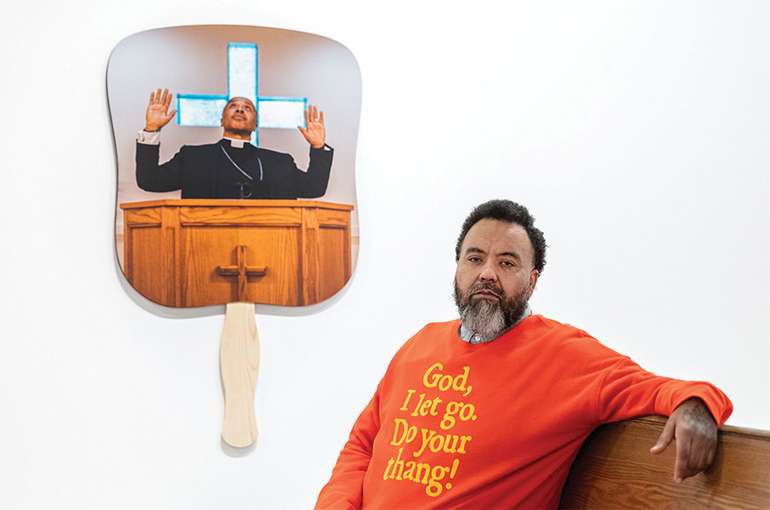
Rucker said many of the pieces included in the exhibit were inspired by the COVID-19 pandemic. He knew of at least a dozen people who died from the virus, which forced him to reflect on who is important within our respective lives.
“The more I started thinking about it, the more I started researching it and reading books and different things about the Black church, about family, about our histories,” he said. “I started thinking more about not just God, but who I see God in.”
BEST HOMECOMING EXHIBIT: Giving Back
Giving Back: A Tribute to Generations of African American Philanthropists, a book written by Valaida Fullwood and Charles Thomas in 2011, was originally meant to be a one-off project that told stories of local Black philanthropists with Thomas’ poignant portraiture and other photography.
What the pair hadn’t envisioned was the way it would evolve into an exhibit that continues to thrive and have an impact all these years later. Having premiered at Johnson C. Smith University in 2015, Fullwood and Thomas’ Giving Back: The Soul of Philanthropy Reframed and Exhibited has since traveled to 35 cities nationwide, changing the narrative and often inspiring the launch of localized giving circles and philanthropic funds within a respective city’s Black community.
On July 15, the exhibit celebrated its 10-year anniversary with a Queen City homecoming, opening at Charlotte Museum of History (CMoH), where it ran through Oct. 19.
As they’ve seen occur naturally in so many communities where the exhibit has shown, Fullwood’s New Generation of African American Philanthropists’ Collective capitalized on the moment to establish a new fund centered on racial funding equity.
“What’s been beautiful the past 10 years for the exhibit in the 35 cities that it’s traveled to is that, in each of those cities, it’s not only been an artistic piece but it’s been a community engagement and civic engagement piece,” Thomas told us in July. “It’s something that’s galvanized our community to tell their stories but also to take action.”
BEST NEW PUBLIC ART: ‘Words Matter’ by Rosalia Torres-Weiner
When Jocelyn Rojo Carranza, 11 years old, and Gaby Aparicio Ortega, age 13, each took their own lives after being bullied at school, Rosalia Torres-Weiner knew she had to share their stories. So, the self-proclaimed “artivist” did so the best way she knows how: with paint.
Created in collaboration with fellow local artists Eva Crawford and Matt Moore, “Words Matter” is a massive mural on the side of Compare Foods at 201 West Arrowood Road that honors and celebrates the lives of the two young girls.

Like much of Torres-Weiner’s work, “Words Matter” tells viewers that lives, families and communities matter.
Works like “Words Matter” proudly tell Latino stories, especially now when that community, so vital to our city, is under attack, Torres-Weiner says.
But the mural also empowers Charlotte’s unjustly embattled community. It’s a message that Latinos, who have done so much to make America great already, are resilient and strong.
BEST FICTION WRITER: Nancy Stancill
In Nancy Stancill’s more than 30-year career as an investigative reporter, she’s exposed wealthy men delaying divorces to punish their ex-wives, unveiled credit card companies luring consumers into crippling debt, and profiled a strip club owner who later bribed former Charlotte mayor Patrick Cannon.
The fiction the retired journalist and former Charlotte Observer staffer writes in her second career as a crime novelist is just as scandalous and intriguing. In Deadly Secrets, reporter/sleuth Annie Price solves a string of murders involving a charismatic pastor who has established a right-wing Christian state in western North Carolina.
“I wanted a heroine who was 6 feet tall like me,” Stancill told Queen City Nerve in January, following the book’s December 2024 release, “but who was cuter, had better clothes, and a more exciting love life.”
Deadly Secrets draws from Stancill’s knowledge of newsrooms as well as her love of western NC’s mountains.
In the wake of the devastation wrought by Hurricane Helene on the region, Stancill devoted half her proceeds from Deadly Secrets to Asheville-based charity Hearts with Hands.
BEST COMEDIAN: Don Garrett
Rather than wing it at the first open mic he could find, once Don Garrett decided he wanted to pursue stand-up comedy, he approached it as a student of the art, enrolling in a six-week course at the local Comedy Zone to learn the basics.
Fast forward eight years and Garrett’s time learning the ropes has paid off — literally. He is now participating in more than 100 paid shows a year. Garrett has gone on to accomplish something that’s rare in Charlotte’s stand-up scene by establishing himself as a touring comic.
He hasn’t forgotten his roots, though, and still performs at local venues in Mooresville, Cornelius and Rock Hill while regularly returning to The Comedy Zone where it all started. He describes his comedy style as observational and witty, calling himself a “mostly clean comic.” Many of his shows are billed as “family-friendly” and he doesn’t do political comedy, preferring to bring people together through comedy rather than divide.
Garrett’s end goal is to make his life revolve around his comedy and hopes to someday host a late-night television show. For now, he’s planning to launch his own six-week comedy course in which he’ll teach the basics on how to put together a set.
BEST THERAPEUTIC ARTS EVENT: Laugh Until You Cry
Down the otherwise empty halls of Watershed Church in southeast Charlotte’s Chantilly neighborhood on May 17, five comics and a psychotherapist came together not as the start of a joke but to connect through comedy more broadly.
Created by Davidson-based comic Skylar Schock, Laugh Until You Cry is a comedy event series that encourages others to delve deeper into discussions about mental health using comedy as the kick-starter to that conversation. The show not only sheds light on topics involving mental health from the stage but encourages the audience to create meaningful and open discussions surrounding their own shared personal experiences.
As she crafted Laugh Until You Cry, Schock found that it is one thing to privately laugh at something alone, but another entirely to laugh with an audience, creating meaningful connections and reminding others that they are not alone in their experiences or struggles.
“Comedy does have a way of connecting people socially,” says Schock. “I think laughing together in person is the best medicine.
BEST DANCE ORGANIZATION: Charlotte Cultural Collective
There’s a certain vibe that Lorraine Crittendon gives off when she steps into a room that demands all eyes should be on her — not in a flashy, “look at me” way but more of a quiet grace that suggests you’re in the presence of someone special. And if she’s in the room to perform with her company, Charlotte Cultural Collective, that intimation will soon enough be proven correct.
Originally launched as LCritt & Co. in 2018, the Charlotte Cultural Collective has grown to include a hugely impressive team of folks practiced in a slew of dance styles ranging from bachatera and Afrobeats to roller and cheer dance. Together, the group fuses Black Diasporic dances, traditions and expressions to emphasize their intersectionality and shared heritages.
As an acclaimed dance instructor, Crittendon isn’t just about performing but teaching, sometimes offering free classes, as she did for her AfroBeats classes in partnership with Charlotte Ballet as part of the Arts & Science Council’s Culture Blocks programming. While that season has ended, be on the lookout for more such opportunities, as you couldn’t ask for a better leader to learn from.
BEST DANCE PRODUCTION: Charlotte Ballet, A Realm of Existence
While not technically an introduction to new(ish) Charlotte Ballet artistic director Alejandro Cerrudo, A Realm of Existence certainly felt like one. The full-length evening featured three works of contemporary ballet choreographed by Cerrudo before finishing up with a crowd favorite, Johan Inger’s “Walking Mad.”
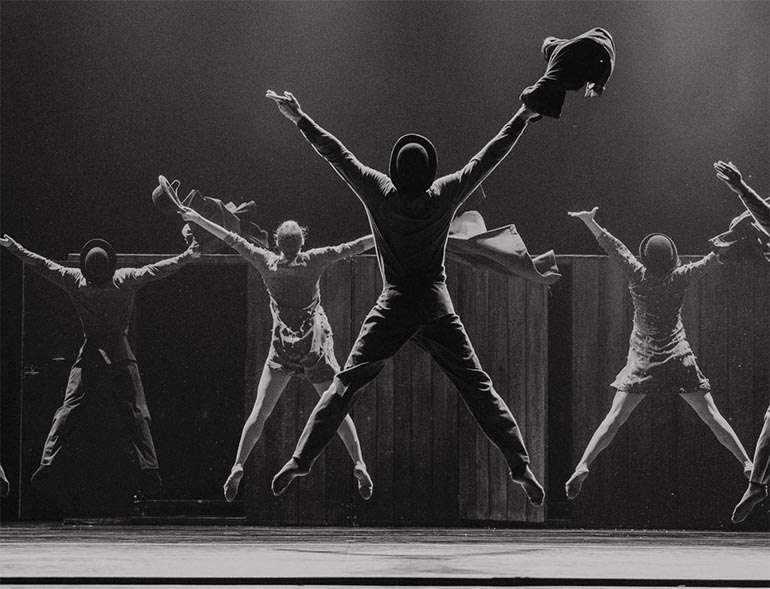
Only one of Cerrudo’s three works, “Dos y Dos y Dos,” was created specifically for and with the Charlotte Ballet ensemble. While checking off plenty of boxes on the “contemporary ballet performed in a nice building” checklist, the piece is perhaps most interesting as a sort of unconscious map of the (rumor has it sometimes bumpy) relationship between Cerrudo and his company.
The relationship between a choreographer and their dancers is always, always fraught. Is there any collaborative relationship that isn’t? And this dance, regardless of what it is about, is an artifact of the behind-the-scenes blood, sweat and tears fueling an act of creation.
BEST THEATRE PRODUCTION: Three Bone Theatre, ‘Electridad’
Three Bone Theatre once again pushed Charlotte’s performing arts scene forward with Electricidad, Luis Alfaro’s explosive reimagining of Sophocles’ Electra. Set in East Los Angeles amid the heat of gang violence and grief, the play delivered a modern tragedy that was as raw as it was lyrical.
Performed at the Arts Factory, the production captured the fire and fatalism of Alfaro’s script, where family loyalty, revenge and identity collided under the California sun. The ensemble gave performances that burned with authenticity, bringing Alfaro’s poetic dialogue and emotional depth to life.
With Electricidad, Three Bone reaffirmed its mastery of socially charged theatre, weaving myth and modernity into a story that reflected today’s world while honoring its classical roots.
It earned the company its second consecutive Best in the Nest award, following last year’s recognition for Mojada, the first in Alfaro’s trilogy, which is to say that you can consider us already seated for the trio’s finale: Oedipus El Rey in May 2026.
BEST IMMERSIVE THEATRE PRODUCTION: Mixed Metaphors Productions, ‘It Be Like That Sometimes’
The Reynolds are your typical 21st-century family. Natasha, the matriarch, suffers from insomnia and anxiety related to her struggles with unemployment. Her daughter Kasey, a recent graduate of East Mecklenburg High School, feels intense pressure to be perfect going into college. Then there’s Auntie Torie, who’s fully burnt out from hosting the aforementioned mother-daughter duo while Natasha searches for a job.
It’s in this context that Mixed Metaphors Productions (MMP) invited us to visit the Reynolds family at their home in west Charlotte over the summer.
As with past MMP productions, It Be Like That Sometimes was an immersive experience, bringing a select number of patrons through Aunt Torie’s home (QC Family Tree’s Big Blue House in Enderly Park) to spend time with each member of the family, hearing their struggles and learning their coping techniques.
“We’re looking at mental health, but we’re really looking at it through this lens that a lot of what we consider as individual mental health issues are actually systemically related,” MMP founder Kat Martin told us before opening night. “We feel like the lack of attention that gets put on the systemic component of mental health is erasing a really big part. It’s something really personal for us inside of our ensemble and inside of our collective.”
BEST CHARLOTTE REVAMP: ‘Immediate Family’
Unlike most touring productions that arrive at a given Blumenthal Arts venue and roll out the same sets and performances that have been seen in every other city before this one, Paul Oakley Stovall’s Immediate Family arrived in August with much fanfare surrounding its director, TV legend Phylicia Rashad.
We haven’t seen this much buzz over a local attraction at Booth Playhouse since Charlotte Repertory Theatre was at the height of its ambitions in 2003, when the company planned to take its production of The Miracle Worker, starring Hilary Swank, to Broadway.
What most folks did not know, however, was how this play was undergoing major changes for its Charlotte run, including new sets crafted by Winston-Salem-based scenic arts fabrication shop Majestic Scenic and new costumes courtesy of accomplished film/TV and theater designer Colleen Morris-Glennon.
Not even the script was set in stone, as Rashad was on hand throughout the run and made small changes here and there right up to opening night. What followed was a run that strengthened as it went on, becoming worthy of the hype over time.
BEST STUDENT PRODUCTION: CPCC Theatre, ‘She Kills Monsters’
Playwright-director-choreographer Qui Nguyen’s She Kills Monsters, inspired by the legendary Dungeons & Dragons board game, arrived onstage in Charlotte for at least the third time in the last decade with a new Central Piedmont Theatre production in the spring. The CPCC run was the strongest of them all.
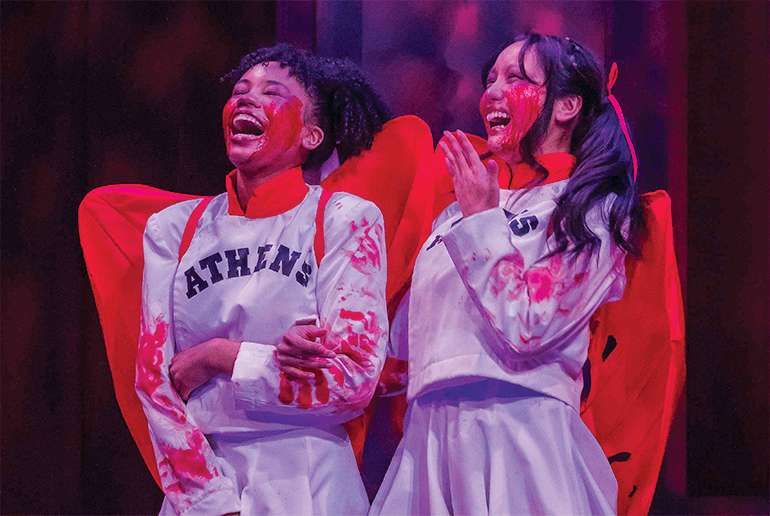
The bigger, newer Parr Center offered the spaciousness for scenic-and-projections designer James Duke to make Nguyen’s spectacle more spectacular. In cahoots with lighting designer Jeff Childs, costume designer Freddie Harward and prop designer Maxwell Martin, CPT had the equipment and budget to splash additional color across the Parr stage. Add the sound designs of Montavious Blocker and Carly McMinn and you had a sensory-rich fantasy brew.
Evangelicals and assorted homophobes despise She Kills Monsters, especially when it defiles their precious schools. We, on the other hand, are always pleased to see the harmless and rollicking sacrilege return to Charlotte.
BEST HISTORICAL PRODUCTION: Davidson Community Players, ‘A Small & Humble Erasure’
Part of Davidson Community Players’ Sacred Places project, the world premiere of Stephanie Gardner’s A Small and Humble Erasure in March hit as close to home as any play could in Charlotte.
Directed by Michelle Medina Villalon, Gardner’s piece reminds us that Theatre Charlotte is built on more sacred ground, over a cemetery consecrated for enslaved African Americans. And she told us, naming names, just how this cemetery was “deconsecrated” and who was responsible.
Mayor Ben Douglas and numerous councilmen are in the room where it happened, all of them white men from respected Charlotte families — Baxter, Hovis, Albea and Wilkinson — with mischievous colorblind and gender-blind inroads in Villalon’s casting, starting with the famed Mayor whose name is perpetuated on the QC’s international airport.
There was considerable satirical bite to Gardner’s concept, above and beyond the casting vengeance she takes on all the benign and virulent segregationists who are culpable for this sacrilege — a humbling but important performance to take in for any Charlottean.
BEST ACTRESS: Destiney Wolfe, ‘Violet’
As the disfigured title character in Theatre Charlotte’s Violet, Destiney Wolfe’s hideous facial scar looked more like a fine line drawn with a red ballpoint pen than a shocking horror. It figured to be more effortful to watch Wolfe without the scar everybody onstage is talking about and constantly having to imagine a scar we are not seeing, and it surely made the job onstage just as trying.
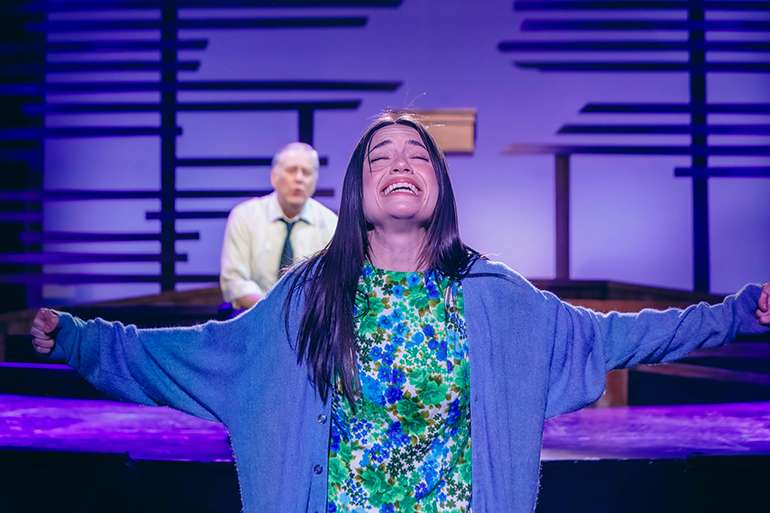
As dynamic as Wolfe’s vocals were, her adamant refusal to believe that anyone besides her daddy could love her is the most startling aspect of Violet we were to encounter — recognizing this trait in people we’ve met … and maybe ourselves. Wolfe’s performance brought that home with a point as fine as any ballpoint pen could draw.
BEST ACTOR: Marcus King, ‘…what the end will be’
In …what the end will be, which premiered at The Arts Factory in an arresting Three Bone Theatre production directed by James Webb in the spring, playwright Mansa Ra truly shines in his sensitivity to each and every interaction. But it’s with Marvin King as Max and Tim Bradley as Bart that the sparks really fly.
King is an interesting mix of sophistication and caveman, savoir-faire and anger issues. Not too much about him is subtle aside from the self-revealing moment when he asks his husband which shirt he should wear at his company’s Thanksgiving Day golf tournament. That’s how little Max gives in to how he would choose to look when not masquerading in his corporate suit-and-tie.
Ra brings Maxwell around a bit on his appearance in the turning point, but it was King who made Max more believable than he was written throughout the production.
BEST ONE-PERSON SHOW: Brooke McCarthy, ‘How to be an Ethical Slut’
Brooke McCarthy’s award-winning one-woman musical comedy cabaret show How to be an Ethical Slut advocates for polyamory, a consensual nonmonogamous lifestyle that involves having romantic/sexual relationships with multiple partners at the same time, as a way to find emotional happiness and sexual satisfaction.
A local writer, producer and theatre artist, McCarthy, who identifies as polyamorous and bisexual, describes the show’s plot as semi-autobiographical. In it, McCarthy portrays seven characters on an eye-opening journey that sees the main character’s arc range from unethical slutdom to what could be considered more of an ethical slut — all accompanied by choreography, self-discovery and songs about STDs, threesomes and self-empowerment.
Despite saucy song lyrics, McCarthy says How to be an Ethical Slut is not about promiscuity. Instead, it celebrates female sexual pleasure, empowerment, the fun of exploration and, above all, bodily autonomy.
BEST PHOTOGRAPHER: Corine Olarte
Corine Olarte’s journey to photography didn’t follow a straight line. She began as a pre-med student before realizing her true calling was behind the camera, where she could explore identity, emotion and human connection through art rather than medicine. That shift shaped the photographer she is today — one known for her honesty, warmth and ability to make every subject feel seen.
A queer Filipina creative based in Charlotte, Olarte’s work captures authenticity and self-acceptance in every frame. Her portraits and brand imagery balance technical mastery with vulnerability, creating space for real people and real stories.
Outside of her photography, Corine founded Eat Like an Artist, a creative collective and podcast dedicated to helping others nurture their craft, find community and feed their inspiration. Her work reflects a deep understanding of people and place, reminding us that the best art often begins with empathy.
BEST MOVE: BOOM Charlotte
As an event grows up and outward, conventional wisdom would be to change the surrounding environment in order to continue that trend. BOOM Charlotte, since 2016, has made two such moves now. Starting off in Plaza-Midwood, the fringe arts festival moved to Camp North End in 2023, building upon the culture that had already started to bloom from the former warehouse surroundings into recycled shops and stalls.
This year, the festival would ride up Graham Street and plant itself yet again into the newly renovated University City lakefront. Taking place at the center of the north Charlotte hangout, BOOM stretched across JW Clay Boulevard to take place in Armored Cow Brewing as well as along the water.
In addition to expanding BOOM’s abilities to bring local cultural talents to the forefront in the spring, the aesthetic of a waterfront BOOM Charlotte festival was one we didn’t know we needed until it happened.
BEST NEW VENUE: The Comedy Club at Duckworth’s
The opening of a new comedy room at Duckworth’s Grill & Taphouse in Uptown slipped under the radar, but it’s an extremely compelling development for comedy fans in the Queen City. The 80-seat venue offers a great alternative for mid-sized comedians who can’t quite fill the bigger rooms in the city.
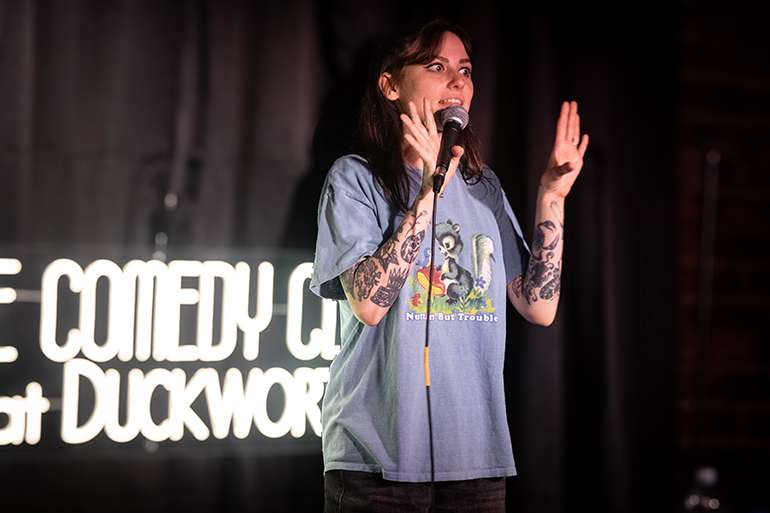
Charlotte has long been somewhat of a black sheep when it comes to live entertainment from local artists, be it music, stand-up comedy or the performing arts. Despite our size, it’s generally harder to get people to engage with local and independent acts here than in cities of similar scope.
“We need more rooms like Duckworth’s and more opportunities for local comics to showcase themselves,” local comic Nathan Baker told us in April. “This’ll bring more people in and hopefully keep them here instead of having homegrown talent run off to the greener pastures of New York, Chicago and Austin.”
The Comedy Club at Duckworth’s is a great down payment to the much-needed growth of our comedy scene.
BEST NEW ARTS INCUBATOR: Charlotte Studio Artists
In a city where creative spaces keep giving way to apartments and regional chains, Charlotte Studio Artists has managed to carve out something rare: permanence with purpose.
Founded by a trio of former Charlotte Art League members — Jodi Lynn McNeely, Walter Sanders and Catherine Kanvik — the collective has turned the old Johnston YMCA Child Development Center in NoDa into a buzzing hub for painters, sculptors and mixed-media artists.
Sanders beamed like a proud father while walking us through the space in February, proof of what a determined community can create. Among the residents is artist Stephanie Grainer, who started experimenting with upcycled doll parts during the pandemic after losing access to her kiln, a reinvention that Sanders says has kept her “on a roll.”
Part workspace and part incubator, the studio gives local artists room to grow, collaborate, and stay rooted in a neighborhood that’s long been Charlotte’s creative heartbeat.
“It is artist-led and artist-run; we all pitch in,” explained McNeely. “It’s not just a rental. It’s not just a place to do work. It’s a place to plug in and really further your business and then help the NoDa community have another space for art.”
“Art is such a bridge,” added Sanders. “It’s an engagement tool for the community, for Y members, for artists, and merchants, too. If we bring bodies in, we want to collaborate with merchants so people go over and enjoy some food and beverage. It benefits everybody.”
BEST RETURN: Carolina Theatre
Closed for nearly half a century, the historic Carolina Theatre in Uptown reopened its doors in March and has quickly become a staple of Uptown entertainment, screening classic films and hosting the premiere of the Charlotte-based movie Roofman while putting on concerts by artists ranging from CeeLo Green to Punch Brothers.
The Carolina Theatre originally opened in March 1927, and Elvis Presley played a concert there in 1956. Black residents were not welcome at the movie house until 1963, and even then, Black moviegoers were only admitted in small groups and required to reserve seating in advance. Attendance dwindled throughout the 1970s, and after a screening of the Bruce Lee martial arts vehicle Fists of Fury in 1978, the Carolina Theatre closed. The property lay shuttered and vacant until 2017, when construction began on the theater’s renovation.
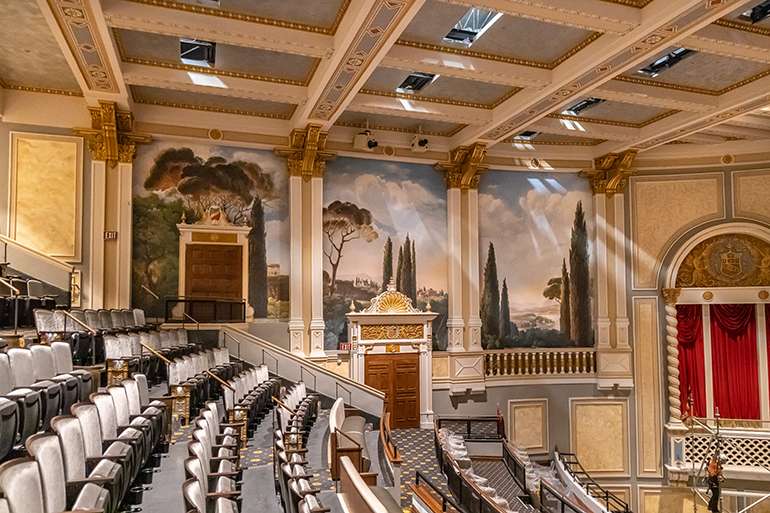
The Belk family, the city of Charlotte, Mecklenburg County and private donors raised $78 million needed for the design and construction of the renovation project. Funding from additional sources including the federal and state government brought the price tag for the eight-year renovation up to $90 million.
The 36,000-square-foot, 960-seat historic theater originally featured wrought-iron chandeliers and intricate murals designed to evoke the opulence of a Mediterranean palace. Foundation for the Carolinas worked with award-winning Charlotte architectural design team DLR to undertake painstaking renovations that maintain the venue’s historical design, recreating its murals in the 1927 style and restoring the original decorative plaster and moldings.
Now, the theater that first opened its doors almost a century ago is poised to become a linchpin in Uptown’s future.
BEST VENUE OUTSIDE 485: Cain Center for the Arts
When Queen City Nerve first reported on renderings of the proposed Cain Center for the Arts in 2020, construction for the educational, performing arts and visual arts center was a year away, and its grand opening was three years in the future.
Finally in 2023, Cain Center for the Arts raised its curtain in the heart of Cornelius. Since then, the 32,000-square-foot facility, which includes a gallery area, two large classrooms, a dedicated dance studio and a 400-seat theater, has brought eclectic performing arts events, thought-provoking visual art exhibits, and diverse arts education to the Lake Norman community and beyond.
Past performances have included Charlotte Conservatory Theatre’s staging of the comedy POTUS and stand-up comedy from Saturday Night Live alumnus Tim Meadows (who hilariously couldn’t grasp the fact that his career had taken him to the point of performing in a town named Cornelius).
Upcoming events include Davidson Community Players’ production of playwright Christopher Durang’s Tony-winning comedy Vanya and Sonia and Masha and Spike, Mike Super’s mystifying Third Time’s A Charm magic show, and concerts by classical-crossover quartet Sons of Serendip and Grammy-winning country music and bluegrass singer Kathy Mattea.