Krystle Baller’s Debut Solo Project Is Meditational, Immersive Art
Album began as soundscape for upcoming Arts+ Chromatic Roots exhibit


In shamanic mediation, shamans use an introductory drum beat to pull you into a spiritual journey and a closing beat that calls you back out. The repetitive, rhythmic beats throughout the meditation lure the listener into a trance state, guiding their spiritual bodies through grief, loss and healing.
For Krystle Baller, that trance state gradually built through the beats of what would become the local musician’s first solo album, Dust of the Self.
“I just felt like I’ve never had a creative download like this before where I couldn’t think about anything else,” Baller said. “I barely slept, I barely ate and I just had to get all the music out of me. It was a solid week and a half of just putting all this music together”
The 45-minute electronic shamanic journey was originally born as a short soundscape for the upcoming immersive exhibit at Arts+ titled Chromatic Roots, which features similar projects from a number of local producers and musicians. However, the project took on a life of its own in Baller’s hands.
What resulted is part musical project, part novella, part environmental meditation.
Released June 13 under the performing name krystilization, the new concept album follows the story of a janitor who discovers roots growing out of the old church basement he maintains. When he clears the roots, he creates space for previously repressed life to flourish, immersing him into a world rediscovered.
The janitor’s general story originated in the Discord channel where Chromatic Roots collaborators were discussing a baseline for the exhibit’s thematic soundscape. The more music Baller wrote, however, the more the story came to them.
Growing up in West Virginia, Baller always had a connection with nature. When they started regularly hiking in 2021, they would listen to intelligent dance music artists like Aphex Twin, Bonobo and Boards of Canada, linking music with the meditative act of walking among nature.
The janitor’s discovery of a new world amidst the stagnation of everyday life is Baller’s “sonic offering to the sacred wild,” they explained, a culmination of years of hiking, living and connecting with themselves through nature.
“Everything just lined up for this moment in time and the album itself,” Baller told Queen City Nerve. “The journey of the janitor, I wrote the story and then started seeing myself in the story of things that I’ve gone through, of dealing with grief, dealing with loss, of finding joy in these spaces and finding a childlike sense of wonder, and that’s the feeling that I wanted to invoke with the music.”
Chromatic Roots and Meow Wolf
Known as SuperDaftBros, creative manufacturers Ian McCormick and William Baucom build custom props and replicas, often designed in collaboration with displays or work by local visual artists.
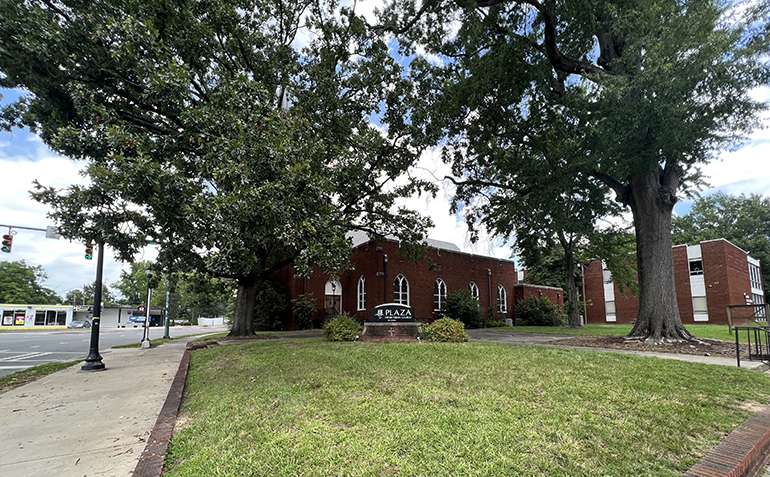
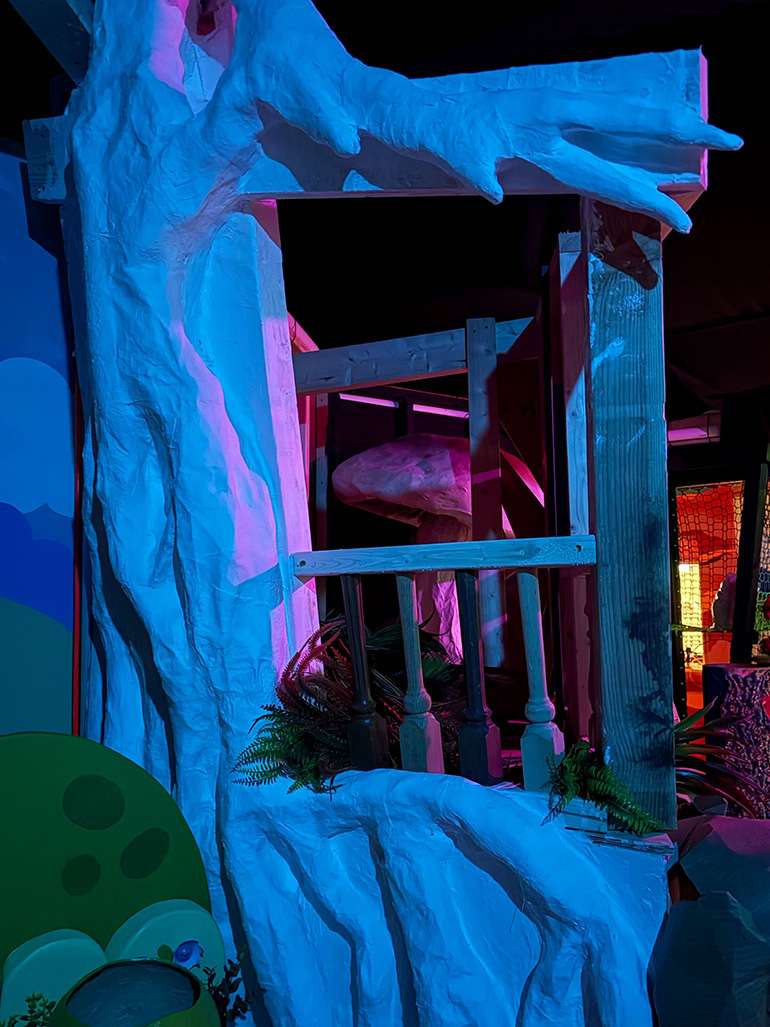
Three past collaborators include Arko, Luvly Moon and Rebecca Lipps, and now that group of five Charlotte creatives has reunited, working with artist and project manager Cat Babbie to spearhead the Chromatic Roots installation at the Arts+ Community Campus facility at the former Plaza Presbyterian Church on The Plaza.
Held in collaboration with art gallery Activation Studios, also located on the former church campus, the Chromatic Roots installation will explore the fight against apathy and stagnation. It’s set to open on Aug. 1.
Read more: Activation Studios Creates Needed Space for Indie Artists on The Plaza (2024)
Organizers will direct 30 artists in transforming the century-old church basement into a subterranean root forest. The janitor — and exhibit patrons — will journey through the different biomes of the new world, from forest to desert to ocean and all the mysterious nooks and crannies in between.
Amid the artists’ representations of a world rediscovered, the installation follows the narrative that anyone can be a hero, McCormick said.
“Anyone can change the world around them somehow, not necessarily by doing drastic actions but by taking smaller acts,” he said.
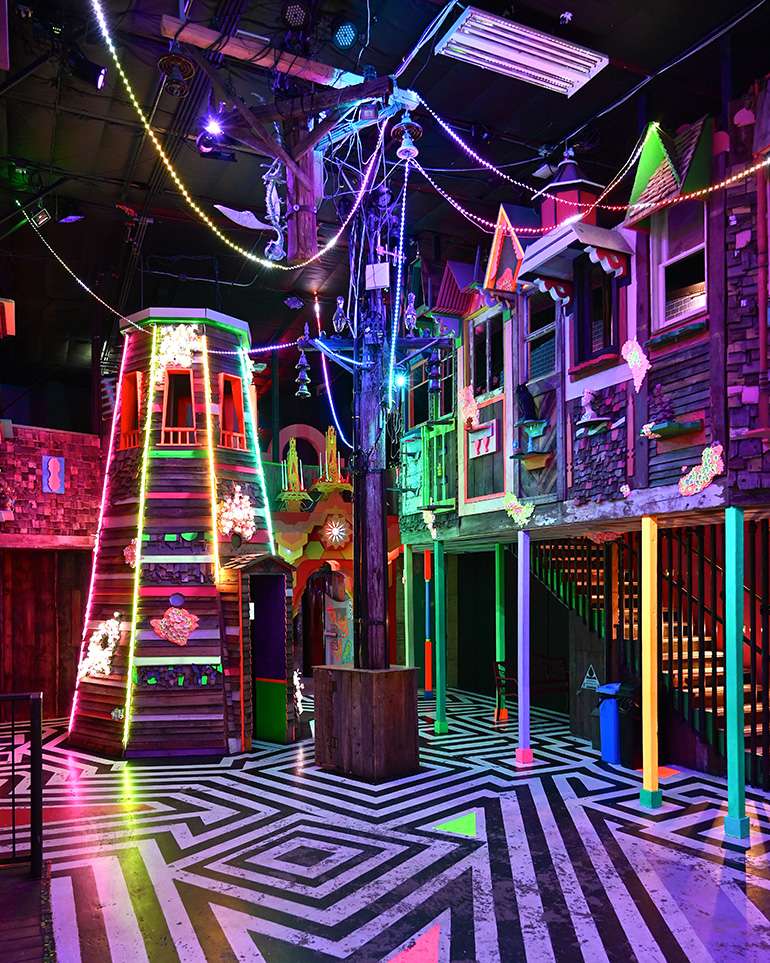
The organized chaos of Chromatic Roots follows the principles of Meow Wolf, an arts company creating large-scale, immersive exhibits that allows patrons to explore exhibits that exist more like complex, creative movie sets than just art hanging on a wall.
“There’s definitely this rise in creative, artistic spaces and immersive experiences,” McCormick said. “And we know that there is an interest here in Charlotte and we are trying to foster it in whatever way we can.”
In 2008, Game of Thrones author George R.R. Martin purchased an abandoned bowling alley in Santa Fe at the behest of a group of alternative artists called Meow Wolf, who then renovated it into The House of Eternal Return, an exhibit that the group described as “a science fiction story that leaps off the page and becomes your total environment.”
It was in this spirit that the team behind Chromatic Roots set out to reimagine the space they inhabited at the Arts+ Community Campus.
“It’s a unique expression of artistic interests, of narrative feelings,” McCormick explained. “It’s like you’re almost walking through a movie [or] an escape room that makes you feel like the world has meaning or the world can be a better place again. It’s just whatever you want it to be.”
While Chromatic Roots was inspired by the essence of Meow Wolf, the fun part is that it allows the individual participating artists to bring their own experiences to the installation, creating an amalgamation of different perspectives that meld together more fully than would occur in a curated art show with separate pieces.
“It’s something that is hard to capture in just an art gallery,” McCormick said. “I think that this broader medium allows us to explore that better.”
McCormick acknowledged that the group’s previous shows had lacked an impactful sound presence, but they knew just who they could turn to in Charlotte’s creative scene to fix that.
According to Babbie, Baller was the first person the curators thought of to create a soundscape for the exhibit.
”There was no question, there was no debate,” Babbie said. “It was whatever Krystle Baller wants to do, we want it.”
“Krystle really gravitated to this and I can’t tell you how it totally changed the game for us,” McCormick added. “Krystle brought this, like, energy and this human element to the whole narrative.”
Even to folks who don’t necessarily follow the narrative and just want to see some cool art, Baller’s soundscape taps into an emotionality that makes them feel like there’s something deeper, explained Babbie.
“It’s perfect for the space and it’s perfect for the narrative,” she said. “It’s mysterious, it’s familiar, it’s, as the highest compliment, infinitely repeatable.”
Baller’s songs will be included among other original soundscapes produced by Charlotte artists playing in different biomes throughout the exhibit. Local producer and DJ Simon SMTHNG, for example, has announced that he has created some original work to contribute to the score.
Nature and music in perfect harmony
Baller has a form of the neurological condition synesthesia, a phenomenon that utilizes multiple senses to process the things around you. Baller’s iteration of the condition creates different sounds for different colors.
They don’t hear the sounds in their ears but in their brain, they explained.
“It’s not even a sound I can sing. The pitch is lower than I can say with my throat.”
Thanks to synesthesia, Baller can hear the varying pitches given off by different surroundings. The frequency among the greens and browns painting the woods have lower tones than brighter colors, allowing Baller to “hear” the sound a desert or forest would make.
Though the pitches can be overwhelming in large crowds — people make different sounds, too — they act as a starting point to find accompanying notes with Baller’s instruments.
“I think because my brain works differently, I can hear what I need to do,” they said. “I can tell if [the sounds are] in harmony or disharmony … it’s very intuitive.”
As cofounder and creative director of music and film nonprofit We Rock Charlotte, Baller has become intimately familiar with music performance and production to the point of now hearing melodies in their head and knowing exactly how to manipulate the sounds of their computer to achieve them.
Read more: We Rock Charlotte Celebrates a Decade of Music, Arts and Social Justice (2024)
Baller also used panning techniques to imbue spiritual meaning into the album, signifying past and future — though that technique may take a pair of earbuds or surround sound to really make out. For example, if the sound of a bird is flying to your left, that could mean that it’s looking into your past. If it’s flying to your right, it’s looking into your future.
In “Mother’s Well,” Baller manipulated an audio clip of someone doing a cannonball to sound like a sharp clap. In the beginning of the song, the clap moves from right to left, smacking you back into your childhood. At the end, the clap smacks you back to the present, moving from left to right.
The spiritual journey that begins and ends with Baller’s varying versions of shamanic drums in the new album acted as a catalyst for healing; both within themselves and those around them.
Bridging the gap through music
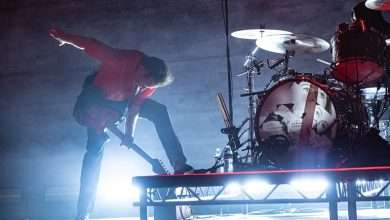
Baller’s music allows them to explore the different facets of themself through diverging sounds. They use their bass guitar and lead vocal position in feminist punk band Hey RICHARD to express their political opinions and social justice advocacy through words, detailing their coming-out story to an unaccepting family in the band’s song “Coming Out.”
When Baller came out to their conservative parents seven years ago, they disowned them. Over time, however, Baller and their parents began to heal that relationship, a process reflected in the janitor’s journey.
While Baller was working on the album, they visited their family in West Virginia for their niece’s graduation.
”I just had a really healing, good visit with my mom and my dad … [And they got] to know my wife better,” the said, referencing local visual artist Elizabeth Palmisano. “It was just a really healing thing for me.”

One night, Baller and their mom stayed up until 2 a.m. talking outside when a storm rolled in. The rain and wind rattled the wind chimes, creating a beautiful cacophony of sound.
Baller recorded that moment and included it in “Forgotten Road,” a track off Dust of the Self.
“My superpower is music and that’s what I wanted to do, not for anybody else, but honestly, I just needed to go through the process myself so I could get to a place of deep forgiveness [and] gratitude for the people that raised me,” they told Queen City Nerve.
Because of Hey RICHARD’s feminist values and political ethos, Baller found that by writing instrumental music they could bridge the gap between what their family would and wouldn’t listen to.
”I found a peace and a joy in writing instrumental music,” they said. “I could … speak to anybody, no matter [what] they believe, how their values are different than mine. And coming to that peace happened halfway through making [the album].
”I’m seeking radical joy,” they continued. “Joy is an act of resistance and I refuse to put people on the left and right; I’m honestly sick of both. Like, we have to find a way to bridge a gap.”
Though Baller still can’t justify the reaction of their parents when they came out, they realized it was their way of showing Baller love. Their parents were freezing Baller out as a way to damn Baller’s soul.

But their parents are also the people who instilled the values Baller carries today. The work Baller does with children through We Rock Charlotte is directly impacted by the work their dad did with youth. Baller has decided to look past their parents’ politics and focus on the fact that they’re human beings, the same ones that taught Baller to care for people at a young age.
The last song of Baller’s album, “All Roads Return,” compiles small pieces of all the other tracks from Dust of Self to create a circular spiritual journey strengthened by the healing each listener endured.
Writing the album shifted Baller’s headspace, making them realize that most people are good. Like the janitor, people can change the world simply by showing up and doing their best.

Baller has built a beautiful life with Palmisano in a house surrounded by trees and peace. No matter the state of the world around them, they chose to fix it by starting with themself.
“That’s all that I can control is myself, and I don’t want to continue the way that we’re continuing,” they said. “So I’m going to live outside of this divided capitalist system and make art and have a life that I love and no matter what happens, at least now in the present moment, I can feel secure in my decisions.”