
Pasquales’ Farm is Built on Pillars of Fresh Food, Nature and Community
Outdoor film screening and mental health festival scheduled at family-owned farm

To drive down Plaza Road Extension in far east Charlotte is to witness change happening in real time.
In the area between Hood Road and I-485, new communities like the Cardinal Creek neighborhood already have residents moving in while construction crews are just starting construction on still newer developments across the street.
Easily missed by less observant drivers on the north side of the road is a small, black gate with seven yellow letter signs next to it that spell out “WELCOME.”
The message is not only a broad one welcoming those new neighbors to east Charlotte but a literal one that invites folks to enter the gates and check out something special that’s happening at Pasquales’ Farm.
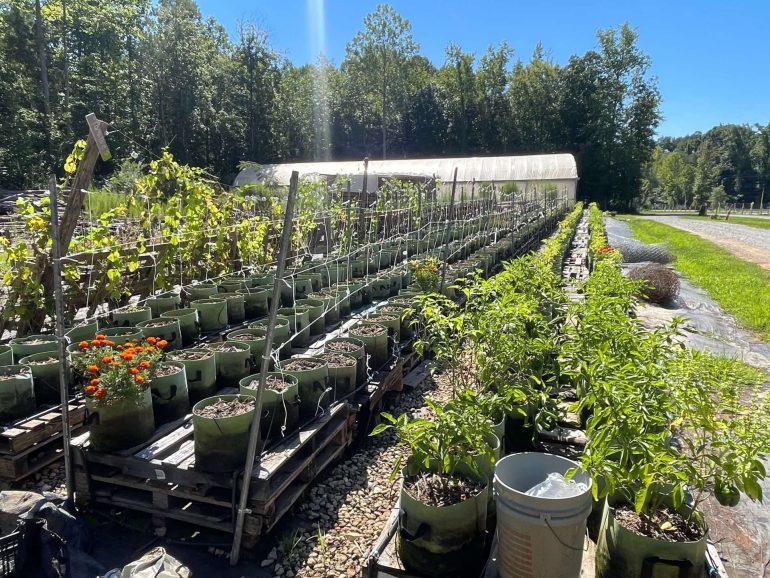
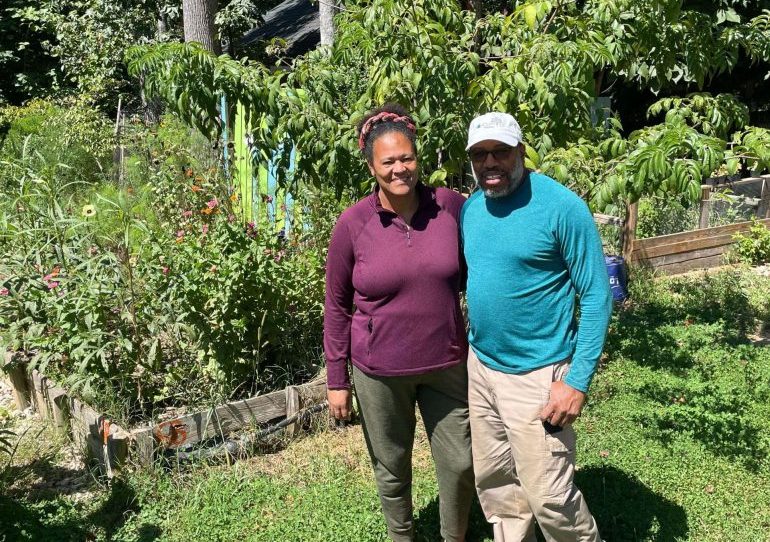
Purchased in 2018, built out during the pandemic, launched in 2023 and opened to the public this summer, Pasquales’ Farm is the passion project of Eliseo and Wendy Pascual, who have turned their 5 acres in far east Charlotte into an urban farming oasis amidst ongoing growth and development.
The family-owned farm is home to dozens of chickens, a handful of goats and tons of produce being grown in 40 raised beds, a climate-controlled greenhouse and a high tunnel with the help of Eliseo’s custom-made irrigation systems.
Over its two years in existence, Pasquales’ Farm has sold produce at area markets such as Rosa Parks Farmers Market in west Charlotte. This summer, they opened their Farm Stand for the public to shop for produce on the Pasquales’ property on Thursdays, Fridays and Saturdays.
Eliseo and Wendy have a bigger vision for Pasquales’ Farm than to simply serve as a produce market, however; they want to become a community hub and agritourism destination to educate folks about urban farming and where their food comes from.
“There’s nothing, I think, that brings people together more than food — food and nature,” Eliseo told Queen City Nerve on a recent visit. “If we can put those things together and we don’t bring the community parts, we are missing the point.”
Read More: Deep Roots CPS Farm Builds Network of Urban Farmers
On Sept. 12, Pasquales’ Farm will host a free outdoor screening of the 2021 film In the Heights as part of local Latin American film organization Cine Casual’s Cine en los Barrios event series.
“Bring your blankets, chairs, and family — it’s going to be a night full of music, joy, and community vibes,” reads the event page.
Other upcoming events include Latin Rock Night on Oct. 3 and on Oct. 10 the inaugural mental health awareness festival called Mindful Together, creating a symbiotic relationship between the farm and its neighbors near and far.
Finding a home
Eliseo was born and raised in Santo Domingo, the capital and largest city of the Dominican Republic. Despite the urban environment, as he explains it, “In some way, every Dominican is a farmer.”
His father grew up on a farm that remains in the family to this day, and Eliseo spent most of his summers there learning the ways of agriculture.
When he grew up, he attended college in Soviet-era Moscow, where he studied agricultural engineering.
He returned home to Santo Domingo, where he earned Master’s degrees in public administration and economics.
In 2001, he arrived in the United States to visit a close friend from college. His intention was never to stay, but his friend was in the midst of launching a real estate company and asked Eliseo to join him in the venture. Eliseo acquired a work visa and got onboard.
He found success in real estate and development, but in the back of his head he always had a desire to return to his roots in farming.
Upon moving to North Carolina in the early aughts, he had noticed a lack of local produce available for those who sought it out.
“When I started checking around, I went to supermarkets, and everything that I saw in a supermarket was either from California, from Canada, from Mexico, but no products that I see, ‘Okay, this is local,’” he recalled.
He launched a greenhouse project in a church parking lot in the Sugar Creek corridor in 2015 to help address the food desert there but couldn’t build out the proper infrastructure to make the project worthwhile without owning the land.
In 2018, he was part of a development team that aimed to build a townhouse community on a 5-acre plot off Plaza Road Extension. Land surveyors found that it wouldn’t be feasible to build enough homes to make the project worthwhile for developers, so Eliseo pivoted.
“When I found this land for them and I saw that we couldn’t do the project that they were trying to do, then I told them, ‘Okay, for you, it doesn’t work, but for me, it’s perfect,’” he said. “The location, the land and everything, all the resources that were here, it’s perfect for what we were planning to do.”
The pandemic gave Eliseo and his family a chance to focus on building out the property. They cleared land, built access roads and laid the groundwork for sustainable farming.
Food supply and the importance of urban farming
Meanwhile, COVID-19 also sparked a reawakening among many around the country regarding food supply and access, with grocery stores shutting down and supply lines becoming choked off, leading to empty shelves.
“People understood that the distribution system is very fragile,” he said. “That if we have an important event like COVID, if we don’t have local production, we can starve … They understood that when you have people producing milk here or meat, when nothing can come, you can rely on those people because they are producing that in your vicinity and you go there.”
Eliseo’s larger vision involves support from city, county and state governments to build a network of urban farms located around the county, interspersed along properties located strategically along I-485, with the capacity to serve the surrounding population in the event that food supply lines are once again halted.
Read More: Carolina Farm Trust Marks 10 Years Confronting Food Insecurity
In order to create such a network, however, Eliseo insists there must be incentives that encourage more folks to get into urban farming. With land affordability skyrocketing just as the overall cost of building materials and other necessities increases, it’s becoming more difficult for people with knowledge and experience to actually start a project like Pasquales’ Farm.
Entering the farm’s third year, Eliseo has not yet come close to breaking even as he continues to experiment with ways to make the most out of every inch of his property.
“My taxes go through the roof and I don’t have the production yet that keeps up with the cost that I have associated to the property,” he said. “People want to do it, but there’s no funds available to get the land in the condition that you can develop for production.
“That is one of the biggest barriers that people have to start [farming] produce, especially in the urban setting, because there’s a very high upfront cost that you need to do it in order to little by little start recovering.”
On his land, Eliseo and Wendy continue to build out more ways to not only produce fresh foods but make their farm a destination for field trips, educational workshops, produce shopping and community events.
Eliseo is currently working on a boardwalk for visitors to tour the backside of the property where the goats, ducks, chickens and other animals roam, plus a barn near the front for workshops and other activities.
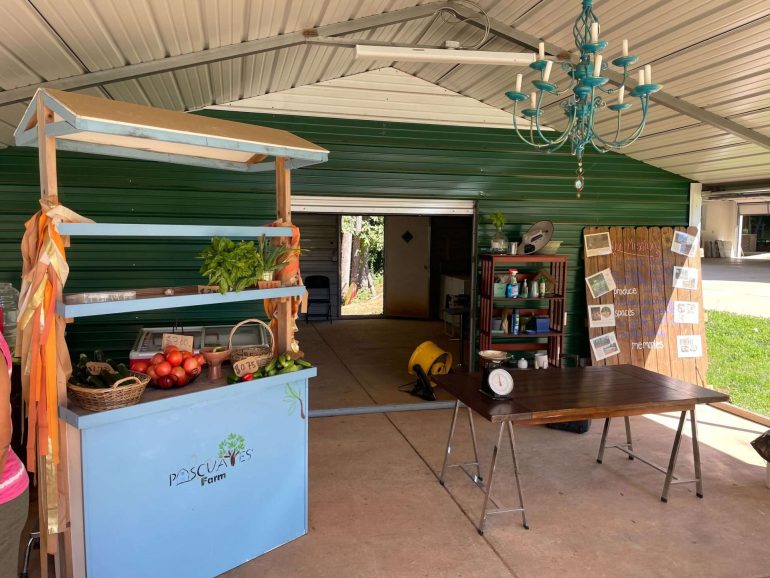
They will also continue to build out the Farm Stand to become a Farm Store that is open to the public seven days a week.
It’s all being done in the hopes that, if they build it, the people will come, which has proven to be true during volunteer days and other community events held over the summer.
“That’s why we think that having [food and nature] together and bringing the community can make the difference,” said Eliseo. “Because the community will see how they can support us and also how we can support the community and have the win-win relationship. Because there’s a lot that we can do from here that will positively impact the community. If we have to support the community, if the community sees us as a source of solutions for some of their needs, that will allow us to keep growing.”
Visit pascualesfarm.com to learn more about Pasquales’ Farm.

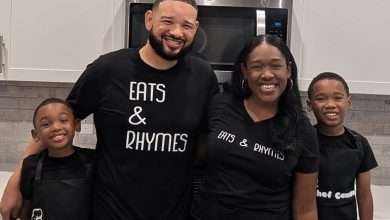


We love Pascuales’ Farm!!
Pasquales’ Farm looks like a strong example of a farm built on the foundations you care about: fresh food, nature, and community.