Cook. Swap. Repeat. Ensures Recipes Aren’t Lost to Time
Jenelle Kellam takes part in culinary cultural preservation with Do It for the Bites


Within the Black community, the expression “We’re losing recipes” serves as a lament that signifies the ways in which Black people literally and figuratively have lost aspects of their culture over time.
Figuratively, it could be the inability to gather loved ones for a holiday after a matriarch passes on. In a literal sense, it could be the loss of a grandmother’s sweet potato pie recipe. Jenelle Kellam has decided she won’t let her community lose any more literal recipes.
As founder of Doitforthebites, LLC, a Charlotte-based collective dedicated to collecting history through food, Kellam began hosting a cookbook swap called Cook. Swap. Repeat. in Charlotte, doing her part to help keep recipes from being lost.
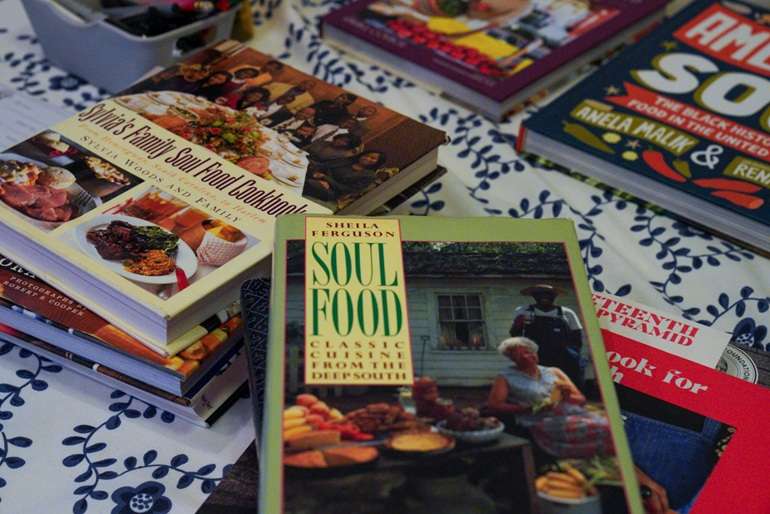
She got the idea while attending a book swap at ArchiveCLT. She had begun collecting cookbooks from Black authors and chefs during the pandemic.
“I love looking at the cookbook section when I go to thrift stores,” Kellam told Queen City Nerve. “I just love looking through old cookbooks just to see how cooking has evolved. My favorites are the binded cookbooks that have like five recipes on one page, and it’s interesting to compare those to the cookbooks now where one recipe may span several pages because you have the pictures and the writer’s story and just more detailed instructions on how to prepare the dish.”
Cook. Swap. Repeat. offered her a way to share some of what she had learned.
The swap is more than just about retaining recipes, though. It’s about the community behind the recipes as well. Being able to converse with other people about changes or difficulties in a recipe are what make the event special.
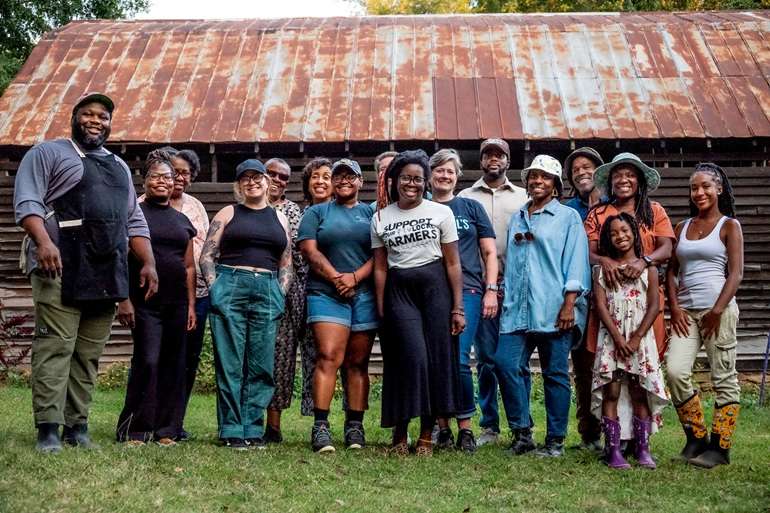
Sometimes the events are less of a swap and more of a “show-and-tell.”
“People can just go to the library or go to a bookstore and look at a cookbook, but if you bring a cookbook to a cookbook swap and someone’s not familiar with it you can talk to another person about the recipes that you’ve tried from that specific cookbook,” Kellam said. “I know in a lot of my cookbooks I have so many bookmarks, and it’s the recipes that I’ve made more than once or recipes that I really like.”
Partnering with Red Rice Books, Kellam hosted her sixth Cook. Swap. Repeat. Event on June 19, highlighting Watermelon and Red Birds: A Cookbook for Juneteenth and Black Celebrations by Nicole A. Taylor, with Chef Quientina Stewart-Morrow concocting spice blends found in the book.
Before the June event, Kellam sat with us to discuss the event and what cooking means to her.
Preservation through archives
While recording and archiving recipes has become more common in our increasingly digital age, for many cultures in past generations, recording recipes wasn’t a common practice at all. The recipes were often handed down orally, and when the arbiter of the recipe died so too did the recipe. With that history in mind, cookbooks are more than just cookbooks to Kellam.
“Collecting cookbooks is about preservation,” she said. “Just thinking about growing up with my mom, she didn’t have cookbooks and I can’t remember anyone in my family really having cookbooks, but she did write down recipes and she still does have folders with loose-leaf paper or an envelope with a recipe written on it. And my first memory of a cookbook would be my church’s cookbook. So my church that I grew up in collected recipes from each family, and they combined it into a cookbook.”
Having heard many stories of family recipes lost when the matriarch died, Kellam wanted to avoid that with her own mother, working with her to record her recipes. Her favorite was her mother’s banana pudding recipe.
“With bananas, by the way, because it’s not banana pudding if it doesn’t have bananas,” she laughed.
She’s documented the process on her Instagram page, first recording her mom at work on a recipe then tracing her steps. Now, she has her own personal recipe book where she has saved her mother’s recipes for future generations, though it’s not published yet.
“I’ve thought about it, honestly,” she said. “There are a few recipes in my own personal recipe book that are really good, and I’m thinking, ‘Huh, maybe one day.’”
For Kellam, cooking and collecting cookbooks is about more than nourishment; it helps her navigate decisions in her everyday life.
“Cooking is memory, and for me it is a way that I practice trust in myself,” she said. “It’s very low risk for me. I know it’s not that for some people, but to me, I feel like when I’m in the kitchen and cooking, I am able to make mistakes and then correct them. And so that applies to my everyday life and it teaches me that I can make mistakes in my everyday life. And there are corrections that can be made.
“I use my intuition and I know what to do,” she continued. “You know, like, whenever I cook something for my family and they ask me for the recipe— and this is another saying, like, ‘I’m letting the ancestors guide me when I’m cooking.’”
Adding to the ancestral guides, she said being able to talk amongst peers about recipes allows someone to view it in a different light. The recipes aren’t rigid and can be adjusted as necessary.
“Recipes themselves are just a guide,” she said.
Black celebrations centering food
Though Juneteenth was only made a federal holiday in 2021, it has been a celebration for Black people and Black culture for much longer. For Kellam, there was a distinct reason for hosting a Cook. Swap. Repeat. event on a holiday that commemorates the nationwide announcement of emancipation.
“When I think of Black celebrations, I think of food,” she said. “Like, we getting the menu in order – that’s the first order of business. There are certain people who make certain dishes, and you know what to expect from that dish.”
Food and celebration are ingrained within Kellam, who grew up in a family that hosted dinners and celebrations. That’s a recipe she’s not losing any time soon.
“I grew up cooking in a family that cooks, a family that hosts,” she said. “As a child my job during the summer was to work in my dad’s garden, picking potatoes, tomatoes, green beans, whatever he was growing, shucking corn, snapping peas. That’s how I grew up, and so it’s just stayed with me all these years.”
That’s how the cookbook swap has translated so well for Kellam – by combining the nature of celebration, hosting, learning and recipes. It isn’t all just about taking home a cookbook.
“That’s part of the swap itself because people don’t necessarily have to swap the cookbooks,” she said. “It’s kind of like a show and tell. You can bring your cookbooks to show to people or just have them on display for people to look at.”
Guests fill out cards with their name, the cookbook title and perhaps some recommended recipes. After that each cookbook gets tagged with a sticker. Red marks books that aren’t available for swapping, yellow means “I might be open to swapping this book” and green means go.
If someone comes and doesn’t have a cookbook to swap, they can still get a book to take home. So for those who don’t have any recipes to give, there’s still plenty to share.
Read more: Booked Book Club Highlights Black Authors, Hosts Unique Meetups in Charlotte
That’s where Red Rice Books, a local Black-owned virtual bookstore, comes into play.
“I have a cookbook collection with [Red Rice] and so they bring titles from the cookbook collection that I have with them so that people can shop and potentially buy.”
Because if she’s going to be successful in ensuring we don’t less any more recipes, it’s going to take a community.
Look for updates on future Cook. Swap. Repeat events at the official Instagram page.