City Life Critics’ Pick Winners: Best in the Nest 2025
The best of Charlotte's city life as chosen by Nerve critics

Every day there are folks working hard to ensure a better future for our city. This is for them.
Back to all categories
Winners: Download your award graphics here
Support our work by becoming a Nerve Member
LIFETIME ACHIEVEMENT: James “Fergie” Ferguson II
“We weren’t practicing law in the abstract,” said James E. Ferguson II in Robert Samuel Smith’s 2008 book Race, Labor & Civil Rights. “We were the legal arm of the civil rights movement in North Carolina.”
Ferguson was referring to his work with North Carolina’s first racially integrated law firm, Ferguson Chambers & Sumter, which he helped establish shortly after graduating from Columbia Law School as one of less than 15 Black students in a class of more than 300.
Ferguson’s racial equity work started even before then, as a kid in Jim Crow-era Asheville, where he helped launch the Greater Asheville Interfaith Group to connect his local all-Black high school with a white counterpart in the interest of creating a dialogue about race.
In 1971, Ferguson helped argue in support of busing as a means of integrating public schools in the landmark Swann v. Charlotte-Mecklenburg Board of Education case, a major follow-up to the Brown v. Board of Education case from two decades prior.
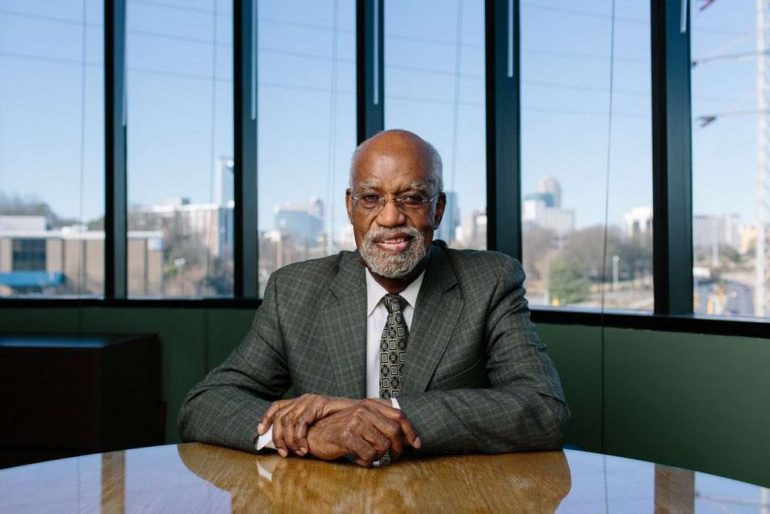
Ferguson, or Fergie as he was widely known, made his mark at each end of the state, from suing the Asheville school district over discriminatory student assignment policies to defending the Wilmington 10.
He represented the Charlotte Three, a trio of Black civil rights activists who were convicted on the basis of flimsy evidence for the arson of a white-owned stable in 1968.
“He endured abuses and threats but made everyone feel seen and heard — that is the civil rights movement,” said Sonya Pfeiffer, a local attorney who worked closely with Ferguson, litigating with her on behalf of four death row inmates under the state’s groundbreaking Racial Justice Act.
“What he did for schools across the country was extraordinary,” Pfeiffer added. “Have we achieved integration and equality in any realm? The answer is no. But Fergie did what he could in the world that existed. It did make a difference.”
LOCAL HERO: Jessica Lefkowitz, Hearts for the Invisible
As founder and executive director of the Hearts for the Invisible Charlotte Coalition, Jessica Lefkowitz strategically spearheads all of street outreach efforts involving people struggling with homelessness through Mecklenburg County. That means that as the county staff and commissioners are discussing these issues in their offices and chambers, Lefkwotiz and her team are out there helping folks living through the struggle.
While the tragic murder of Iryna Zarutska at the hands of a mentally disturbed unhoused man on the light rail in August led local and state officials to point fingers and proclaim that Charlotte was “soft on crime,” Hearts for the Invisible has been on the frontlines in helping to roll out the county’s new Wellness Without Walls program.
The groundbreaking street psychiatry pilot program connects unhoused neighbors directly with mental health care, getting to the heart of an issue that many leaders would rather turn the other cheek to while spouting off about more policing and stricter sentencing.
Teaming up with United Way of Greater Charlotte, Roof Above and Atrium Health, the Hearts for the Invisible Coalition provides that on-the-ground expertise that would make Wellness Without Walls impossible to properly implement without.

BEST TWITTER: Carolina Forward
Last year, we wrote, “This will likely be the last time we include the Best Twitter Account category in our Best in the Nest, as Elon Musk has turned the site into a cesspool of misinformation, right-wing hate and weird content-farmer accounts.”
Yet here we are in 2025, unable to log off as the former “Bird App” continues to sink into the muck and mire of the internet’s worst discourse. With that in mind, there’s something to be said for those who remain in the trenches throwing punches at the trolls and bots in the interest of reaching a few of us real people.
Carolina Forward, a progressive statewide think tank with an interest in pushing back against the machine of lies that is the Republican Party (state and national), has been dug into those trenches and shows no interest in getting out.
One example involves how the account has worked to fix conservative narratives around crime in Charlotte by educating folks on the fact that many rural counties with Republican leadership in North Carolina have higher per-capita crime rates than the Queen City.
Then there were those times they warned before spring how Jefferson Griffin’s big plan was to send his election challenge up to the NC Supreme Court and let that body rule without the inclusion of his opponent, Democrat Allison Riggs, as she would be forced to recuse herself, making the Republican majority even wider.
The “rumor” drew guffaws from many of the mainstream reporters in Raleigh, but it came to fruition months later, by which time all those reporters had seemingly forgotten that they had been tipped off to this plan long ago.
BEST PERSONAL INSTAGRAM: Hector Vaca Cruz, @hectorvacacruz
We’ve long known Hector Vaca Cruz’s work as a community organizer with Action NC, but we were first drawn to his photography in his 2023 exhibit Pandemic: Year One at the OBRA Collective. His signature black-and-white photos provided a jumping-off point to prompt discussion and soul searching about such thorny issues as privilege, immigration, classism and identity in light of COVID-19.
He continues to showcase his one-of-a-kind mix of political activism and photography on Instagram, where you’ll find protest pics, portraiture, news, and selfie monologues from the artist himself. There’s even the rare skateboarding post, which is always a plus.
BEST TIKTOK ACCOUNT: Natalie Carr, @nataliecarrmusic
Natalie Carr never stops moving, whether it’s across the state to temporarily reside in the Outer Banks and take up surfing as a new hobby or post well-curated TikTok content that compliments her brat-pop aesthetic.
Carr’s newest single “Hot Photos” is a rallying cry for women and men alike to take a second and really give yourself some credit … and when the light is coming through the windows just right, snap some hot photos.
She’s as good at this social media shit as she is at music, and her perennial appearances in our Best in the Nest issue should go to prove how high a bar that is.
No one in Charlotte works as hard as Natalie, dropping multiple singles in a year, multiple social posts a week across all platforms, and writing and producing her own pop hits that the rest of the world needs to get hip to.
TikTok provides the perfect jumping off point to do just that.

BEST PODCAST: ‘Tying It Together’ w/ Tim Boyum
Tim Boyum is likely the only person left wearing a bow tie in 2025 whom we actually trust. The veteran North Carolina reporter and anchor hosts Tying It Together, which we take to be a reference to his favorite accessory, as it all also serves as the podcast’s logo.
Bow ties aside, Boyum goes beyond the headlines in talking to newsmakers across the state and getting the nuanced story that’s all too often missed in this world of social media outrage and hot takes.
His in-depth talks with different politicians and candidates are helpful during election season, though he also branches out to cover topics like cryptocurrency and climate change.
BEST REPORTER: Steve Harrison
It has been a busy year in the chambers of the Charlotte-Mecklenburg Government Center, and Steve Harrison has consistently shown up to ensure that none of what happens in our town’s city hall goes unreported.
Harrison was closely involved with the drama that led to the departure of city attorney Patrick Baker at the end of 2024. Baker had fulfilled a public records request from Harrison, following state law, only to then be charged with “leaking” documents by at least one city council member during a job performance review. He stayed on top of the issue after that, covering the complexities of the odd interim contracts signed by Baker’s replacement Anthony Fox and the new incoming long-term replacement, Andrea Leslie-Fite.
These stories, like the one he also covered about CMPD Chief Johnny Jennings’ settlement, are not the “If it bleeds it leads” types that get the most clicks or views, but they’re important in fighting for a transparent local government — a tough job in Charlotte.
BEST NEWSLETTER: The Charlotte Optimist
In May, Michael Graff, formerly of Charlotte Magazine and Axios Charlotte, announced his return to the local media landscape with the launch of his newsletter, The Charlotte Optimist. But to call it just a simple newsletter is to miss the depth and nuance that his weekly longform stories, sent out every Sunday night, encapsulate.
“We’ll aim to provide exclusive insight into Charlotte’s leaders and how they make decisions,” Graff wrote upon the Optimist’s launch. “We’ll also dig for the stories hidden in Charlotte’s couch cushions.”
And he’s done exactly that. In just the month or two leading up to our Best in the Nest issue, he’s lent his personal style of reporting to hot topics like the murder of Iryna Zarutska and the Queens/Elon merger while diving deeper into broad issues such as economic mobility and day laborers in Charlotte.
It certainly doesn’t hurt that he often taps longtime collaborator and local legend Logan Cyrus for the visual aspect of each story. Be sure to check out Cyrus’ recent photo essay on Charlotte’s Access 21 if you’re unfamiliar with the value he adds to any story.
BEST SCIENTIST: Dr. Jordan Poler
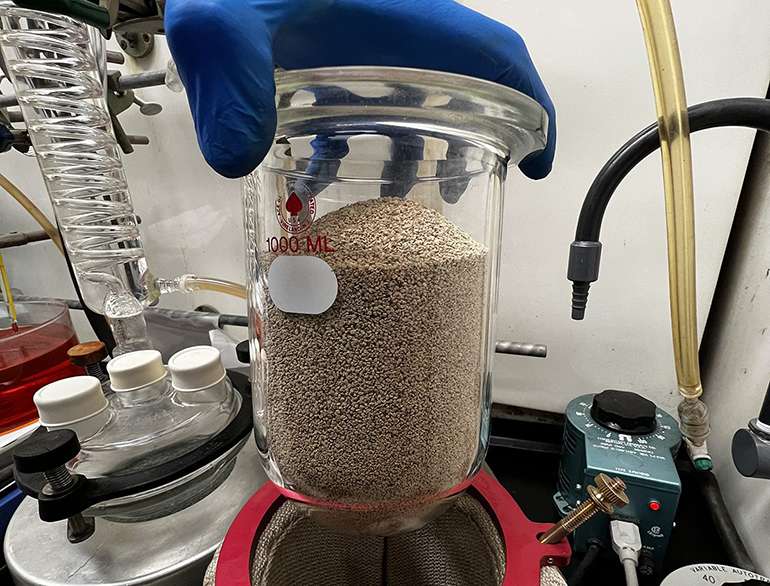
More than a decade ago, UNC Charlotte professor and scientist Dr. Jordan Poler decided to focus on chemistry that could be both sustainable and have minimum impact on the environment.
He believes he and his team of researchers have found that sweet spot, a secret sauce of nontoxic ingredients for a recipe that cleans per- and polyfluoroalkyl substances (PFAS) and other toxins from drinking water at the point of use; think refrigerator filter for tap water.

His research involves a process called ion exchange, which, in the most basic of explanations, works by trading an atom or group of atoms (ions) with ones that do not degrade the quality of drinking water.
The results are materials that can be packed into canisters made for water filtration in everything from refrigerators to well-water systems. These materials remove chemicals including pharmaceuticals, pesticides, arsenates, chromates, heavy metals such as iron, and PFAS.
Poler founded a startup called naneXPure LLC, which intends to translate the technology developed in his lab into the marketplace.
He and his business partner are now working with Monroe-based Goulston Technologies to broaden the drinking water purification materials crafted in his lab to industry scale.
BEST BOOK (NONFICTION): ‘Affordable Housing in Charlotte’ by Tom Hanchett
In May, local historian Tom Hanchett released the long-anticipated follow-up to his 1998 classic Sorting Out the New City. His new book, Affordable Housing in Charlotte: What One City’s History Tells Us about America’s Pressing Problem, is about as self-explanatory as a title can be.
That said, it’s certainly worth a read for anyone living in Charlotte who’s interested in the history of housing, NIMBYism, and how developers can toe the line between greed and benevolence like the most skilled tightrope walkers.
Perhaps most interesting to us was the new lens the book creates for us as residents of this city, providing perspective on so many specific apartment developments that you might have passed by thousands of times on your daily commute or in your own neighborhood and never given any thought to the public and private wars that were fought to get that building up and running.
MOST-NEEDED RENEWAL: Symphony Park
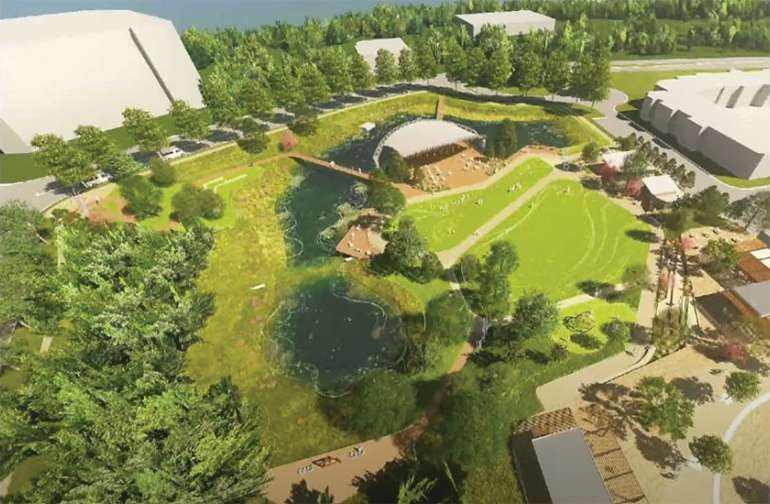
SouthPark, long known for its luxury shopping, upscale dining and stately homes, is set to gain a signature public gathering space with the $21-million redevelopment of Symphony Park. Originally built in the early 2000s as part of SouthPark Mall’s expansion, the existing bandshell and green space have primarily hosted the Charlotte Symphony Orchestra’s Summer Pops Series and SouthPark Alive After Five events.
The new public-private project will transform the area into an activated urban park designed for year-round use. Plans include permanent restaurants and micro-retail spaces for local entrepreneurs, a mix of flat and terraced lawns for events, interactive play areas for children, enhancements to the bandshell, public art installations and permanent restrooms.
Two pedestrian bridges will connect Symphony Park directly to The Loop urban trail, improving walkability and linking green space, commerce and community in the heart of SouthPark. The project, led by SouthPark Community Partners, brings an exciting and long-missing gathering place to the neighborhood.
BEST PRESERVATION PROJECT: Leluia Hall/Leeper & Wyatt Building
“Somehow it is 2023 and I find myself here as a restaurateur in front of city council fighting to save a 1903 building,” said Jamie Brown — one half of the Tonidandel-Brown Restaurant Group that she founded with husband Jeff Tonidandel — during a 2023 Charlotte City Council meeting. “That’s not where I expected to be.”
Brown was there to gain support for a rezoning hearing at the site of their newest restaurant Leluia Hall, located at 1823 Cleveland Avenue. While the historic Dilworth Methodist Church South property was already zoned for the use they needed — renowned restaurant Bonterra operated there for more than 20 years before moving in 2021 — Tonidandel-Brown wanted to take things further.
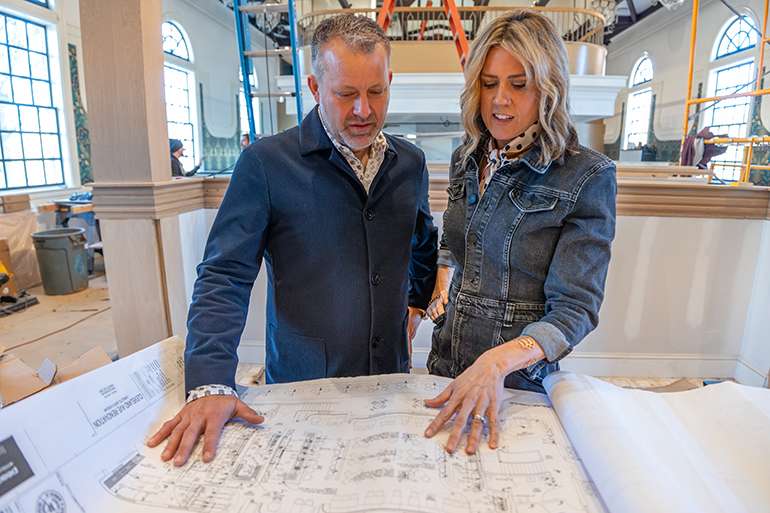
They’ve since completed that complex move and opened up Leluia Hall, completing the toughest parts of a years-long project as they still plan to open a sister bar in the relocated Leeper & Wyatt building.
The two insist that preservation was never part of their mission when they launched Tonidandel-Brown, though it does play into their goals involving community.
“We are interested in the neighborhoods and having a presence in the neighborhood that we’re going into,” Tonidandel explained. “I think that leads us into some of these old buildings. We really want to be part of the neighborhood. It makes a little more sense to go into some building that’s been here for 100 years rather than jumping into a new build where you don’t quite feel like you’re really part of the neighborhood.”
BEST ARCHIVIST: Cheryse Terry
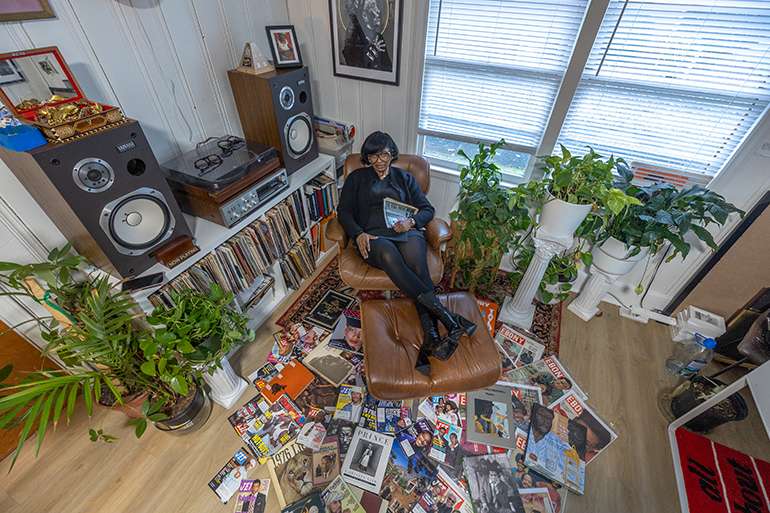
The art on the downstairs walls in Cheryse Terry’s split-level west Charlotte home is enough in itself to make a visit worthwhile. What sits between the four walls is the true treasure, however: an archive of historical Black ephemera that would likely take months just to catalogue and organize.
Over the decade it’s taken for Terry to build this archive of newspapers, publications, physical media, photographs, tchotchkes and trinkets, she has become one with the collection, it seems. Any mention of a given moment in Black history might send her to the shelves to dig out a specific memento that’s connected to it.
For Terry, who in 2022 opened the book-and-coffee shop Archive CLT on Beatties Ford Road to much renown, the annals tucked away among the shelves and drawers in her home are the real project.
“Archive, the cafe, the vibe, it’s just a tip of the iceberg to get people to come and then have to deal with and listen to the work that I actually wanted to do, the 501c3 that I’m starting: Archive Historic Preservation Society,” she told us in February.
Twenty years ago, living life as a pregnant teen growing up in west Charlotte, Terry may have been written off by many as just another stereotype who wouldn’t go far in life.
But drawing on the strength of her own mother, she has shattered such labels, naming herself and pursuing a path most impactful for her family and community.
Terry’s work in preserving and digitizing Black history earned her recognition as an Emergent City Champion by the Knight Foundation in 2024 and has led to partnerships with Johnson C. Smith University as well as the Charlotte Mecklenburg Library to help strengthen each institution’s own archive of Black history — local and beyond.
BEST NEW ARCHIVE PROJECT: Jim Frakes
An arts school might not be the first thing that comes to mind when most people think of UNC Charlotte, but by chronicling the history of the university’s Department of Art & Art History, Professor of Art History Jim Frakes hopes to change that.
Founded in 1964 by artist Maud Gatewood at the behest of the university’s founder Bonnie Cone, what began as the Fine Arts Program at what was then Charlotte College is celebrating its 60th anniversary this winter with a number of exhibits.
Despite that milestone, Frakes considers the university’s arts department “young,” yet its nascent momentum and unlimited potential inspired him to dig into its history nonetheless.
His interest in the department led him to create a role for himself as “honorary curator” of the department’s artwork. Prior to Frakes taking the helm, the department hadn’t had a traditional curator, which could lead to a lot of lost information. Believing the school could do better, his interest shifted to preserving the many stories he had learned about.
Many alumni works that Frakes uncovered during his work were included in Generations, an exhibit at the Projective Eye Gallery at UNC Charlotte’s Dubois Center in Uptown, in January.
“I’ve only been here for 20 years, so I didn’t have the institutional memory,” he said. “If a student hadn’t been there in the last 20 years, I basically wouldn’t even have any idea who they were, what they were out in the world doing. As I began to look, I discovered many, many alumni who I would never have known about doing really amazing things.”
BEST LANDMARK DECISION: The Franks House
The Franks House, located behind the United House of Prayer church at 350 W. Dunbar St. along the upper edge of South End near Bank of America Stadium, is one of the last remaining structures from the thriving Black community that once existed in Third Ward.
Named after its most notable and beloved owners, Arthur and Bessie Franks, the modest building represents a significant historic and cultural legacy. This year, it took its proper place in history.
On June 7, the Mecklenburg County Historic Landmarks Department, Charlotte-Mecklenburg Historic Landmarks Commission, and the United House of Prayer unveiled a historic marker recognizing the Franks House and Third Ward. The marker’s permanent home is at the United House of Prayer.
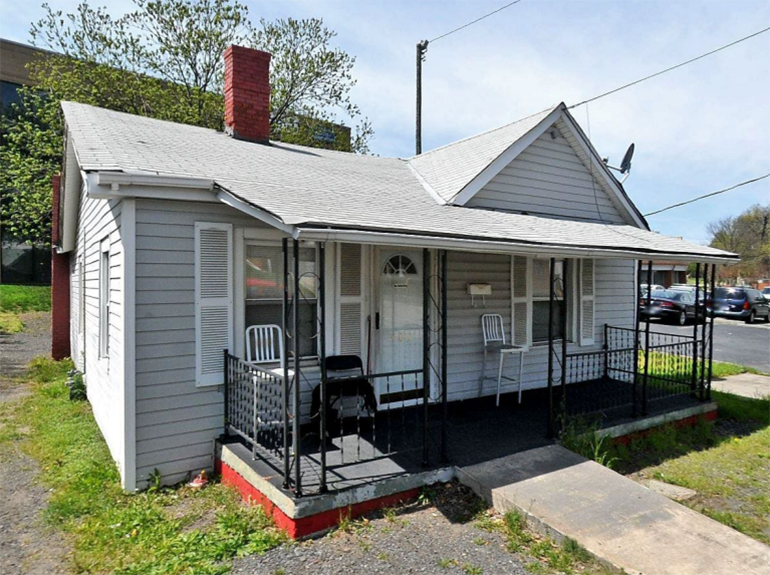
When the Franks purchased the house on Dec. 23, 1949, the house was one of the few Black-owned homes in Third Ward. The home was a gathering place for family and friends, hosting crowds of up to 50 people after Sunday service at the nearby First Baptist Church.
The neighborhood fell prey to so-called urban renewal in the 1960s. Under the guise of civic improvements, Third Ward bungalows were demolished, including many on Dunbar Street. Families began to leave the neighborhood and, by the 1970s, only a few residents remained on Dunbar Street. The Franks House now stands as one of the few surviving artifacts from the city’s Black Third Ward.
BEST ACTIVIST ORGANIZATION: Carolina Migrant Network
Carolina Migrant Network (CMN) is a legal and advocacy organization that works with immigrants undergoing deportation proceedings or locked in detention centers.
Since Donald Trump took office for the second time in January and immigration arrests have swept the nation, CMN has stepped up to protect and educate its community.
The organization reinstated its ICE hotline, which was created during Trump’s first presidential term but deactivated during the Biden administration due to a lack of use.
CMN co-founder Stephanía Arteaga said it was helpful for the community to have a reliable team available with resources for detainees’ families and a place to report ICE activity or detainments.
”The line … helps us keep a pulse on what’s happening in the community, which is why it’s been helpful in identifying the increase in ICE activity,” she said.
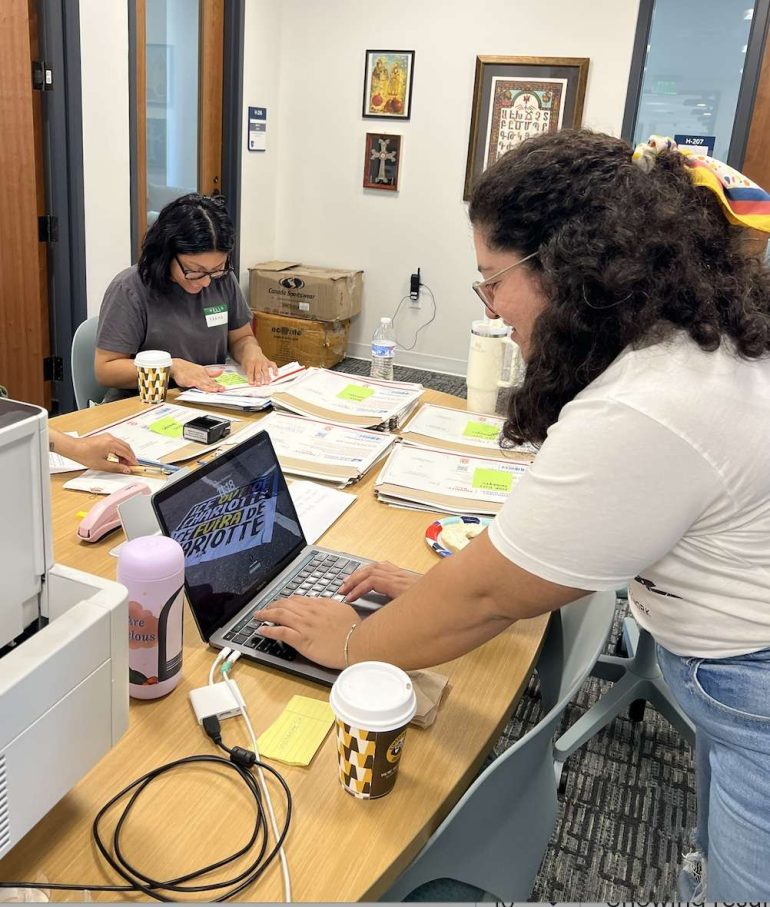
Arteaga asked that people who witness ICE activity in the Charlotte area contact CMN, which strives to better understand and document patterns of behavior from the agency, including the people they target and the areas they frequent for enforcement activity.
CMN also holds Know Your Rights clinics to inform the public about what to do in the event of detainment, role playing ICE encounters to practice responses and providing resources to the immigrant community.
The organization’s Immigrant Solidarity Fund helps provide financial support to families with loved ones in immigration detention. The fund allows CMN to be the only organization in the Carolinas to provide free legal representation for people facing legal proceedings and/or being held in immigration detention facilities.
BEST COMMUNITY ORGANIZER: Isra Allison
Isra Allison grew up in the Kensington neighborhood of Philadelphia, where she witnessed immeasurable love and community despite the poverty. Outsiders called the area “the Badlands,” which gave Allison an early taste for how image and perception can differ between folks who live in a space and folks who judge from afar.
She moved to Charlotte to take a job in corporate training, but upon returning to Kensington she found it in the worst shape she had ever seen it. It was almost as if the expectations of the outside world had become a self-fulfilling prophecy.
As an organizer with Down Home NC, Allison now recruits and coaches regular working people to run for political office, mostly residents of rural areas who know what it’s like to see potential in their community when no one else does.
“If we are successful, we will be able to see the fruits of our labor,” Allison wrote in September. “When we knock doors, we’ll ask who represents them and they will say it’s their neighbor who represents their interests — someone we recruited … They will see that community voices and representation matters.”
BEST COMMUNITY ORGANIZATION: West Side Community Land Trust
Launched in 2016, West Side Community Land Trust is a nonprofit organization created by neighbors to organize and empower the west Charlotte community in the 28208, 28214, 28216, and 28217 ZIP codes. Its goal to preserve and develop their neighborhoods to the benefit of low-income residents and the neighborhoods as a whole in the face of rapid reinvestment and subsequent displacement of long-time residents.
Starting with smaller projects like the 2020 efforts to move two shotgun houses that had been preserved since the razing of Brooklyn to the Lakeview community to serve as homes once again, the org has evolved to take on larger projects like developing The Legacy at Carr Heights, which provides 120 apartment homes for seniors ages 55 and over on West Boulevard. In total, under the leadership of executive director Charis Blackmon, West Side CLT has produced 161 permanently affordable, high-quality housing units.
Listen: Nooze Hounds: Charis Blackmon, West Side Community Land Trust
“Charis is doing fantastic work to address gap needs in terms of housing in Charlotte,” said Federico Rios, senior vice president of the Robinson Center for Civic Leadership, in 2024 when Blackmon was honored with the Nish Jamgotch Jr. Humanitarian Award. “She combines expertise with a humility that allows her to connect with developers, homeowners, political and business leaders — all crucial to expanding affordable housing.”

BEST ADVOCATE: La Becky Roe
It’s said that when there isn’t a seat at the table, it’s up to you to make one. That’s what local autism advocate La Becky Roe did when she founded Let’s Talk About It, an organization that provides advocacy, education and support to folks living with autism spectrum disorder (ASD), individual developmental disabilities, and other mental health issues.
Roe also penned Spectrum of a Journey, her 2023 book that chronicles her experience navigating autism after her son was diagnosed with ASD in 1998. At that time, there was little information available for parents like Roe.
“I had to find my own way,” she says, recalling how at the time she was referred to a neurologist who told her that her son wouldn’t ever learn to recognize that she had even left the room, and that “all he’s going to be, he is right now.” He was 3 years old at the time.
Through The Autism Center, the organization offers support in creating individualized education programs, known as IEPs, for kids on the spectrum; behavioral interventions, sensory management support, and corporate training to promote the inclusion of people with ASD. Let’s Talk About It also facilitates workshops and support groups, striving to build a sense of community among caregivers and their loved ones with ASD.
This year, Roe addressed Charlotte City Council during a public forum to ask that city officials include people with and impacted by ASD in more programming, stating that the city’s resources have not kept up with the rising rates in diagnoses over the years.
BEST VIOLENCE INTERVENTION: Alternatives to Violence – Nations Ford
When Robyn Lake Hamilton, president and CEO of Urban League of Central Carolinas (ULCC), spoke at Charlotte City Council’s public forum on Jan. 13, minutes after a presentation from CMPD Chief Johnny Jennings saw council members frustrated with recent crime stats, she was surprised nobody had asked about her work.
It was city council, after all, that funded and assigned ULCC to spearhead the latest Alternatives to Violence program (ATV) along the Nations Ford Road corridor in June 2023. In the time since, Hamilton said her team is making progress in its efforts to detect and interrupt conflicts, identify and manage high-risk individuals, and change group norms around violence.
“While it’s true that Charlotte, like many other cities, has experienced an increase in homicides, we are seeing encouraging signs of progress within the Alternatives to Violence Program,” Hamilton told council.
The neighborhood has been plagued with gun violence in recent years, contributing to a bad reputation among residents and city leaders. In 2024, Queen City Nerve tracked 12 murders in the area bordered by East Arrowood Road, Nations Ford Road, Archdale Drive and South Boulevard, including three homicides in December alone. As of Oct. 25, 2025, we had tracked just two in that same area this year.
For Hamilton, a lack of resources presents an opportunity for the program to work directly with neighborhood residents and get them what they need. The historic disinvestment in Nations Ford drives her work at ATV.
“[That] is why we want to start doing a lot more,” Hamilton said, “so the violence doesn’t start as opposed to having to respond in a reactive way.”
MOST PROMISING POLITICIAN: JD Mazuera Arias
Juan Diego “JD” Mazuera Arias, the first Latino elected to the Charlotte City Council, may have gotten an unintentional lift when his opponent for District 5’s seat, Marjorie Molina, was forced to address statements that her employer, K2M Design, has played a role in US Immigration and Customs Enforcement (ICE) detention facility construction.
Molina’s reply that she wasn’t directly involved in those ICE detention projects may have helped Mazuera Arias eke out a 34-vote win, but he already boasted attributes that can benefit his East Charlotte district, home to the city’s highest concentration of Hispanic residents — 23% in 2019.
A queer Colombian immigrant, former DACA recipient and first-generation college graduate, Mazuera Arias’ perspective is informed by his experience as chair of the Hispanic Democratic Caucus of Mecklenburg County and former legislative fellow for US Rep. Alexandria Ocasio-Cortez, where he claimed to have co-led AOC’s immigration policy portfolio.
Molina was far from a bad representative for the east side, but folks are now hoping Mazuera Arias can bring a vital voice to bear on city policy, particularly as Charlotte navigates a climate where Hispanic people, both documented and undocumented, are under attack by a criminal federal regime.
BEST OVERSEAS PROJECT: AfroCare CLT, Akyremade JHS School
Charlotte-based volunteers and organizers were on hand in Kumasi, Ghana, on July 1 to watch their years-long effort come to fruition with the grand opening of the Akyremade JHS School, a two-story middle school located in one of Charlotte’s Sister Cities.
Spearheaded by Justin Jones-Fosu, founder and chair of the Work Meaningful Foundation (WMF), the project has been carried out over the last three years by AfroCareCLT, a coalition of 10 Charlotte-based organizations with a passion for and/or roots in Ghana and specifically Kumasi.
Jones-Fosu conceived of the project after visiting his father’s home village in Ghana in 2019. He soon thereafter donated 90 dual desks and the resources needed for clean water access to the existing Akyremade Primary and JHS School just outside of Kumasi through his inclusionary workplace learning and development company Work. Meaningful.

Inspired by the direct impact of those donations, Jones-Fosu became motivated to do more, but he knew he needed help. That led him to co-found AfroCareCLT, which along with Work. Meaningful. and WMF comprises Charlotte-based groups including Charlotte Sister Cities, Eh’Vivi, Asanteman Association of Charlotte, South Academy of International Languages, Charlotte International Cabinet, Little Listeners, My Forking Life, and Springclean.
“Seeing the school completed today is a humbling reminder that the tortoise really does win the race — not because it’s the fastest but because it’s steady, faithful and committed to the finish,” Jones-Fosu told Queen City Nerve from Ghana the day after the school’s opening.
“This journey has taught me that meaningful impact isn’t about speed — it’s about showing up, again and again, especially when no one is watching. To see this dream realized, just outside of Charlotte’s Sister City, is proof that purpose, when pursued with patience, can transform lives — including our own.”
BEST CULTURAL PRESERVATION: Jason Tapp, Spooky Charlotte
As founder of Spooky Charlotte, folklorist Jason Tapp has been local media’s favorite go-to guy for creepy Halloween season stories about ghosts, haunted houses and paranormal activity. Tapp’s interest in preserving the region’s strange history, and in the restoration of historic headstones, show there’s much more to him than recounting macabre campfire-style tales.
In 2020, Tapp helped restore an abandoned family cemetery along Remount Road. In 2023, he was awarded Best in the Nest’s Best Amateur Historian and, in 2025, Tapp’s successful two-year effort to repair and preserve the Elmwood Cemetery headstone of Charlie Houck, a carnival animal trainer who was clawed to death by a lion in 1930, was honored at The Charlotte Museum of History’s annual Charlotte Gem Preservation Awards.
Recently appointed to the Historic Elmwood Pinewood Cemetery board of directors, which also oversees the Old Settlers’ Cemetery in Uptown, Tapp is currently engaged in restoring several damaged Settlers’ headstones, some of which have been in storage for decades.
BEST NONPROFIT: Metrolina Association for the Blind
Metrolina Association for the Blind (MAB), which marked its 91st birthday in June, has helped countless visually impaired clients live more independently over generations of service.
Facing a $29-million budget gap going into the Fiscal Year 2026 budget-making process, Mecklenburg County terminated its Community Service Grant program, which had provided more than $2 million to organizations like MAB that provide health care services to vulnerable populations.
MAB was awarded $340,000 in each of the last two fiscal years and this year had applied for more than double that as the need for its services continues to grow in the Charlotte area.
Leadership at the organization had hoped they would receive the original amount of $340K even if denied the extra. They had met all the necessary metrics laid out by the county, so learning that the entire program would be cut this year was a shock to them.
“When you apply for a grant, there’s no guarantees with anyone that you’re going to receive the funds — none,” said Tracy Libertino, CEO and president at MAB. “So we’re always mindful of the fact that we’re going to have to adapt if that’s the case … The challenge is, in Charlotte, the need here is growing exponentially but the funds aren’t.”

MOST RESILIENT NONPROFIT: Carolina Refugee Resettlement Agency
For nearly 30 years the Carolina Refugee Resettlement Agency (CRRA), in partnership with its national agency the Hebrew Immigrant Aid Society (HIAS) and the Office of the UN High Commissioner for Refugees (UNHCR), has used federal grants to resettle newly arrived refugees and provide them with basic services outlined by the US Department of State within a 90-day period of their arrival in the country.
Since a Jan. 24 State Department order instructed all refugee resettlement agencies across the country to stop providing services to their clients and a memo ordering a temporary pause of all federal grants three days later, the agency has been in a sort of limbo. An injunction was later filed against the memo.
Despite everything going against it, the organization has still provided refugees with employment, social and legal services while continuing to pay staff. The State Department’s order, however, does mean that CRRA cannot accept new arrivals, Marsha Hirsch, CRRA executive director, said.
“I guess I don’t quite understand why this program is considered, or has been deemed, to be somehow dangerous to the American people,” she said.
For the moment, CRRA still has resources available through the Office of Refugee Resettlement. Hirsch’s team works to ensure continued access to employment services and medical case management for those clients who need it.
BEST COMEBACK: North Mecklenburg Animal Rescue
Beth Phillips opened her no-kill nonprofit rescue called North Mecklenburg Animal Rescue (NMAR) in 1999. Since then, the rescue has facilitated 4,600 adoptions and saved well over 5,000 animals.
The work itself has come naturally to Phillips, who’s been an animal lover since she was a small child, but now her organization faces one of the toughest struggles it’s come across over more than 25 years of helping animals.

A recent fundraising gala exceeded expectations in helping to start on that long road back to financial sustainability, but with no building to operate out of currently, it could take the organization years to get back to where it once was.
Meanwhile, regardless of the troubles they’re facing, the organization continues to save the lives of animals in the area every day.
“The need flies at us constantly,” Phillips said. “Requests for help come from everywhere all the time. Animal shelters, random people that found a dog or cat, people wanting to rehome their animals, often for the most minor of reasons. The need is never-ending.”
BEST SEND-BACK: Sustain Charlotte
Earlier this year, Sustain Charlotte, a nonprofit focused on advancing environmental sustainability, returned a $10,000 sponsorship from Duke Energy after learning the utility had urged the Trump administration to ease federal environmental regulations. The sponsorship had been tied to Sustain Charlotte’s April 28 awards event, where Duke Energy was slated to appear as a top sponsor.
In a public statement, the organization said it could not in good conscience accept support from a company seeking to weaken climate protections related to coal ash, greenhouse gas emissions and other pollutants.
Returning the funds, leaders said, was a reflection of their commitment to integrity and long-term environmental progress, even at a financial cost.
The decision reignited conversations across Charlotte about corporate accountability and the influence of major utilities. It also underscored the difficult balance nonprofits face in aligning their mission-driven values with the realities of financial feasibility.
BEST PROTECTORS: Inner Circle Charlotte
This summer saw women expressing safety concerns along the Charlotte Rail Trail in South End after a series of disturbing high-profile incidents that preceded the murder of Iryna Zarutska on a light rail near the East/West Boulevard station.
Several Charlotte women were subject to sexual harassment and assault along the trial, including a man exposing himself and masturbating in front of one woman and another man exposing himself and then inappropriately touching a 15-year-old girl.
Those incidents highlighted persistent vulnerabilities, particularly during early mornings, late evenings or in secluded areas. After those reports, women’s group Inner Circle Charlotte partnered with FTF Charlotte and Work for Your Beer to host a self-defense class at Monday Night Brewing. The event offered women practical skills including how to react, deescalate and defend themselves in threatening situations.
Mental health resources were also available at the event, specifically those aimed at supporting survivors of assault through trauma-informed care. Inner Circle Charlotte member Nicole Smith said members of the group generally feel safe in the city and their goal is to help ensure it stays that way.
“The thing that is in our control is how we use our voice and how we defend ourselves,” Smith said. “If we want to protect our city, we have to first protect ourselves.”
BEST ENVIRONMENTAL CAMPAIGN: Solarize Charlotte-Mecklenburg
A community-based clean energy campaign called Solarize Charlotte-Mecklenburg launched in June with a goal to make solar energy and battery power more affordable and accessible to Mecklenburg County residents.
The campaign is one of dozens following the Solar CrowdSource model, a platform that facilitates community-based group-purchase programs for solar energy, battery storage and other clean energy technologies. The group purchasing approach means that the more participants who purchase solar energy systems or batteries, the greater the savings for all purchasers. Since the campaign began, 282 participants have signed up in the Charlotte-Mecklenburg area.
Solarize also works to build community engagement and solar-positive policies through awareness, education and outreach activities including community meetings, workshops, open-house gatherings and information dissemination.
The no-obligation signup deadline for Solarize Charlotte-Mecklenburg is Oct. 31, so act quickly if you pick this paper up before then!
BEST WATCH PARTY: HopFly Brewing
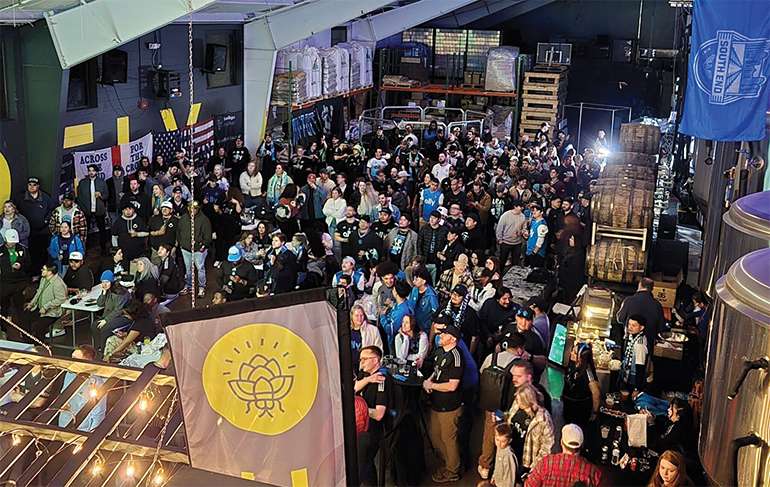
HopFly Brewing Co. has become known for its large watch parties celebrating Charlotte FC, transforming its Gold District taproom into one of the city’s liveliest soccer fan destinations. The two-story warehouse space features a massive 92-foot TV wall, creating an immersive experience that rivals the energy of the stadium itself.
During match days, the brewery comes alive with hundreds of fans, live DJs, light shows, fog machines and local vendors offering merch, face painting and photo opportunities. The events blend brewery culture, community and sports fandom into a single experience that appeals to both die-hard supporters and casual visitors alike.
HopFly’s watch parties reflect Charlotte’s growing enthusiasm for soccer and its Major League Soccer club, helping cultivate a stronger fan community. The brewery’s ability to combine craft beer, entertainment and team spirit has cemented it as a standout venue in the city’s social and sports scene.
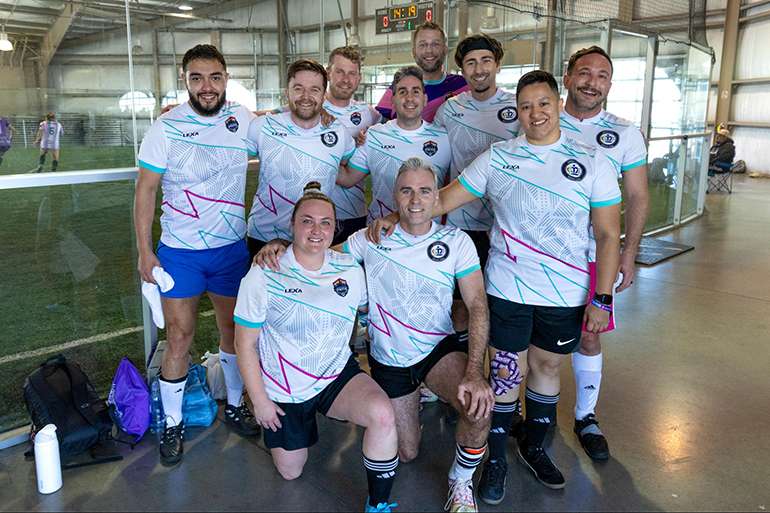
BEST INDIE INTRAMURAL: Charlotte Pride FC
Charlotte Pride Football Club is the city’s only adult LGBTQ+ recreational soccer league. Co-founder Nick Stark started the club when he couldn’t find a pickup soccer group that wasn’t straight and overly aggressive.
For years, interest trickled in slowly, until 2023, when it exploded. A Facebook Messenger group called Kween City Soccer began holding regular games. Then came an organized league. Then, a board. Then, sponsors. And eventually a nonprofit and a growing distribution list.
What makes Charlotte Pride FC unique isn’t just the inclusive culture or the grassroots growth; it’s the mix of experience levels, identities and personalities that come together every week.
Some players are seasoned athletes, others haven’t touched a ball since childhood. But everyone belongs.
“Just try it and make the choice that’s right for you,” Stark urged anyone who’s on the fence. “We’re here. We love soccer. And we’re a safe place in a world that seems to be losing them.”
BEST DEVELOPMENT/OPENING: UNC Charlotte Esports and Gaming Arena
UNC Charlotte officially opened its state-of-the-art Esports and Gaming Arena in the university’s Popp Martin Student Union with a grand opening celebration in September to mark the completed renovation of the space.
The arena, which first opened to UNC Charlotte students and staff on the mezzanine level of the student union in April, was funded by a $1.5-million allocation in the North Carolina General Assembly’s Fiscal Year 2023 budget.
It is outfitted with 31 competition-ready PCs, an iRacing Rig, a designated lounge space and a console docking station.
In 2024, the university launched a new varsity esports program called Charlotte Esports.
Under its first full-time program director, Ian Escalante, approximately 30 students in five different leagues compete nationally against other schools.
BEST JAIL PROGRAM: Rhythm & Reflection
The Mecklenburg County Sheriff’s Office (MCSO) in May celebrated the opening of Studio W5HY?, a state-of-the-art soundproof music recording studio in the Mecklenburg County Detention Center in Uptown, part of a new MCSO program titled Rhythm & Reflection: A Journey to Reformation.
Funded in part by the Tim Bergling Foundation and established in honor of the late Swedish artist Avicii (Tim Bergling), the recording studio space aims to provide incarcerated folks with tools for healing, self-expression and lasting change, according to a release announcing the studio’s opening.

“Studio W5HY? will serve as a powerful outlet for musical creation, poetry and the spoken word, giving voice to stories that often go unheard,” stated Sheriff Garry McFadden in the release. “I am excited to see how this new music program changes the lives of our residents.”
MCSO quickly took flak for the project, however, after news coverage of Tuesday’s opening showed an alleged murder suspect utilizing the recording studio.
The segment understandably angered the victim’s family, but the fact remains that any program for incarcerated folks that is potentially reformative serves the community better than one that is simply punitive.
HAPPIEST ENDING: Ransom Hunter Park Opening
For Eric Wilson, the grand opening of Ransom Hunter Park in Mount Holly in September was more than a ribbon cutting; it marked the completion of an effort that he undertook in 2008 to honor his great-grandfather, who was born into slavery only to become one of the area’s most prominent landowners following the Civil War.
Wilson got the chance to watch his own grandchildren play on the playground, designed as a nod to Ransom Hunter’s home, barn and blacksmith shop, all of which once stood on the West Glendale Avenue property.
The moment marked six generations of Hunters and Wilsons who have lived, worked and played on the site.
Eric’s connection to Ransom Hunter was kept alive through Mina Hunter Wilson, Ransom’s daughter and Eric’s grandmother, who was born on the property and continued to live there during Eric’s childhood in the 1960s and ’70s, spending countless hours in the house with Eric sharing stories about Ransom.
“Just to have [my grandchildren] there, where I grew up and five generations back they had their beginnings, and it’s now being preserved, it just means a great deal to me,” Wilson told Queen City Nerve in the lead-up to the park’s opening. “My grandchildren will now be able to play in the same spot that I played in, that my daddy played in, that my grandmother played in … It’s just crazy.”