
Carolina Refugee Resettlement Agency in Limbo Amid Trump Orders
Charlotte-based organization is still serving current clients but forced to pause intake


For nearly 30 years the Carolina Refugee Resettlement Agency (CRRA), in partnership with its national agency the Hebrew Immigrant Aid Society (HIAS) and the Office of the UN High Commissioner for Refugees (UNHCR), has used federal grants to resettle newly arrived refugees and provide them with basic services outlined by the US Department of State within a 90-day period of their arrival in the country.
Now after three decades, the future of the agency that has helped welcome more than 10,000 people fleeing violence, war and persecution into the Charlotte area is itself at risk.
On Jan. 24, four days after President Donald Trump’s inauguration, the State Department ordered all refugee resettlement agencies across the country to stop providing services to their clients. Three days later, the Office of Management and Budgets (OMB) issued memorandum M-25-13, ordering a temporary pause of all federal grants, loans and other financial assistance by Jan. 28.
“If we’re considering that [the Bureau of Population, Refugees and Migration] is not allowing for services to be provided to refugees in their 90 days and then [federal] funding is… to be eliminated then, yes, you have, in effect, closed our office on the spot,” said Marsha Hirsch, CRRA executive director, in a conversation with Queen City Nerve.
Thanks to an injunction that was filed hours after memo M-25-13 was issued, CRRA can resume its services for now, providing refugees with employment, social and legal services while continuing to pay staff.
The State Department’s order, however, does mean that CRRA cannot accept new arrivals, Hirsch said, leaving the agency in a sort of limbo until for the foreseeable future.
How refugee resettlement works in the Charlotte area
According to the UNHCR, a refugee is someone who has fled their homeland due to a violence, war, or a well-founded fear of persecution for reasons of race, religion, nationality, political opinion or membership in a particular social group.
It’s estimated that, since the mid 1990s, more than 17,000 refugees have settled in the greater Charlotte area.
When someone has fled from their country to another, they register with the United Nations to determine whether or not they can stay in the new country. If they cannot stay in the second country but cannot return to their home, their cases are forwarded to the State Department for consideration to arrive in the US with their unique refugee status.
These refugees must complete a series of medical and security background checks along with in-person interviews before being granted legal status in America.
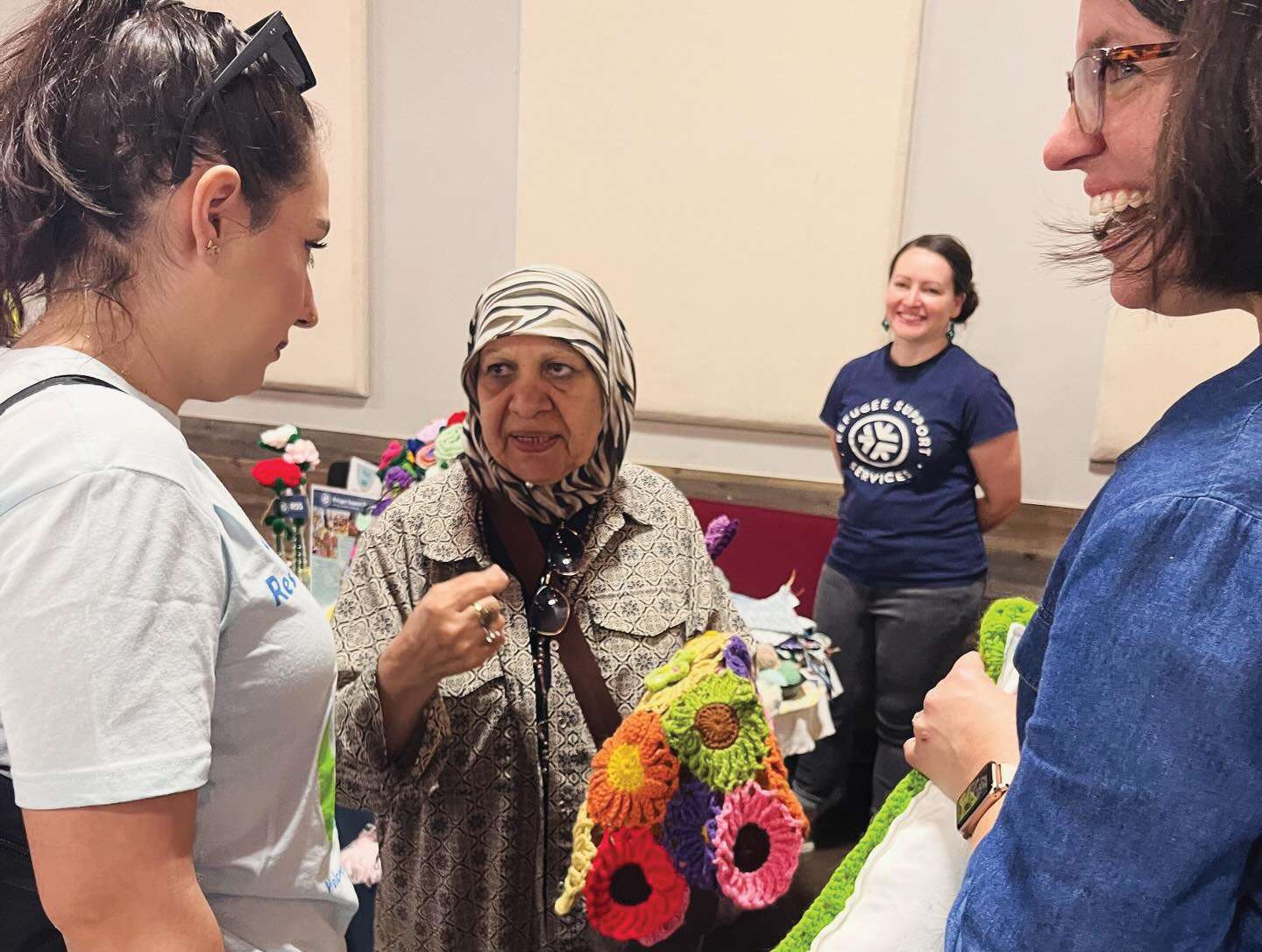
If the refugee is approved, they will be assigned to a local resettlement office like CRRA, which operates on a 90-day period. There is a list of core services they are required to provide in that period that includes housing resettlement, food security, education assistance and employment opportunities.
CRRA follows what the State Department calls the “cooperative agreement” that requires CRRA to perform the list of services within the given timeframe.
Hirsch emphasized that refugees arrive in the United States legally and are authorized to begin work immediately.
On the one-year anniversary of their arrival, refugees are eligible to apply for lawful permanent residency — known as a green card — and on their five-year anniversary they’re eligible to apply for naturalization and become a US citizen.
All of the circumstances around their arrival is codified in the Refugee Act of 1980, a law establishing the process of accepting refugees into the US and resettling them. All of the work the CRRA does is within the context of those laws, Hirsch said.
After the 90-day period, resettlement funding shifts toward the federal level. The Office of Refugee Resettlement (ORR), operating under the the Department of Health and Human Services, provides resettlement offices with varying programs outside of the State Department’s cooperative agreement services.
ORR funds employment services, medical case management, economic integration and legal services for up to five years to CRRA clients.
A so-called “Muslim Ban” put in place during Trump’s first term in an attempt to halt travel from places the administration found to be undesirable, mostly Muslim–majority countries, though Hirsch points out that the nickname was not completely accurate as the order also barred all refugees from entering the country regardless of religion or country of origin.
Due to subsequent lawsuits against the executive order, CRRA and ORR programs were intermittently shut down and re-opened throughout the first Trump administration. During his last year in office, Trump did reduce the annual ceiling to a record low of 15,000 refugees allowed into the country per year.
The country’s refugee resettlement program was severely diminished during Trump’s first term but not abolished, Hirsch said. In fact, it saw expansive growth under President Joe Biden.
How Trump’s executive orders affect refugees
Within the first day of Trump’s second term, he signed a new executive order again pausing all refugee arrivals into the US. Any cases involving people preparing for arrival in February were deleted out of the system, effectively canceling their planned travel to the US. That ban is still in effect today.
Hirsch said she had anticipated this sort of action given what occurred during Trump’s first term. What she didn’t foresee was the extraordinary step the State Department took on Jan. 24, which ordered all refugee resettlement agencies across the country with active clients inside their 90-day period to halt services.
“I think there’s been a few steps made in the last couple of weeks that are perhaps beyond what was the expectation of just having a halt to refugee arrivals, but in fact, actually removing the funding for any support or services for them,” Hirsch said of the unexpected work stoppage.

“Clients that arrived in December, we were told we shouldn’t provide any services to them anymore, and if we did provide services … the State Department would not be reimbursing agencies for their work.”
For the moment, CRRA still has resources available through the ORR. Hirsch said her team is working to ensure continued access to employment services and medical case management for those clients who need it.
Those services were threatened on Jan. 27 when the OMB issued its federal funding freeze.
“Financial assistance should be dedicated to advancing Administration priorities, focusing taxpayer dollars to advance a stronger and safer America, eliminating the financial burden of inflation for citizens, unleashing American energy and manufacturing, ending ‘wokeness’ and the weaponization of government, promoting efficiency in government, and Making America Healthy Again,” the memo read.
Biden-appointed US District Judge Loren L. AliKhan temporarily blocked the order on Jan. 28 in response to an injunction filed by the National Council of Nonprofits. After widespread backlash and confusion over which programs the pause affected, The White House rescinded the memo the following day.
Despite the temporary stay, White House Press Secretary Karoline Leavitt has indicated that Trump still plans to carry out the order.
“This is NOT a rescission of the federal funding freeze,” she wrote on Twitter. “It is simply a rescission of the OMB memo. Why? To end any confusion created by the court’s injunction. The President’s EO’s on federal funding remain in full force and effect, and will be rigorously implemented.”
Read more: Advocacy Organizations Brace for Second Trump Administration
Should the pause be reinstated, it would not only impact the refugees seeking asylum in the US but also the staff of any resettlement agency tasked with helping them.
Destabilizing people’s employment when they are providing a government service that is codified into law doesn’t make sense to Hirsch. The fact that there is any question around the legitimacy of the program is also something she can’t comprehend.
The refugees CRRA serves have been thoroughly vetted by the US government, including the State Department and Department of Homeland Security. The program has been functioning since 1980 and is often monitored and audited to ensure it is providing services appropriately, Hirsch said.
“I guess I don’t quite understand why this program is considered, or has been deemed, to be somehow dangerous to the American people,” she said.
How to help refugees when the government won’t
While the federal funding pause is still on the table, there are steps everyday people can take on a local level to ensure their neighbors are taken care of, Hirsch said.
With the current limitations around providing services, CRRA is looking for volunteers to fill the gaps. You can sign up at the website to volunteer in assisting CRRA in different ways — driving clients to appointments, sorting and counting donations, helping with administrative office duties, providing language interpretation for clients as needed, and more.
Supporters can also make monetary donations to ensure agency employees can continue working. CRRA also accepts grocery store gift cards to make sure clients’ basic food needs are met.
The funding pause outcome is left up to federal courts, but individuals can make their congressional representatives aware of the effects the freeze would have on people’s lives locally, Hirsch said.
The Carolina Refugee Resettlement Agency is located at 5009 Monroe Road, Suite 100, and can be reached at (704) 535-8803. The agency is open Monday through Friday, 9 a.m.-5 p.m.




The recent executive orders issued by President Trump have significantly impacted refugee resettlement agencies across the United States, including the Carolina Refugee Resettlement Agency (CRRA) in Charlotte. These orders have introduced funding uncertainties and operational challenges, leaving agencies like CRRA in a state of limbo.
One of the key executive orders, titled “Realigning the United States Refugee Admissions Program,” has effectively suspended the entry of refugees into the country. This suspension has led to a halt in new arrivals, directly affecting agencies that rely on federal funding to provide essential services such as housing, employment assistance, and cultural orientation for refugees.
The abrupt cessation of funding has forced many organizations to make difficult decisions. For instance, RAICES, Texas’ largest immigrant legal aid group, announced the layoff of 63 employees due to the suspension of the refugee resettlement program and the federal funding freeze. Similarly, the U.S. Conference of Catholic Bishops has filed a lawsuit against the administration for halting funding for their refugee resettlement program, which has led to layoffs and could force more local Catholic Charities offices to make cuts.
In Charlotte, the impact is palpable. CRRA, which has been instrumental in assisting refugees to integrate into the community, now faces an uncertain future. The suspension of the refugee admissions program not only disrupts the lives of those seeking safety and a new start but also undermines the infrastructure of support that communities like Charlotte have built over the years.
The broader implications of these executive orders extend beyond immediate operational challenges. They raise questions about the United States’ commitment to humanitarian principles and its role in providing refuge to those fleeing persecution. As agencies grapple with these changes, the resilience and advocacy of local communities become ever more crucial in supporting displaced individuals during these turbulent times.