Exploring Both Sides of the Transit Tax Debate
One-cent sales tax increase will be on the ballot Nov. 4

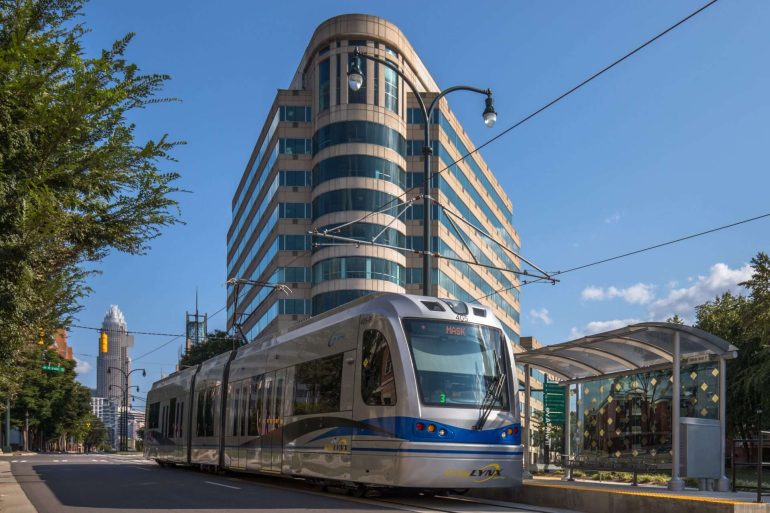
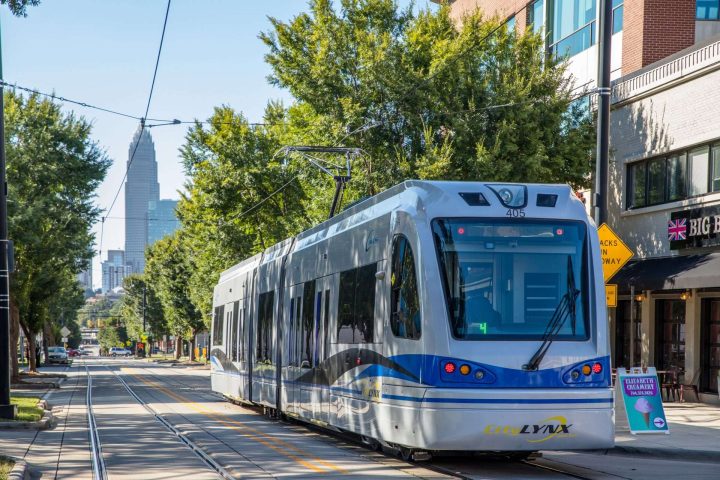
It was 1998 when Mecklenburg County residents voted in favor of the 2025 Integrated Transit/Land Use Plan, an ambitious strategy aimed at expanding rapid transit throughout the area. The plan instated a county-wide half-cent sales tax that went toward the formation of the Charlotte Area Transit System (CATS), paving the way for construction of the LYNX Blue Line and Gold Line while expanding bus networks.
When Robert Dawkins first heard about the plan back then, he was thrilled. He was eager to see Charlotte grow into a great, big city rather than let the train of opportunity pass by.
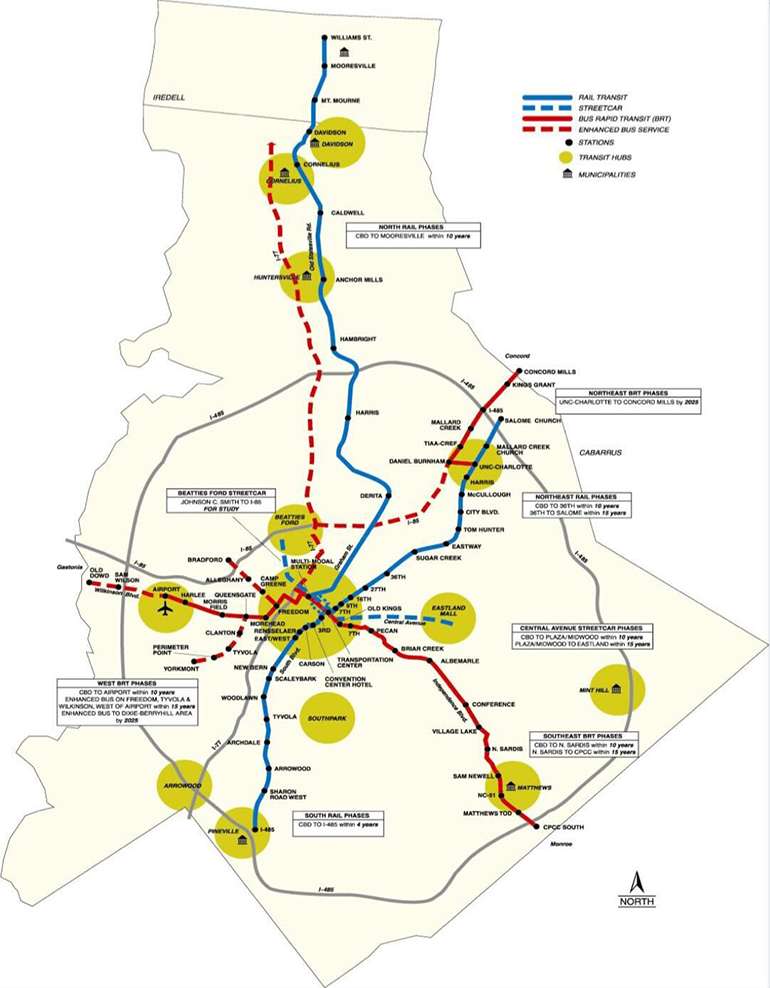
The recommended system plan proposed 28 miles of bus rapid transit (BRT) guideway, 21 miles of light rail transit (LRT), 11 miles of streetcars and 29 miles of commuter rail infrastructure.
In 2007, the Blue Line officially started running its 9.6 miles from Uptown to I-485, later extending 9.3 miles and connecting UNC Charlotte to Uptown. The Gold Line became North Carolina’s first streetcar system with its first phase in 2015 before completing Phase Two in 2021 to encompass a 4-mile long streetcar line with 17 stops.
While the 2025 transit plan was reworked and extended for five years in 2006, those involved with the plan knew before 2013 that there was not enough revenue from the half-cent sales tax to fund it, according to Shannon Binns, founder and executive director of nonprofit organization Sustain Charlotte.
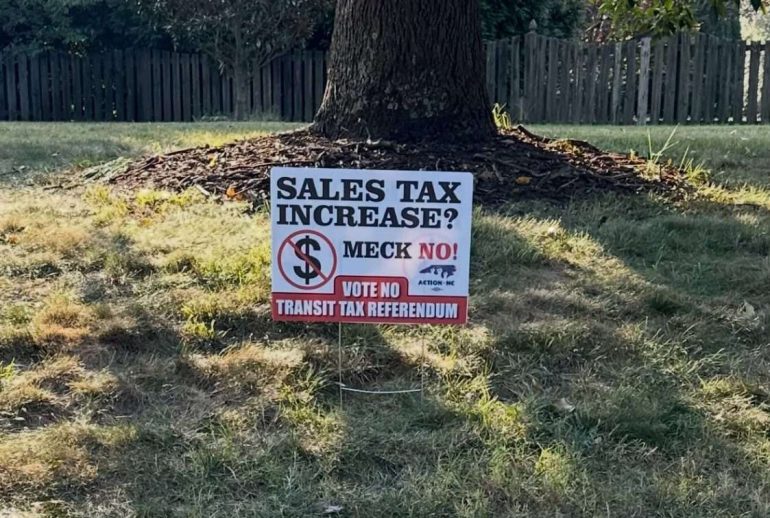
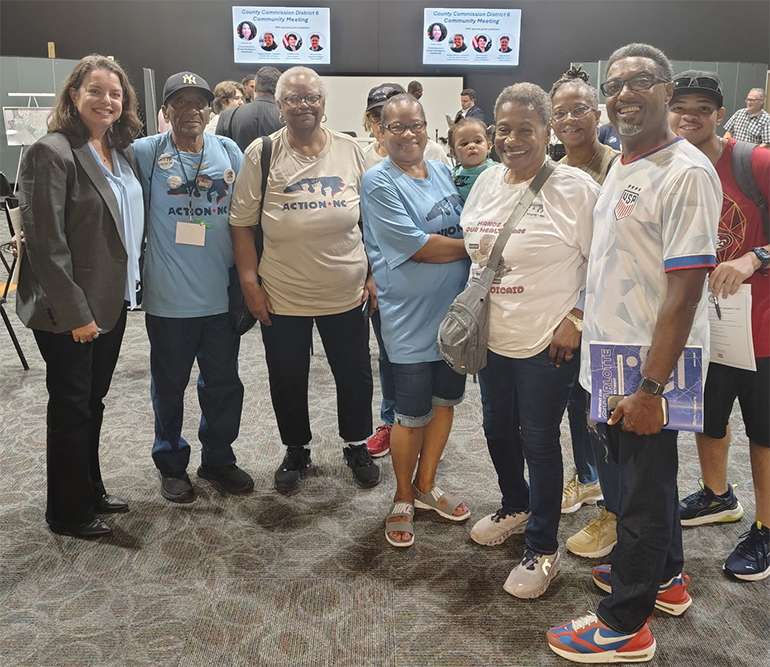
As the years went on, Dawkins, now the political director for Action NC, a local nonprofit working to reduce poverty, underdevelopment and social and economic inequality, watched as the promises made to extend the Red Line commuter rail to Huntersville fell through, then the center transit lane down Independence Boulevard was never completed.
Nearly three decades after the 1998 transit plan referendum, a new transportation tax will be on your November ballot. The 1% transportation sales tax would raise the sales tax from 7.25% to 8.25% to fund transportation infrastructure.
While supporters of the tax promise faster commutes, increased job access and better roads, opponents like Dawkins urge voters to think about Charlotte’s history in following through with those promises.
What is the transportation tax?
The NC Senate passed the Projects for Advancing Vehicle-Infrastructure Enhancements — now the Public Access to Valuable Equity — (PAVE) Act on June 26 and Gov. Josh Stein signed it into law on July 1, leaving the final decision to Mecklenburg County voters in November.
The PAVE Act, approved by the General Assembly and sponsored by Republican state Rep. Tricia Cotham, gives Mecklenburg County the authority to apply the 1% sales tax increase and use the revenue to fund transportation projects such as roads, rails and buses.
The generated funds from the tax will be split 60/40, with 60% of revenue going toward the foundation of the Metropolitan Public Transportation Authority (MPTA) and the infrastructure it will oversee and 40% going toward road development across different municipalities.
The MPTA would use the net proceeds from the tax for “financing, acquiring, constructing, operating, and maintaining any combination of real and personal property for a public transportation system,” the PAVE Act said.
No more than 40% of the MPTA funding can be spent on rail with the remaining funds going to bus service.
The CATS Metropolitan Transit Commission adopted a new transit plan, called the 2055 Transit System Plan, in May that aligns with the funding the sales tax increase would generate. The plan includes Better Busing practices like 15-minute arrival frequencies and synchronized traffic lights to reduce congestion.
With the funding appropriated to road development, the city doesn’t just want to build more roads, Binns said. The money could go toward narrowing lanes to dissuade drivers from speeding, retrofitting streets with safe bike lanes separated from traffic or adding sidewalks.
While the CATS’ new shared-ride service, CATS Micro, was named as a priority, the Silver Line East, a light rail that would run from center city through the town of Matthews and into Central Piedmont Community College’s Levine campus, was removed from the original bill, causing consternation among town leadership there as well as community members in east Charlotte.
The bill also specifically references the construction of the Red Line, which will use the existing Norfolk Southern rail line to create a 25-mile commuter rail line connecting Uptown Charlotte to the downtown areas of Huntersville, Cornelius and Davidson with potential to extend into Mooresville.
The construction of the Red Line is a long-awaited promise that city officials continued to postpone, but their hands were tied, Binns insisted.
In 2021, a sales tax increase was proposed by the Charlotte MOVES Task Force, created by Mayor Vi Lyles to identify the city’s transportation and mobility needs. The task force concluded that in order to fund Charlotte’s transit plan, a one-cent sales tax increase was necessary.
The sales tax increase was stalled for the years to follow because north Mecklenburg towns like Huntersville, Cornelius and Davidson would not support it until there was a guarantee that the Red Line they had voted for in 1998 was going to be built.
Read More: Senate Bill 145 Introduction the First Step in Local Transit Plan
Because sales taxes in North Carolina can only be raised at the county level and not by individual cities, the city of Charlotte needed the other municipalities in Mecklenburg to be in support.
The issue then was that the city did not own the tracks that the Red Line was to be built on.
In 2006, CATS and the owner of the Norfolk Southern rail line, Norfolk Southern Railway, came to an agreement that Norfolk Southern would allow CATS to use its railway for future commuter rail projects including the Red Line.
Seven years later, Norfolk Southern retracted the agreement. Without ownership of the railway, Charlotte was forced to put the project on hold until Norfolk Southern suddenly agreed to sell around 22 miles of rail line to the city in 2024.
With the north Mecklenburg towns on board, the city had to convince the Republican-led state legislature to authorize the inclusion of a referendum on November’s ballot.
Given that the General Assembly has a “roads-first philosophy” according to Dawkins, the initial transportation plan allotting transit 80% of revenue from the sales tax to go toward completing the 2030 transit plan and 20% going towards bus, bike and pedestrian improvements.
The GOP refused to authorize the plan unless it included more money for road infrastructure. Thus, the city compromised with the 60/40 plan.
While the benefits of the plan are obvious, Dawkins warns about the cost attached.
“You also have to tell people to not sell them all on the great stuff without telling them the bad pieces,” he said, “and to make sure that they’re prepared and you don’t do anything that will have externalities that will run these unintended consequences [and] come back and hurt people.”
Impacts on the community
Sales taxes were chosen as the way to fund the transit plan because that’s a broad-based tax, meaning the cost is spread among everyone who buys consumer goods, Binns said.
”It generates far more revenue than really any other source, because it’s such a broad tax,” he said. “The task force knew that the sales tax was almost the only way we could generate the level of funding that we really need in our community because we have underinvested in transit for so long, there’s a lot of mobility needs and there’s a high price tag to go with that.”
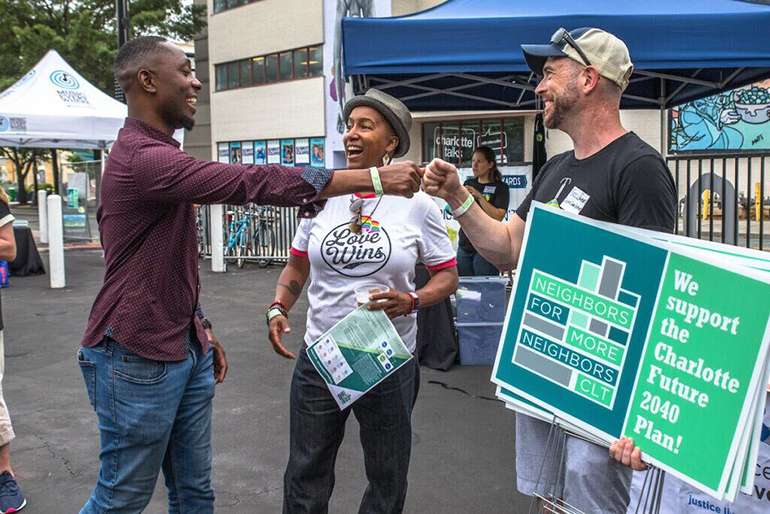
The Redress Movement, an organization dedicated to redressing longstanding systems of segregation, announced its opposition for the tax, warning that it will disproportionately fall on lower-income communities while the transit investments are likely to further gentrification and segregation.
Read More: The Redress Movement Works to Right the Wrongs of Housing Segregation
In an article published on the Redress Movement’s website, organizer Greg Jarrell said that sales tax increases are regressive by nature and cost lower-income households a greater share of their income than higher-income households.
“The data suggests this would be a $132/year-$240/year tax increase for lower- and middle-income households across Mecklenburg County,” Jarrell wrote. “This regressive tax focuses transit investments on roads and light rail, which doesn’t help the majority of low-income transit users, who are bus riders.”
The North Carolina Budget & Tax Center (NC BTC) found that the sales tax impacts those at the lowest income — less than $21,600 per year — as they spend 6.6% of their income on sales and excise taxes while the highest income earners — more than $697,400 per year — pay just over 1% of their income.
North Carolinians with poverty-level incomes already pay nearly $1,400 a year in sales taxes, according to NC BTC. Should the transit tax be approved, the city of Charlotte estimates that those families will pay an additional $130 a year.
Binns told Queen City Nerve that opponents of the tax who claim that the increase will negatively impact low-income communities are missing the fact that folks struggling with poverty in Mecklenburg County already pay an exorbitant amount of their income toward transportation.
According to the city of Charlotte’s State of Mobility Report, 76.6% of Charlotte workers drive alone to work while 23.4% travel by some other mode. This is due in large part to the continued underinvestment in infrastructure that provides an alternative to driving like walking, biking and riding public transit.
The report also found that the highest concentration of low-income households coincides with the almost 13,000 households that have no access to a vehicle in Mecklenburg County.
By investing in this transit tax, Binns said folks could be less reliant on owning a car and provide a more efficient, reliable bus network for those who don’t have access to a vehicle.
“That’s a game changer for a low-income household in terms of cost savings,” he said. “They’ll be able to reap the benefits from the sales tax immediately and they’ll have a reliable, affordable way to get to work in the places they need to go.”
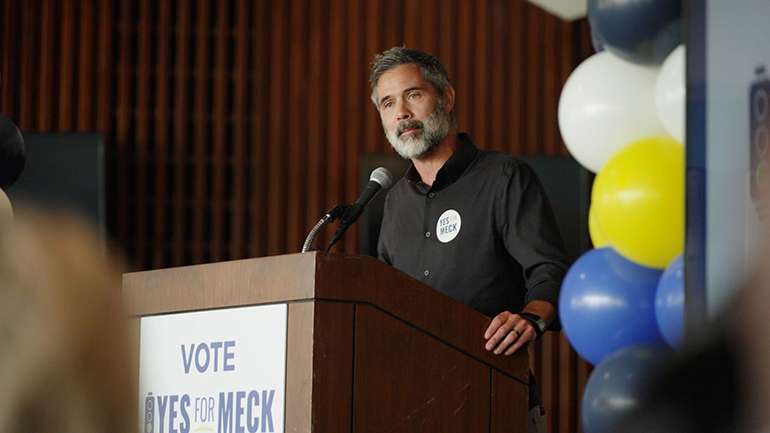
In August, Binns spoke at the launch event for Yes for Meck, an education campaign that supports the proposed tax increase by informing voters about “the vital role this referendum plays in enhancing mobility, safety, sustainability, and economic opportunity throughout the region,” according to a release from the Charlotte Regional Business Alliance.
At the Aug. 20 launch event, Marlon Stover of Lions Services discussed how the city’s plan will open opportunities for blind and visually impaired residents to thrive, while east Charlotte resident and Public Transit Advisory Committee member Juan Contreras Juarez urged voters to help fix a broken bus system that can sometimes throw a resident’s day into disarray with delays and no-shows.
“Many of us walk on roads with no sidewalks and we wait at bus stops with no shelter, and when service breaks down, everything breaks down-work, child care, appointments, and our peace of mind,” Juarez said. “This is why this campaign matters. The transportation plan in front of us will help fix what has been broken for too long.”
Read More: 5 Things to Know: PAVE Act Passes NC House, Advancing Charlotte’s Transit Hopes
Tonya Jameson, director of civic engagement with Leading on Opportunity, told Queen City Nerve that her organization is supportive of the referendum because access to transportation gives people access to jobs.
She referenced a 2018 study by economist Raj Chetty that found that children raised in areas with around 15-minute commutes tend to earn more as adults. It also found that reducing local commute times, among other aspects, were predicative of a 7% increase in adult income.
“There’s just an undeniable link between the ability and access to transportation and access to opportunities,” she said.
Despite the proposed restorations, the organization’s main clientele will still suffer, Dawkins said. He argued in an Action NC Twitter post that folks will be paying more in taxes for a bus to arrive a few minutes early to get them to a job that doesn’t pay them enough to make ends meet.
Is displacement inevitable?
While the 2025 Integrated Transit Plan prioritized economic growth by integrating a rapid transit system with land-use planning to attract businesses and people to the areas surrounding it, the plan failed to preserve the low-income housing that was already in place, displacing entire communities of people.
The new housing developments constructed along the light rail system also became too expensive for the people that lived in the areas where they were built.
After the Blue Line opened in 2007, in the census tract that encompasses the Parkwood station and the area of NoDa closest to the Blue Line station, the white population increased by 25% between 2010 to 2020, according to Jarrell. The Black population decreased by 32% in the same decade.
“Now we’re here again, and they must not have learned from it because they haven’t bought any space on the lines that [they’re] telling people are gonna exist,” Dawkins said. “So now the developers have already bought that. So where’s the displacement and gentrification money?”
The rail investments approved by the NCGA, including the commuter rail Red Line, have prioritized wealthy, majority-white northern suburbs to be built first, Jarrell said. Out of the 10 proposed stops, the line will only serve two majority-Black neighborhoods.
The Silver Line light rail would also serve mostly well-resourced areas with the only three stops in disinvested neighborhoods being the ones closest to the airport.
While an original proposal in the transportation plan would have served diverse neighborhoods near Sharon Amity and Idlewild roads, the General Assembly cut a number of the east Charlotte stops.
“We know from past experience that while gentrification may temporarily look like integration, if left unchecked, it ultimately results in the displacement of people of color and an exclusive, majority-white neighborhood,” Jarrell said.
Binns and Jameson agreed, however, that there is no stopping the inevitable.
“I think an important fact is that displacement is already occurring and whether or not the Silver Line or the Red Line are built, it’s going to occur to some extent, unfortunately, it’s just a matter [of] how fast it happens,” Binns said. “If the sales tax passes, could the displacement happen a little faster? Yes … but it’s not going to create displacement that wouldn’t have occurred either way.
“We could not do the sales tax, which means no improvement to our transportation system, right?” he continued. “Nothing to reduce congestion, nothing to provide more affordable, reliable transportation for those who can’t afford a car and the displacement will still happen. That doesn’t mean we should not do anything. We should pass the sales tax to help low-income people and people of all incomes have better transportation options.”
Dawkins said he has no ill will against Sustain Charlotte or other supporters of this tax because, at the end of the day, they’re all representing progressive organizations that see the tax through different scopes, he said.
Though few believe this tax is the perfect solution to Charlotte’s transportation issue, they believe it is better than nothing, he emphasized.
“All the people that always tell you something is better than nothing are the people that, if it doesn’t work, can go back to doing what they’re doing, [but] not the people who relied on it,” Dawkins said. “If you’re the person that’s house got displaced, you’re the one with the nothing … Poor people shouldn’t be asked to pay for their own displacement.”
The majority of folks Action NC works with are low-to-moderate income earners that rely on busing as their main mode of transportation.
If the economy takes a hit the same way it did in 2008 and the sales tax doesn’t cover the city’s mobility plans, Dawkins predicts that busing will be the first service to see cuts.
He doesn’t believe that CATS, the city or the tax’s supporters thought through the guarantees that they’ve made to people while rushing through the development of the bill.
He also worries that because the bill leaves funding allocation to each Mecklenburg municipality and does not go into specifics on exactly what they must spend the money on, it will be hard to hold anyone accountable for any broken promises if the referendum passes.
Dawkins proposes that officials take more time to figure out the best long-term plan.
“My point is, if you don’t do it right you’re going to hurt people to the point where you can’t go back and fix the damage that you’ve done,” he said.
Voters will decide on whether to approve the sales tax increase to fund the city’s transit plan on Nov. 4, with early voting beginning on Oct. 16.