Senate Bill 145 Introduction the First Step in Local Transit Plan
Legislation needs NCGA approval before county voters have their say

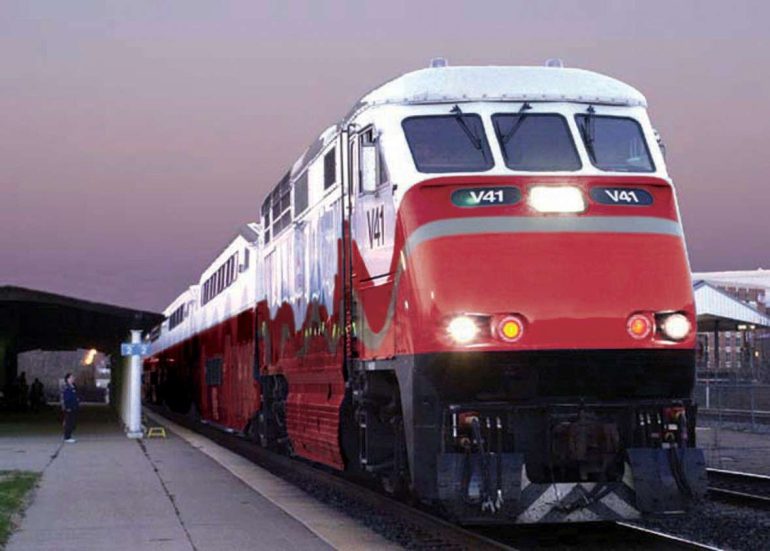
Mecklenburg County and the city of Charlotte took a long-anticipated step this week toward funding a new transit plan that will include the construction of the Red Line commuter rail to northern Mecklenburg County with the introduction of Senate Bill 145 in the North Carolina General Assembly.
If passed by lawmakers in Raleigh, the bill will allow for a local referendum to go on the ballot this fall asking Mecklenburg County voters to support a one-cent sales tax increase that would then go toward funding roadway projects and public transportation systems.
Sponsored by NC Sens. Bill Rabon, David Craven and Vickie Sawyer, Senate Bill 145 has the support of government bodies in Mecklenburg County, Charlotte, Cornelius, Davidson, Huntersville, Mint Hill and Pineville.
Officials in Matthews have stood against the plan since it became clear that a proposed Silver Line light rail system running from Uptown Charlotte to the southeast Mecklenburg town would be put on hold in favor of the Red Line commuter rail going north from Uptown to Davidson or possibly Mooresville.
If approved by voters, a one-cent sales tax increase would be expected to generate more than $19 billion for the county over 30 years.
Scaled back from an original plan that would have committed around 80% of generated revenue to rail projects, Senate Bill 145 stipulates that a maximum of 40% of the tax revenue go toward rail with 40% going to roadway projects and 20% to bus infrastructure.
As seen in draft legislation released by the city in August 2024, one proposed breakdown of how the first-year revenue from the proposed sales tax increase, estimated to be about $345 million, would be spent on transit throughout Mecklenburg County showed $138 million going to roads ($102 million in Charlotte and $36 million to surrounding towns), $69 million to bus infrastructure, and $138 million to rail infrastructure.
“The Bill provides the opportunity for unprecedented funding for roads, transit and bus systems that will have both immediate and long-term impacts for our commuters, residents, and visitors,” read a joint managers statement from the municipalities in support of the bill on Monday.
“The road funding provisions are unique in that funds will be allocated directly to the City and the individual towns across the county where local governments will have the independent authority to make decisions about roads, intersections, safety improvements, and other ancillary road enhancements within their communities that will have a positive daily impact on residents,” the statement continued.
The managers specifically pointed to a local issue with “orphan roads” that have fallen into disrepair due to their status as being neither privately or publicly owned and maintained.
“The City and the towns have road infrastructure needs that are currently unfunded and cost our citizens time, car upkeep, impaired quality of life and limit growth opportunities,” the joint managers statement read. “New funding would be available to address these needs and also help solve the ‘orphaned road’ problem that has been a concern for many for far too long.”
In her own statement, Charlotte Mayor Vi Lyles acknowledged that the introduction of this legislation is just the first step toward a goal that will take a strong effort in not only convincing state lawmakers to pass the bill but then presenting the benefits of the new tax to Mecklenburg County voters before November if passed in time for a referendum.
“In a community that presents opportunity, where more people are arriving every day, this will provide infrastructure to support a good quality of life. It will help secure a more prosperous and better future through transportation investments,” stated Lyles.
“We still have a lot of work to do, but having a bill filed is an important milestone — one that we have been working towards for years,” she continued. “I look forward to the work in front of us, with our partners, to deliver on a future that will make a difference for all of us because it will make a difference in the quality of life for our region.”
The plan also relies on the creation of a new countywide transit authority that would combine the current roles of the Metropolitan Transit Commission and the Charlotte Area Transit System (CATS). The new authority would include 12 board seats from Charlotte out of 27.
Local officials are hoping state lawmakers will consider taking up the new legislation during its current session, which adjourns on July 31, though there is currently no guarantee that will occur.