Having Coffee with Sam Shapiro, Charlotte’s Hitchcock Expert
Anticipation of Fear series to showcase slate of films from the 'Master of Suspense'

Alfred Hitchcock once remarked that his films were “intended to make people scream and yell and so forth, but no more than screaming and yelling on a rollercoaster … So, you mustn’t go too far because you want them to get off the ride giggling with pleasure.”
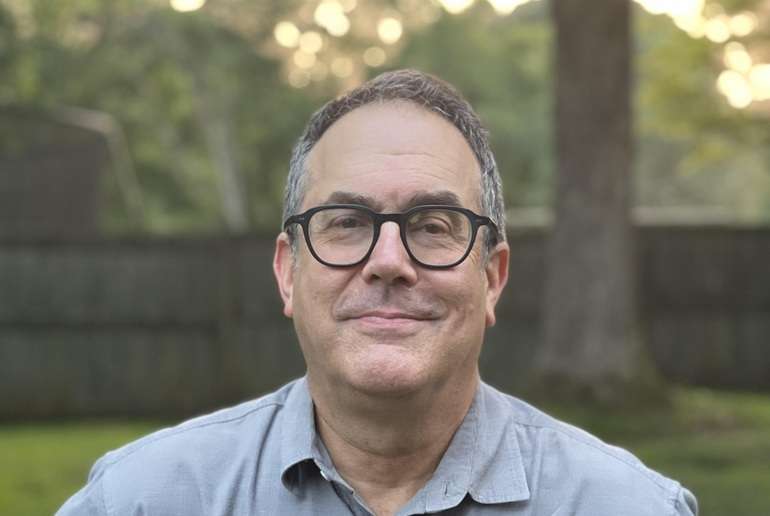
For Sam Shapiro, who taught film courses on the English filmmaker at UNC Charlotte for 30 years, it was how Hitchcock so perfectly mastered the landing that has set him apart from others in his field even as we approach a half-century since his death in 1980.
“We love his films because of the rapture and the dread, knowing we’ll exit the ride giggling with pleasure,” Shapiro wrote.
The former professor will share this pleasure with local moviegoers over the coming months through The Anticipation of Fear: Alfred Hitchcock’s Essentials, a series he helped curate for the Independent Picture House.
The series kicks off on Tuesday with a screening of the 1951 flick Strangers on a Train. Sunday’s screening of the film will be followed by a Talkbalk discussion with Shapiro.
And that’s what brought me to Giddy Goat Coffee Roasters in Plaza Midwood on a recent morning to chat with Shapiro, who taught me all about the “Master of Suspense” during my final year at UNC Charlotte in 2009.
Shapiro’s course on Hitchcock met on Wednesday nights for three hours. We watched films and spoke about the context of the works in the remaining hour or so, or reconvened the next week to discuss. I had always been a voracious fan of film but learned the true language of cinema from people like Shapiro, whose love of Hitchcock really shone through in class.
It’s not easy to get early 20-somethings engaged with movies that were often more than 50 years old, but Shapiro had a knack for doing just that. I recall being blown away how 1935’s The 39 Steps could feel so alive and relevant.
Seventeen years later, we reunited at Giddy Goat, each picking at our pastries as we spoke about the impact of Hitchcock and whether he still resonates with a younger audience.
Sam Shapiro’s family moved to Charlotte in 1964 from Tuscaloosa, Alabama. His father, Morton, joined the English department of what was then called Charlotte College. In 1965, the institution became the University of North Carolina at Charlotte.
Morton, or Marty, as he was known by friends and family, continued to teach at the university until his retirement in 1993. Marty also notably helped found the Charlotte Film Society.
Fellow UNCC professor Mark West said of Marty, “I remember talking with him about a course that Sam was teaching for the American Studies Program. I was the director of the program at the time and Marty liked the fact that Sam was teaching at the same university where he had pursued his teaching career for nearly 30 years.”
Sam began teaching at UNC Charlotte in 1994, as an instructor. He started teaching Hitchcock right from the jump, along with other types of film courses. He admits that the director was always his favorite teaching subject.
His full-time career, however, was with Charlotte Mecklenburg Library, where he held various positions over 33 years. His favorite role with the library was as a year-round film programmer for adults and seniors. He screened 25 Hitchcock films during his time in that role and found them to be popular with audiences of all ages.
Perhaps unsurprisingly considering his father’s background, Sam says his parents were “generally permissive, maybe even indulgent” regarding his consumption of movies.
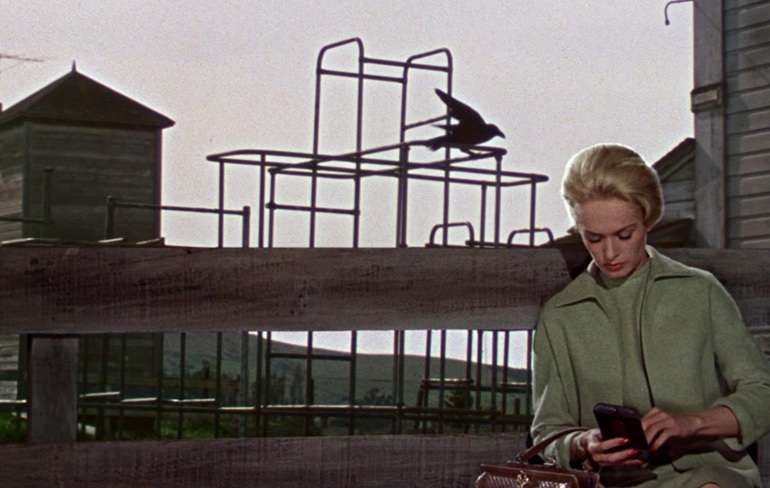
“My mother took me to a double feature of Psycho and The Birds at Charlotte’s long-gone Thunderbird Drive-in,” he recalled. “This was several years after the films’ original release, because it would have been during the early 1970s. My parents also gave me a paperback survey of Hitchcock’s films when I was only 10 years old, a copy which I still retain.”
Between teaching and programming for the library, Shapiro is no stranger to curating film series. In 2022, he began guest curating series for The Independent Picture House, upon the theater’s inception.
His previous series include International Noir Film, Wanderers of the Lost Highways: the Seventies Road Film & Once Upon a Time in Hong Kong: Classics from the Golden Age.
Read more: ‘Two-Lane Blacktop,’ the Great American Road Movie (2019)
As we got into our second cups of coffee, Shapiro said he believes that his latest series, which features Hitchcock films ranging from 1946-’63, provides a snapshot of what was arguably the filmmaker’s greatest era.
“Hitchcock’s greatest films never seem to age,” he said. “Rear Window, for instance, still seems as bewitching and fresh and relevant as it did when released 72 years ago.
“I also think back to my earlier experience as a film programmer, in which the public screening of a Hitchcock classic usually meant a large, happily buzzing audience,” he continued. “I’m presenting these films at the IPH because of the genuine excitement and inspiration that I witnessed as a college instructor for 30 years. Students absolutely loved and gravitated towards Hitchcock films like bees to honey.”
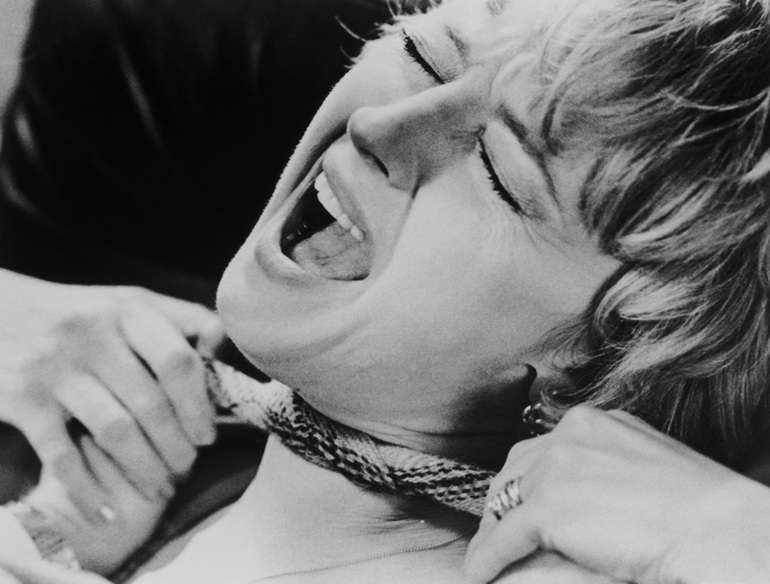
I watched many of the films included in the series in Sam Shapiro’s class and continue to rewatch them regularly to this day. A year doesn’t go by without popping on the aforementioned Rear Window, starring James Stewart, or the classic Psycho. I’m also partial to Frenzy, a later entry near the end of Hitchcock’s life that won’t be included in the series.
Our conversation weaved between the topic at hand, but also the concept of elevated horror, ’70s disaster flicks and high-brow vs. lowbrow. I told him how I once watched a slew of hard-to-find Hitchcock movies during my time working in finance, in my cubicle, after tax season. It could be part of the reason I don’t work that job anymore.
It’s hard to fully express how important Shapiro was to building my acumen and love for older movies, showing me how they serve as living and breathing documents when deliberately engaged by the viewer. Where else would I have dug into terms like “macguffin” or “doppelganger,” common themes in many Hitchcock films?
Read more: Greg Sestero Discusses ‘The Room’ Before IPH Double Feature (2025)
As we wrapped our coffee meetup, Sam implored me to catch Sirāt at IPH before it left the theater. Respecting his taste, I did just that, watching it the following Saturday. Without spoiling anything, I will only say he was very correct in his assumption that I would enjoy the movie.
The film, about a mysterious rave deep in the mountains of Morocco, reminded me of being back in Sam Shapiro’s class discussing the book Hitchcock/Truffaut, in which Hitchcock speaks with the French auteur about the difference between suspense and surprise, and how many movies confuse the two.
He goes on to explain how the audience may know of something that the character in the film doesn’t, which adds to the tension. We sit at the edge of our seats, not knowing where things are heading, and all the better if they don’t conclude how we expect.
Hitchcock likens surprise to a jump scare, which will result in 15 seconds of surprise, while suspense lasts closer to 15 minutes.
In Sirāt, French-born director Óliver Laxe wonderfully and respectfully defies Hitchcock’s advice, using surprise to a nauseating degree.
Even though Sam Shapiro retired from teaching in 2024, he still has time to teach me another lesson: No two rollercoasters ride the same.