How the Federal Education Funding Freeze Could Impact Local Schools
A harsh reality


On July 10, Charlotte-Mecklenburg Schools Board of Education (CMS BOE) Chair Stephanie Sneed and fellow rep Summer Nunn, who chairs the board’s Intergovernmental Relationships Committee, sent an open letter to the US Department of Education (DOE) and North Carolina lawmakers voicing their “deep concern” with the DOE’s decision to withhold more than $6 billion in approved federal education grants for public schools across the country.
This delay in federal funding that was congressionally approved and signed into law by President Donald Trump in March places more than $12 million in allocated CMS funding at risk.
“Without access to this critical funding, CMS faces two untenable options, both of which would have severe consequences for students, educators, and the broader community,” reads the letter, which was addressed directly to Hayley Sanon, principal deputy assistant secretary at the DOE.
“1. Understaff classroom support positions and absorb budget shortfalls for already-hired staff. Such measures will directly impact the quality of education and the ability of students to thrive academically,” the letter continued.
“2. Incur $1 million in monthly debt, diverting resources from vital educational priorities. These funds, once redirected, cannot be recovered for student use, further worsening the challenges faced by our schools.”
The ramifications of Trump’s latest funding freeze will extend to public school budgets, teacher salaries, before- and after-school programs, community learning centers, teacher development programs and more. Impacts include less nutrition funding, larger class sizes, an end to free lunch programs and a number of ripple effects that will affect students in all situations.
Then there are those vulnerable populations of students who will feel the effects more directly. English language learners who are new to this country and struggling to simply fit in with their peers, students living in food deserts who depend on the free lunch programs, Black and brown students who are statistically more likely to end up in prison without a proper education.
Four days after Sneed and Nunn sent their letter, with just over a month left before classes were set to start again, NC Attorney General Jeff Jackson joined representatives from two dozen other states in filing a lawsuit against the Trump administration demanding that it release the funds as was scheduled to occur on July 1.
“Public schools across North Carolina, especially in rural areas, need this money to keep teachers in the classroom and keep kids safe while they learn,” Jackson said in a statement announcing the suit. “It’s unlawful and unconstitutional for the Department of Education to withhold money that Congress has appropriated. I’m going to court to get this money for our students, our schools and North Carolina families.”

The Trump administration, which had insisted its officials must review where the funding would go to ensure all spending aligned with Trump’s “priorities,” announced on July 21 that it would release a small fraction of the funding — around $36 million of the $165 million that was being withheld from North Carolina schools.
On July 22, CMS confirmed it would not receive any of the newly released funding, with $12.5 million in Title II, Title III, and Title IV grants previously approved for the district still being withheld.
The district announced a plan to use carryover funds from last year to cover the difference. This will mean placing its own district-wide freeze on spending, with cuts focused on external contracts, services and vacant positions rather than reducing current employees.
“While the temporary plan protects the student experience for the upcoming school year, it is not sustainable beyond 2025-26,” stated Kelly Kluttz, chief finance officer for CMS. “If federal funding is not released, CMS will be required to make $12.5 million in cuts during the 2026-27 budget planning process.”
What will the impacts of a funding freeze look like?
Central Piedmont Early College (CPEC) is a magnet school that opened in 2023. Despite being an early college program, the school is still a part of the CMS district and receives federal funding from the state. The announced freeze in funding immediately impacted way CPEC officials are preparing for the coming school year.
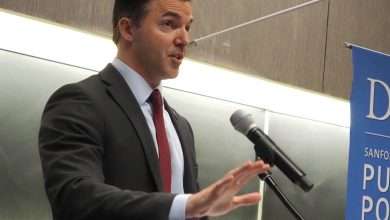
CPEC Principal Erik Turner spoke briefly about expected changes and impacts that his school has already experienced or is anticipating experiencing, saying that his school has already had to let go two staff members: a teaching assistant and a security guard.
“The teaching assistant position was key in providing instructional interventions for students that were not on grade level in math and reading, and she also provided additional support for our students that are English language learners,” Turned explained. “So this year, we won’t have that support through staffing, so we have to try to find alternative ways to support students that have additional academic instructional needs.”
Gov. Josh Stein has estimated that, without the previously approved funding, around 1,000 teachers would lose their jobs statewide. With cuts to other staff positions, those teachers who remain will be forced to take on the roles of other positions.
“You may have class sizes that were, you know, 25 and 27, maybe even 30. But now, it will not be uncommon for CPEC and other unique schools and traditional schools to have classes in the 40s and 50s moving forward because of these cuts,” Turner said.
“Who suffers in those situations? The students suffer, but then also the teachers,” he continued. “I would be shocked if these cuts and these changes to the policies that are coming down from up high don’t have a negative impact on teacher retention.”
Read more: New Report Reveals Discrimination in NC’s Voucher-Funded Private Schools
North Carolina and the United States as a whole are already struggling with a teacher staffing shortage. Studies have repeatedly found that low-income students are usually the most affected by teacher shortages.
“I think that it’s going to expand the gap between the students that were already achieving and the students that were not meeting the achievement metrics and expectations that we have,” Turned speculated.
“In particular, I think students of color, students that are English language learners, students that have learning differences, students that have 504 plans or [Individualized Education Plans], all of those students who are not just students of color are all going to suffer and have a steeper hill to climb to reach their potential academically and to meet their academic goals that the school districts have set for their students in the schools.”
The bigger the school, the deeper the cut
It won’t only affect smaller institutions such as CPEC, as bigger schools in the area may find themselves struggling to keep up with the demands that a large student population brings.
Morgan Winston is a rising senior at East Mecklenburg High School, where she’ll serve as the school’s president of Student Congress in the coming year. She is also the co-president of the Charlotte Mecklenburg Youth Council, a partnership between the City of Charlotte, Mecklenburg County, Charlotte-Mecklenburg Schools, GenerationNation and the youth who serve.
“I think it’s very unfortunate and misguided that the administration put a freeze on money allocated for students with disabilities as well as English learners in an effort to fulfill their agenda on cracking down on so-called DEI,” Winston told Queen City Nerve. “Education is about students and this is a move that will really hurt a lot of students and their families.”
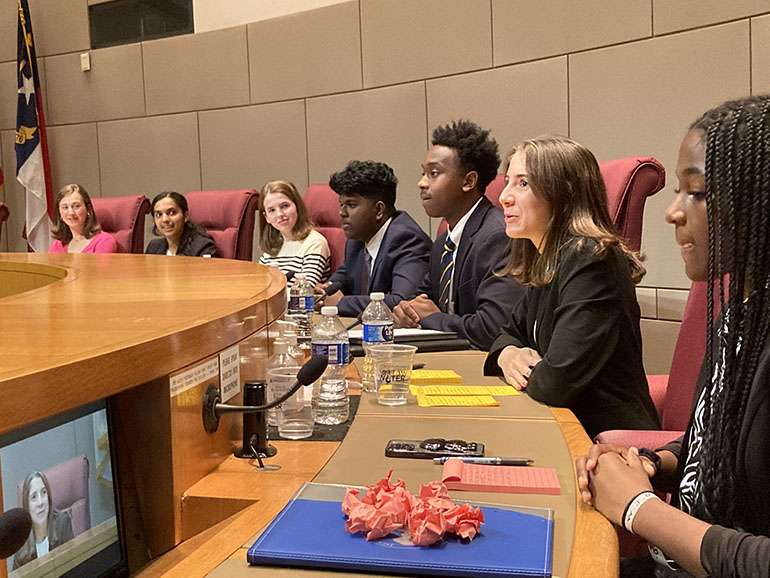
She pointed out that East Mecklenburg is one of the county’s most diverse schools, which could make the effects of the funding freeze that much more harshly.
“Our school has a high number of ESL students as well as students with special needs. So I worry about the serious impact that this freeze could have on students and programs at my school,” she said. “These are real lives that the decisions of these policy makers have an impact on.”
Former CMS student Nas Issofou now serves as a program and civic literacy facilitator with GenerationNation, a Charlotte-based organization that aims to get CMS students and other local young people more civically engaged.
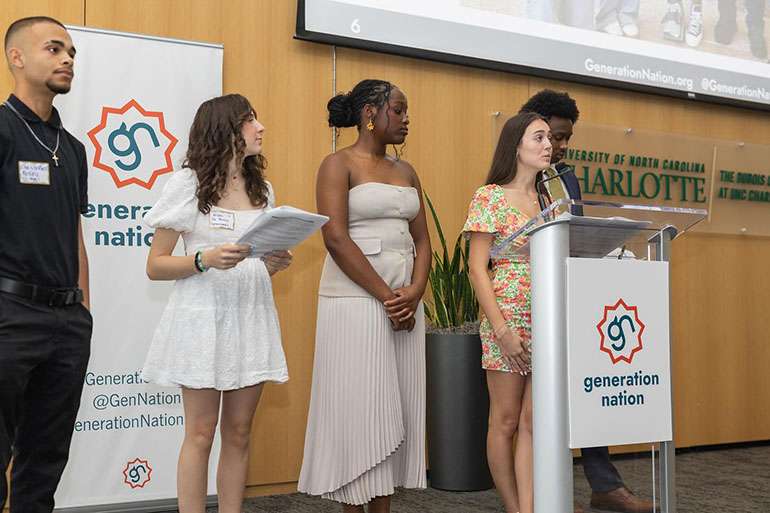
Issofou also serves on the North Carolina Black Youth Wellness Advisory Board and previously served on the Charlotte Community Relations Committee.
As a facilitator with an organization focused not only on Charlotte youth, but more specifically underrepresented youth in a government environment, the recent funding freeze has been weighing heavily on his mind since its June 30 announcement.
“Education should be the backbone of youth development, and seeing it under attack is really disheartening,” Issofou said. “For students going into the upcoming school year, especially our rural areas, they’re going to face a harsh reality.
“Beyond what they experience in the classroom, these students are growing up in an environment where the very leaders they’re supposed to look up to are at odds with providing them a quality education,” he expanded. “I couldn’t imagine; that kind of environment has deep psychological effects.”
Issofou believes that CMS made progress last year in its efforts to improve student growth and performance, but he worries that a cut in funding only threatens that.
“When funding is cut in ways that impact teachers directly, reduce individualized support, or strip resources from classrooms, that kinda progress can quickly stall,” he said.
“Students who need more tailored instruction, especially those in Charlotte’s underserved communities, are almost always the first to feel the effects … When something as basic and universal as education is up for debate or under attack, it really makes you wonder — if we can’t agree on the value of investing in our kids, in our future, then what can we agree on?”
Read more: Federal Funding Hold Threatens ourBRIDGE Afterschool Programs
Students and staff are entering uncharted territory for this upcoming school year, and will potentially have to deal with the effects for years to come.
The choices laid out in Sneed and Nunn’s letter make a few things clear; regardless of which way the district goes, teachers will struggle under the weight of additional responsibilities under the new freeze, expected to manage classrooms of 40 to 50 children, a number that has been proven to harm a child’s opportunity to get a proper education.
Unless funds are unfrozen and released, more students will continue to slip through the cracks in a system still reeling from the effects of the COVID pandemic, all in the name of a political movement.
Ryan Pitkin contributed some reporting to this story.