Council Quickies: SAFE Charlotte, Rail Trail Bridge and More
Action review, public forum and business meeting; Jan. 13, 2025


Charlotte City Council held its first full business meeting of the year on Monday, beginning with an action review update of CMPD’s SAFE Charlotte programming followed by a public forum and a slew of miscellaneous business items including the construction of a long anticipated pedestrian bridge connecting Uptown with South End.
On the Agenda:
- SAFE Charlotte Update
- Public Forum
- Other Business Items
SAFE Charlotte Update
As part of the SAFE Charlotte plan launched by the city in response to rising gun violence and in the wake of 2020’s George Floyd protests, the city has allocated a $1-million investment annually in 2023 and ’24 to support grassroots organizations including Care Ring, MeckEd, Rebuilding Together, Center for Prevention Services, the Latin American Coalition and ourBRIDGE for Kids.
This year the city will also grant $50,000 to 17 grassroots organizations to help them expand and provide support services and job training to more young people and families. Check here to see the full list.
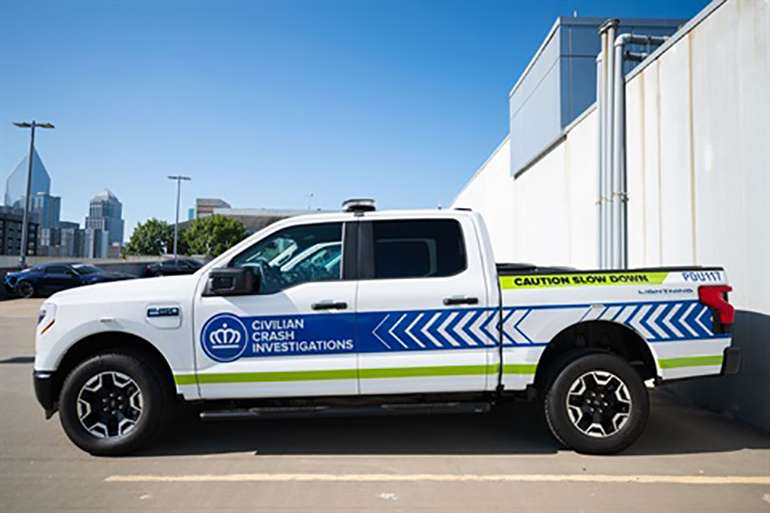
According to CMPD Chief Johnny Jennings, since launching the new Civilian Crash Investigations Unit on Dec. 12, the department’s 15 Civilian Crash Investigators have responded to 497 calls for service and filed 306 crash reports.
He stated that, with sworn officers known to spend an average of 40,000 hours per year on crash investigations, having the new unit is equal to adding 19 officers who can respond to higher priority emergency calls for service.
In their FY22 budget, the city doubled the number of Community Policing Crisis Response Teams (CPCRT), which pair a clinician with an officer to respond to mental health and homelessness calls, and added funds to pilot a new unit of civilian responders (CARES) to respond to mental health-related calls. During Monday night’s presentation, Jennings said the CARES teams have had 761 interactions responding to 680 calls for service.
CPCRT has responded to 5,246 calls for service, completing 437 assessments, diverting 77 people from jail and 455 people from involuntary commitment.
Later, in response to a request for more specifics from Tiawana Brown, Jennings described how jail diversions were documented in cases where a person committed a crime in the midst of a mental health episode and were able to seek treatment rather than be taken to jail as they would have if only a police officer responded to the call.
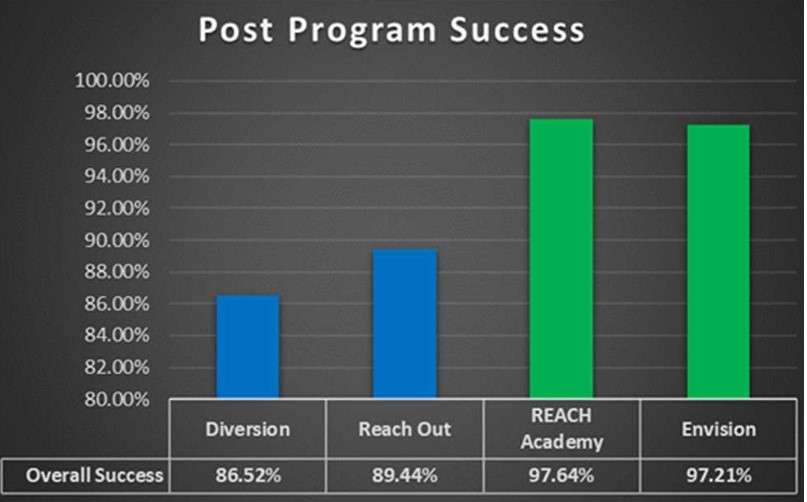
The city added civilian positions to support CMPD youth programs, prioritizing specific programs for evaluation and expansion: Youth Diversion Program, Reach Out, Envision Academy, and REACH Academy.
With 3,768 participants across the programs, an analysis found a total success rate of 88% based on whether the participating youth reoffended.
“SAFE Charlotte has been going for four years now and we can’t point to big success,” said Ed Driggs. “A lot of these problems are social … therefore … what your understanding is of the root causes of these issues is critical.”
Driggs added that “based on the experience of other cities like New York, there is a tradeoff between how aggressive your policing is and what kind of crime you have, and the tension there is the rights and the First Amendment and so on so how do you conduct effective policing and keep people safe and not either offend an ethnic group or trample on someone’s rights?
“I don’t speak out of any desire to oppress any members of the community but simply to talk about what works and what doesn’t as opposed to … actions we are taking that don’t result in observable changes,” Driggs continued. “People are expecting to see a decline in these crime rates.”
Jennings said, “If you look at a city like Baltimore, they are praising a drop from 300-something homicides to 200-something homicides in a year. We definitely don’t want to be sitting at that number and celebrating 200 homicides in a year.” (CMPD reported 110 homicides in 2024.)
“I understand that compared to other large cities, Charlotte is safer, but our numbers have gone up significantly from where they were so something has to be done to address these issues at the root,” said Dimple Ajmera.
In response, Jennings pointed out that homicides are up but those don’t represent the whole picture regarding crime overall in Charlotte. CMPD will present its annual crime report for 2024 on Thursday, which will provide a fuller picture of crime stats according to the department.
Renee Johnson asked about 911 dispatch staffing and reports that people in emergencies are being placed on hold. Jennings said he knew of no magic remedy to the issue, which can occur when too many people call about one incident such as a wreck on a busy street or highway.
Public Forum
A volunteer with the city’s Animal Care & Control kicked off the public forum, asking that the city remove the organization from operating under the CMPD umbrella and encouraging them to also work to make the Animal Care & Control shelter a no-kill shelter.
Dr. Kenny Robinson with Freedom Fighting Missionaries spoke in hopes of raising awareness about the 5,300 children attending local schools while experiencing homelessness, pointing out the disparity in the fact that 4,000 of those children are Black.
“We must make sure that we leave not only no child behind but no child homeless while expecting them to perform at the same level as their peers,” said Robinson, adding that his organization was recently able to take 84 children out of hotels and shelters and place them in permanent housing.
Rabbi Judy Schindler, a professor at Queens University, worked with Robinson to find housing for those children utilizing federal McKinney-Vento funding. She said studies show that those children see lower academic performance, higher dropout rates, and more involvement in the justice system creating a vicious cycle and blocking economic mobility.
“It’s our responsibility to expand programs like McKinney-Vento, provide more robust housing assistance and ensure these children have the stability they need to thrive in school,” said Schindler.
Darlene Pegram addressed council about juvenile crime, saying, “One bad apple spoils the bunch, so why don’t we simply pluck the bad apple out to save our children?” She added that she was a victim of juvenile crime but had to watch the offenders pass her house every day after they were quickly released.
“We teach our kids they can be anything they want to be, not do anything they want to do,” said Pegram, adding that she supports diversion programs to help kids who may be on the wrong path but believes that if they reoffend they should be incarcerated.
Donna Dunlap, CEO of Big Brother Big Sister of the Central Carolinas, spoke in observance of National Mentoring Month and invited those in attendance to a mentoring summit taking place at UNC Charlotte’s Uptown campus on Jan. 30.
Robyn Hamilton, president and CEO of Urban League of Central Carolinas (ULCC), talked to council about the work her organization is doing in spearheading the Alternatives to Violence program on the Nations Ford corridor.
“We are seeing signs of promise … we are seeing positive feedback from the community continuously about feeling safer in their neighborhoods,” said Hamilton, adding that ULCC’s ATV program has focused on job-training for the past year.
Two goals for Hamilton’s team in the coming year will be to better engage with extended-stay hotel/motel owners in the Nations Ford corridor as well as educate apartment community managers in conflict resolution.
Business Items
Council began its business meeting by honoring the West Charlotte High School football team, which won its first state championship in 29 years in December. Much of the team was in attendance to receive recognition from the mayor and council.
Council approved a $5.8-million contract to improve pedestrian/bicycle connectivity and safety along a stretch of Sunset Road near Beatties Ford Road, including a new sidewalk, wheelchair ramps, curb and gutter, drainage improvements, driveway improvements, and pavement markings.
Council also unanimously approved a $16.3-million contract for Blythe Construction to build the 280-foot-long pedestrian bridge across Interstate 277. The project is anticipated to be complete by second quarter 2028.

It’s been five and a half years since council approved 1.2 million in funding for the design of the bridge, which will run from the Brooklyn Village CATS station in Uptown to just above East Morehead Street, running parallel to the Blue Line, and will include a 16-foot-wide bicycle and pedestrian concrete path, retaining walls and grading.
Council approved the purchase of 31 acres off Rocky River Church Road ($712,000) and 17 acres off Sam Wilson Road ($595,000) to donate to the Catawba Lands Conservancy “to ensure stewardship of the tree canopy and monitoring of the property in perpetuity.”
Council authorized the donation of a surplus CATS van to local grassroots org Promise Youth Development, Inc., which “helps under-served youth in east Charlotte improve their health and well-being through education, resilience-focused mentoring, and anti-violence programs.”
Council approved $214,000 for the installation of a traffic signal at the intersection of East W.T. Harris Boulevard and University Ridge Drive/Rose Heather Court after an NC DOT evaluation revealed a pattern of left-turning crashes from Harris onto the side streets.
Read more: Tracking Vehicle-Related Deaths on Charlotte Streets in 2024
It’s unclear why the funding more than doubles the maximum cost estimate for a traffic signal listed on the NC DOT website, though the state agency will reimburse the city for all costs, according to Monday night’s agenda.
Council approved expanding the ongoing Belk Greenway Connector project, which runs from Baxter Street to South Davidson Street, to include a “bicycle facility” (likely a bike lane) along South McDowell Street from Baxter Street to MLK Boulevard.
Charlotte City Council will hold its first zoning meeting of the year on Monday, Jan. 20.