

42,409.
That is the number of people killed in Gaza as of Oct. 3, 2024.
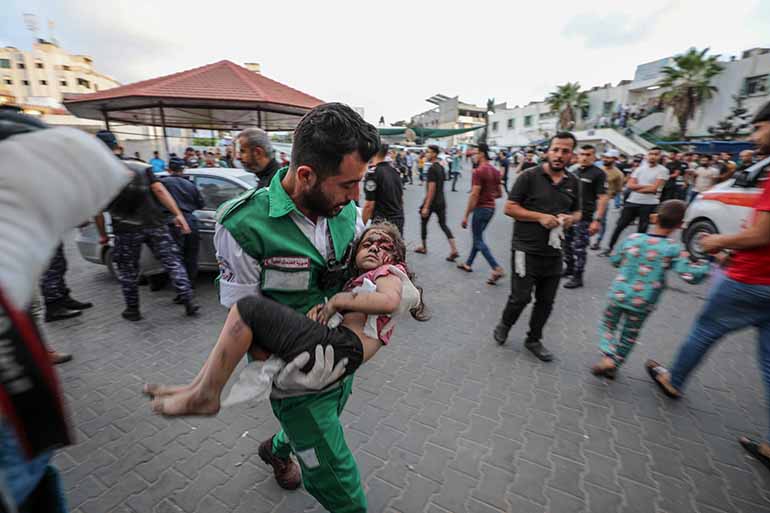
Forty-two thousand four hundred and nine. My third grader and her classmates are learning to write out large numbers in school, to help them develop what educators call number sense, an understanding for the scope and size of large numbers. Sixteen thousand seven hundred and sixty-five children have died.
One of them was Tala Abu Ajwa, a 10-year old girl skating outside her temporary home. She was killed when the Israeli army bombed the building her family was sheltering in.
A piece of shrapnel sliced her neck.
I stare at the image of her pink roller blades sticking out beneath her shroud. Her family had moved eight times in the eleven months preceding that specific bombing. They’d carried those heavy bulky skates each time, trying to hold onto a piece of normal for their daughter. Now her family has Tala’s skates, but not Tala.
I look at the image of Tala’s mother, cradling those pink rollerblades in her lap, trying to comprehend a world where skates can be preserved but children cannot. I marvel at the truth that if she hadn’t been wearing those skates when she died, her death would have been swallowed up by the numbing void of those incomprehensible numbers — not by her family, who loved her enough to pack her skates over and over and over again even as they fled for their lives.
But the rest of us only know her name because she happened to be killed while wearing her roller skates.
At least sixteen thousand seven hundred and sixty-four other Palestinian children have been killed in Gaza. Some of them were newborn infants who decayed in their incubators when the hospitals caring for them were evacuated. Some of them were burned alive with their entire families when the Israeli army bombed the tent cities hastily erected in areas designated for refugees by the Israeli government. Some of them have died of malnutrition and dehydration and preventable diseases.
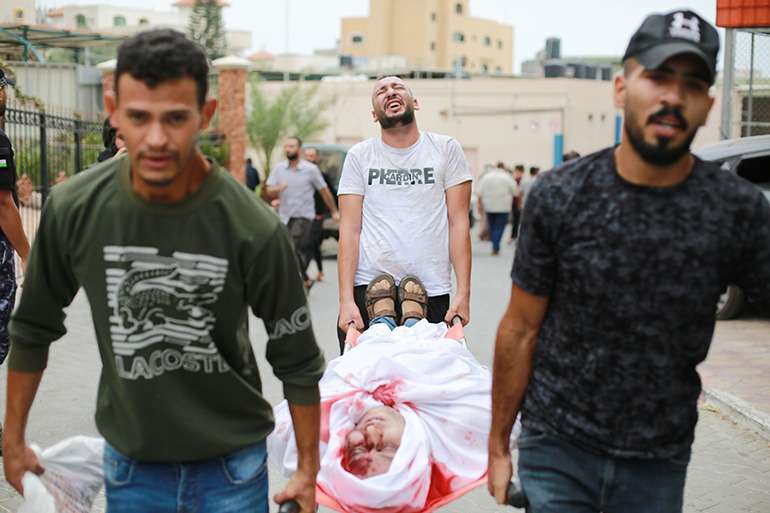
As I write this, the Israeli government is not letting any food assistance into northern Gaza. The Biden administration has warned that if they don’t begin letting in more food in the next 30 days, the US may curtail their supply of weapons. I wonder how many children won’t last another 30 days.
One thousand one hundred and thirty-nine people were murdered in the Hamas terrorist attack on Oct. 7, 2023 — 38 of those killed were children while 20 more children were orphaned. These deaths are incomprehensibly tragic. Those Israeli citizens should be living and working and raising their families. Their children should be skating and complaining about learning to write out their numbers in school.
But lately it is hard for many of us in North Carolina to pay attention. Since Hurricane Helene roared up the coast, incomprehensibly horrible images from the Middle East are displaced by pictures of unfathomable destruction in our own communities. Homes, roads, businesses demolished, beloved mountain and valley landscapes permanently altered.
Whole communities remain cut off, beyond the reach of neighbors desperate to save and serve. No electricity. No clean water. No communication. We’ve barely begun to count the loss.
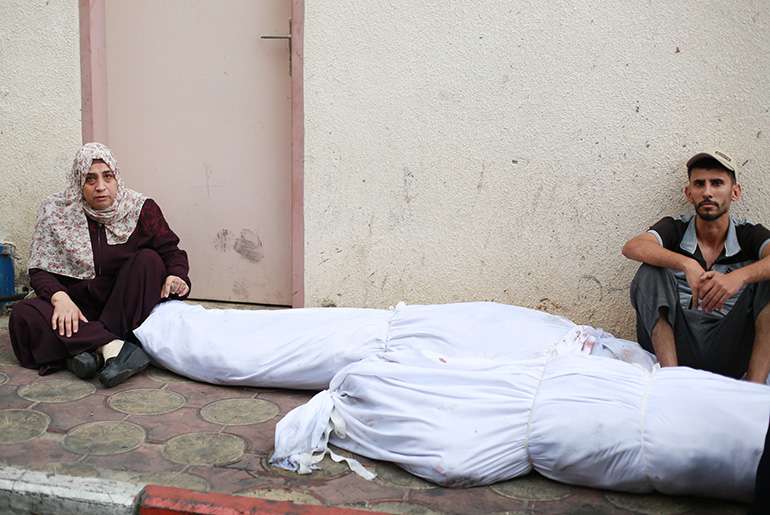
Thousands of North Carolinians have begun combing through their devastated communities, trying to salvage what can be saved after the disaster. I think of the picture of Tala’s mother, holding her daughter’s pink skates — also living without electricity, clean water and basic infrastructure like hospitals and roads — and I wonder why so many of us believe the civilian deaths in Gaza are acceptable and inevitable.
We must mobilize to alleviate human suffering caused by terrorism and war with as much passion as we do the suffering caused by natural disasters. Gaza has been hit by the force of 1,000 fiery hurricanes, and the storm of war is only gaining power and growing in scope.
The Israeli government has expanded the war to the West Bank, Lebanon and Iran. And the United States is supplying the majority of the funding for the war in Gaza. As we work together to repair what Hurricane Helene has destroyed in western North Carolina, we must sit with the reality that we are the deadly force falling from the skies in Gaza. And Lebanon. And, as the Israeli government has told us, Iran. “Just not the nuclear power plants,” we’ve replied.
Read more: OPINION: How I Went From the IDF to Jewish Voice for Peace
In the end, this war comes down to numbers. How many Palestinian civilians must die before the Israeli citizens who were murdered on Oct. 7 are avenged? How many more innocent civilians must be sacrificed?

How much bloodshed will be enough? How many people in Gaza must die to make the people of Israel safe? The answer, of course, is none. Palestinian deaths do not make Israelis safer. We cannot destroy a way to peace.
“Vengeance is mine, sayeth the Lord.” It’s one of the first Bible verses I learned and it remains a favorite. Grim as it sounds, it reminds us that the right to avenge is God’s alone. We can join God in the work of healing, forgiving and redeeming. But much as we may long for it, vengeance is not for us.
We do not have the power to prevent the next hurricanes forming in the Atlantic from killing civilians and destroying communities. But we do have the political power to stop some of the next bombs from falling in the Middle East. Because this war is only going to end when American citizens refuse to keep paying for it.
Kate Murphy serves as the pastor of The Grove Presbyterian Church in east Charlotte. She’s lived in the Charlotte area for 20 years.




Thank you pastor Kate for reminding us on this very issue.