
Clint Eastwood’s ‘Juror #2’ and the Decay of the Movie Studio
Wrestling with the legacy of American iconography

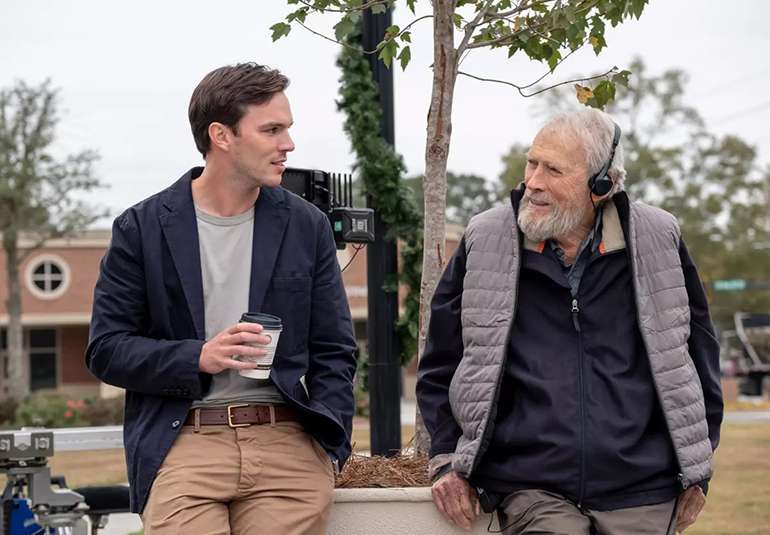
There’s a thing about the icons Americans look up to, the ones who are sent abroad as symbols of our culture: John Wayne, Elvis, Arnold Schwarzenegger or Clint Eastwood, for example. Eventually they just become empty idols, devoid of context and meaning. We stop seeing them as artists or even as people, flawed like the rest of us. Instead, they become cardboard cutouts at Planet Hollywood.
At some point before 2019, I decided I wanted to challenge my own perception of Clint Eastwood. It might have been after a rewatch of Mystic River, the 2003 neo-noir crime drama that Eastwood directed. Before that point, I didn’t really think of Eastwood as a director. In fact, I didn’t think of him as much more than the guy who scolded an empty chair at the 2012 RNC — an act that he has since said has troubled him more than any other thing he did in his life.
After watching Mystic River, I saw that Eastwood composed the soundtrack and thought, “Who is this guy, this Dirty Harry?” He would go on to compose the music for his 2004 film Million Dollar Baby, in which he also had a supporting role. Both films won buku awards and were big box office draws.
Seeing that he was responsible for the soundtrack sent me down a Clint Eastwood rabbit hole. As it turns out, music has always been a big part of his life. Originally he wanted to study music theory and, in 1959, he released an album of country covers called Cowboy Favorites. He is an accomplished pianist and has written songs with Ray Charles, specifically “Beers to You,” which ended up on the Any Which Way You Can soundtrack.
He also curated the soundtrack for 2007’s Grace is Gone, starring John Cusack — the only film he’s done music for that he didn’t also direct. He’s since worked on many films with his son Kyle Eastwood, an accomplished session jazz bassist in his own right.
Clint Eastwood has directed 40 films, most recently Juror #2, which was released in October. He’s still going at a spry 94 years old.
His films include Unforgiven (1992), Richard Jewell (2019), Bird (1988), The Bridges of Madison County (1995), and Midnight in the Garden of Good & Evil (1997), to name a few. He has curated the soundtracks for several of his films and even contributed pieces of music to some.
Clint Eastwood, the director
After watching Mystic River, I took a deeper look at Clint Eastwood, the director. What are his filmmaking styles? Did he have a distinct voice like auteurs Spike Lee and Quentin Tarantino, or is he a journeyman director like Ted Post, Peter Weir and Roger Donaldson? I’ve since found that he is something in the middle, what I would call a “journeyman auteur.”
Eastwood is known for shooting quickly and often only allowing his actors a couple takes before moving on. This process can get away from him in movies like 2018’s 15:17 to Paris, a film that stars the real life-participants of the 2015 Thalys train attack. While it’s an original touch, it makes the movie play like a low-budget Christian film.
Across his 40 films, there are sure misfires such as Cry Macho, Sully, and The Rookie, to name a few, but what long-term director doesn’t have those? Francis Ford Coppola’s latest release, Megalopolis, serves as a great example of what I mean.
And yes, I’m trying to sell you on the man as a director. I can’t speak to his politics, but if you’re going by moral compass, he’s no Roman Polanski or Woody Allen. What’s interesting about his films in relation to his libertarian politics is that they seem to at times run counter to what you may assume his views to be.
Take J. Edgar, the 2011 film he directed that was written by Dustin Lance Blank, a queer activist known for scribing Milk (2008) and Hulu’s limited tv series Under the Banner of Heaven. J. Edgar looks at the sexually repressed private life of the titular FBI director and also is an indictment of government overreach. To put it simply, the movie doesn’t glorify J. Edgar Hoover.
Eastwood often allows himself to be a fly on the wall. He wants only to show you the film exactly as he believes it is written on the page — nothing more and sometimes a lot less. He consistently completes his films under budget and ahead of schedule, asking his actors to run lines excessively before shooting begins so they’re ready on Day 1.
‘Juror #2’ and the current climate for film releases
This brings us to Juror #2. The legal thriller stars Nicholas Hoult, Toni Collette and J.K. Simmons. As with many of his films, it’s understated but tense, bringing to mind his run of Absolute Power, True Crime and Blood Work. These are movies you’d watch at 2 p.m. on TNT with your dad on a rainy Saturday, a type of film that has mostly vanished but was a cash cow in the ’90s — think Murder in the First, Rainmaker, The Pelican Brief, and A Few Good Men.
As is the case in many recent Clint Eastwood films, there’s a vibe reset that happens at the beginning of his movies, not unlike a David Lynch movie but in the other direction. In Lynch’s film you get a surrealist way of speaking and you have to remind yourself, “Oh this isn’t how people actually talk.” Eastwood films, on the other hand, carry a hyperrealism — a “down hominess” that doesn’t exist in real life.
The setting feels quaint, but the smallness of the picture pays off in the final resolution. This quaintness is also what sometimes can be missing in modern films. Most pictures love to woo you with a car chase, an explosion, or a gory murder but Juror #2 brings things back to a small setting that sometimes feels like David Mamet play or a remake of 12 Angry Men, which is a definite inspiration.
The film also features a reunion of Nicholas Hoult and Toni Collette, who played son and mother in 2002’s About a Boy. Hoult plays journalist Justin Kemp, who is called to jury duty in a high-profile murder trial only to find himself struggling with a serious moral dilemma — one he could use to sway the verdict and potentially convict or free the accused killer.
The high-caliber cast features Kiefer Sutherland in a small role, Leslie Bibb (Law Abiding Citizen), Zoey Deutch (Not Okay), Chris Messina (Argo) and others.
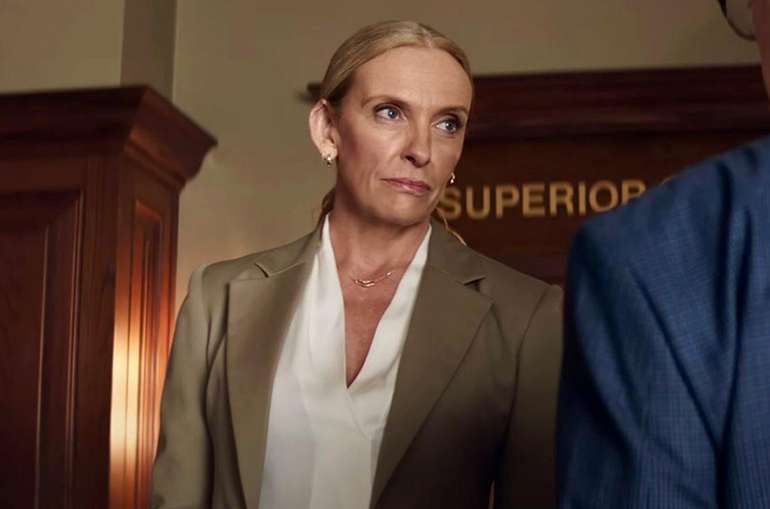
This could very well be Clint’s last picture, considering his age, which makes it all the more strange that Warner Bros. has seemingly given up on marketing the film. WB claims they initially intended the film to have a direct-to-streaming release on Max, though they instead started with a limited theater release.
Jay Morong, co-founder and program director at Independent Picture House, said he tried to get the rights to show Juror #2 at his Raleigh Street establishment but was shot down by the distributor.
“On the one hand, I feel studios and distributors can do whatever they want with a film; it’s their product and they made/paid for it. They control the release and can do as they please,” Morong told me. “On the other hand, I do get confused sometimes when cinemas, like ours or any others, want to play streaming films — or films made for streaming like Juror #2 — and they just aren’t interested in letting anyone play it.
“It is frustrating when you do want to play something and can’t get it because a studio or distributor has decided ‘no theatrical release on this film.’ So, I guess for us I just know this is the nature of the business now and accept that this is how some films get handled and sometimes we won’t be able to bring them to the cinema.”
After originally announcing that Juror #2 would end its theatrical run after a single week in early November, the studio responded to outcry over that decision by expanding the run from 31 theaters to a whopping 46. It is currently set to start streaming on Max on Dec. 20. While its narrow theatrical run is largely over, at the time of this writing it has popped up at AMC Concord Mills 24, where it appears to be showing through Dec. 4.
Follow the money
In the climax of the film, Collette’s Faith Killebrew says, “Sometimes you try to do the right thing only to realize you got it all wrong.” I will admit that I also have gotten wrapped up in the nostalgia of a Hollywood icon and it is important to be grounded by the economics of the matter.
Juror #2 cost $32 million to make and the metric usually is that studios will invest at least that much or more to promote a theatrical run. So we’re looking at $64 million (at least) to break even.
Indiewire reported that Clint Eastwood has made 46 movies for Warner, either as director, actor or producer. Those films have a worldwide gross (adjusted for inflation) of more than $9 billion. His total career gross is around $12 billion, with 75% of that for Warner Bros. Outside of promotion costs, that would be a 233% return on investment. So if we’re looking at the pure economics of the situation, then it appears that WB “owes him one.”
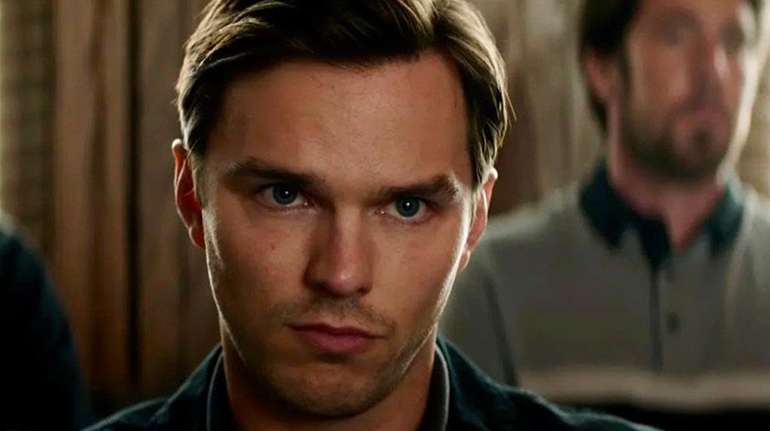
After its premiere at AFI Fest on Oct. 27 at TCL Chinese Theatre, the film opened in early November at 31 theaters across the country. It expanded to 46 theaters, but ultimately closed its run less than two weeks later. The closest showing in the original theatrical run was in Bluffton, SC, right outside of Hilton Head Island, nearly 4 hours away from Charlotte.
The movie received a wide theatrical release in the United Kingdom, showing on more than 300 screens. In France alone, where Eastwood is revered, the film grossed $3.1 million in a weekend. It has made $9.6 million worldwide on mostly word-of-mouth/grassroots campaigns. Warner Bros. has claimed that they would not release box office figures to “save face” for Clint Eastwood.
Bilge Ebiri, film reviewer for Vulture, wrote, “Eastwood, for all his genre cred and iconic stature, is one of the few major filmmakers left making studio-financed adult dramas. To the modern studio executive, he must look like a glitch in the matrix — not an artist to be protected, but an error to be corrected.”
During David Zaslav’s tenure as CEO of Warner Bros., we’ve seen the cratering of the DC Extended Universe with Flash, Aquaman 2 and the box-office bomb that was Joker: Folie à Deux. Warner also refused to release Batgirl and Coyote vs. Acme, instead choosing to scrap them so they could benefit from the tax write-offs.
They are a business and it’s their right to do such things, but the changing landscape of Hollywood has increasingly seen studios not taking chances on original material like Juror #2. Yet this changing landscape gives a little more room for artists to thrive in the medium budget range of $25-50 million.
We’ve seen a lot of great success this year with movies like The Substance, which had a budget of $17.5 million and ultimately grossed $66.5 million. For an under-marketed star-studded R-rated gore fest, that’s actually quite a feat.
Read more: ‘The Substance’ Explores Feminism Through Body Horror
It’s interesting and possibly comical to include Clint Eastwood in the realm of “change,” but it’s not just him. Juror #2 fits into a mold that moviegoers want: a medium-size movie that isn’t a superhero flick. That’s no knock on that fare, we just have to consume more than the artistic equivalent to fast food.
If I’m being honest, the film is fine. Not more. Not less. I enjoyed it a lot, but I wouldn’t even put it in the top ten of Eastwood’s flicks. At times it feels cheap and possibly a little undercooked, but it’s a recognizable flavor that I hadn’t had in awhile. If this is the last film by Clint Eastwood, then I hope it inspires a new generation of filmmakers to think smaller and more inward, but ultimately out to new original ideas. Mostly, though, I just hope people can actually see it.



The Alfred Hitchcock Hour – The Star Juror…..nothing original anymore.
Really interesting read! I’m curious to see how Juror #2 turns out — especially with Clint Eastwood directing at this stage in his career. The plot sounds intense, and it’s cool to see him still tackling fresh material. Definitely keeping an eye on this one.
It’s interesting how Juror #2 doesn’t just feel like another film—it feels like Clint Eastwood’s quiet farewell to a whole era. The article really captures how American icons like Eastwood evolve from legends to something almost hollow over time. It’s a powerful reminder that even our biggest stars aren’t immune to cultural decay. By the way, I recently came across the spike mod v5, and oddly enough, it kind of mirrors this idea—something once cutting-edge, now being reimagined for a new generation. Funny how art and innovation follow similar cycles.
Clint Eastwood’s Juror #2 quietly marks the end of an era—both for a legendary filmmaker and for the kind of thoughtful, mid-budget cinema Hollywood no longer seems to value.
Clint Eastwood’s Juror #2 quietly marks the end of an era—both for a legendary filmmaker and for the kind of thoughtful, mid-budget cinema.
Thanks for putting this together, it’s explained in a simple but effective way.
Clint Eastwood’s Juror #2 feels like more than just another film — it almost symbolizes the struggle of traditional studios in today’s evolving industry. The shift toward streaming and indie projects shows how much the landscape has changed, and Eastwood’s project highlights that contrast in an interesting way.
Really interesting read! Juror #2 feels like a reflection on Clint Eastwood’s legacy and how Hollywood’s backdrop shapes character and culture today. Your take on the moral complexity and how Eastwood reimagines the courtroom drama is thought-provoking and well written. On a lighter note, after watching such thought-provoking films, I love relaxing with something fun—GTA APK SA is one of my favorite gaming throwbacks when I need a break!
It’s striking how *Juror #2* doesn’t just play like another film—it feels more like Clint Eastwood’s quiet goodbye to an entire era. The article really conveys how American icons like Eastwood can evolve from living legends into something almost hollow over time. It’s a poignant reminder that even our greatest stars aren’t immune to cultural erosion. Interestingly, I recently came across the spike mod v5, and it oddly echoes that same idea—once cutting-edge, now being reimagined for a new generation. It’s funny how both art and innovation seem to move in those same cyclical patterns.
This was a really intriguing read! I’m definitely interested to see how *Juror #2* unfolds—especially with Clint Eastwood directing at this point in his career. The storyline sounds gripping, and it’s impressive that he’s still taking on new and original projects. I’ll definitely be watching this one closely.
Excelente reflexión sobre cómo los íconos culturales se transforman en simples símbolos vacíos con el tiempo. Clint Eastwood representa perfectamente esa transición entre el mito y la realidad del cine americano. Muy buen análisis.
It’s pretty disheartening to see Juror #2 being treated more like a liability than a tentpole for serious storytelling. Eastwood has earned his stripes, yet this is how a major studio treats what might be one of his last major works.
That sounds like an interesting take — Clint Eastwood always brings depth to his films. I’m curious how Juror #2 explores the decline of traditional studios and what message it sends about the changing movie industry.
It’s interesting to see Clint Eastwood still tackling stories like Juror #2 at this stage in his career. The film sounds like a mix of courtroom tension and personal moral conflict, which fits his style. The idea of using this movie to reflect on how traditional studios are fading feels pretty real too — Hollywood has changed a lot, and projects like this remind us of the old-school filmmaking spirit we don’t see as often anymore.
Clint Eastwood’s Juror #2 feels like both a courtroom drama and a reflection on the fading golden age of Hollywood. At 94, Eastwood delivers a film that’s less about the mechanics of justice and more about moral reckoning — a fitting theme for a filmmaker whose career has long wrestled with American ideals of honor, guilt, and redemption.
Clint Eastwood’s career really does embody that shift from meaningful cultural symbol to hollow iconography. What I appreciate about this piece is how it pushes us to re-evaluate not just Eastwood, but the entire system that builds these mythic figures and then refuses to update them as society changes. Juror #2 feels like a perfect example of a studio trying to revive nostalgia instead of investing in stories that reflect where audiences actually are today.
The decay isn’t just in the stars — it’s in the industry’s inability to evolve.
What really stands out here is the idea that Hollywood keeps recycling its legends without questioning why. Eastwood isn’t the problem so much as the system that keeps holding him up as a timeless symbol, even when the cultural context around him has completely changed. The article nails that tension — how studios cling to familiar faces while audiences are craving something more honest, more current. Juror #2 almost feels like Hollywood talking to itself instead of speaking to viewers.
This was a thoughtful take on Juror #2 and how Clint Eastwood’s work reflects more than just another movie. It’s interesting to see how an iconic creator ages with his craft, just like games evolve—like The Spike Z, which started small and keeps growing with new updates and players. Both show how staying creative and adapting matter in entertainment today.
I love Clint Eastwood and his movies!
Absolutely, it’s less about Eastwood himself and more about the industry machinery. Hollywood has a habit of elevating certain figures as “timeless,” even when societal values and cultural contexts have shifted. The system perpetuates these legends without really questioning whether they still resonate today.