How to Catch 10 Classic Black Films Screening This Month at Charlotte’s Indie Theaters
Independent Picture House and Carolina Theatre roll out BHM slates

Ben Klein tells a story about two Black women, a mother-daughter duo, who came to Carolina Theatre in Uptown for a screening of Selma, the 2014 drama about Dr. Martin Luther King Jr.’s heroic campaign for civil rights, in January.
Despite using a walker, the mother had purchased tickets in the upper balcony. The two women struggled to their seats in the theater’s upper balcony, where Black people were required to sit when the theater was partially desegregated in 1963. Prior to that, Black people couldn’t enter the theater at all.
The pair spoke briefly to Klein, the theater’s programming director, after the screening. The mother said she used to come to the venue when she was younger and was given no choice over where she could sit. She chose to revisit the specific space where she had made memories a half-century earlier, picking the same seat she remembered sitting in all those years before — but this time, the decision was hers alone.
“I thought there was something remarkably profound about her choosing to sit in the balcony this time,” says Klein.
The story resonates for Klein as the venue launches its inaugural Black and Brilliant series, a program of five curated movies featuring Black actors, directors and culture to mark Black History Month.
Meanwhile, 12 miles northeast of Uptown, the Independent Picture House has already begun showing its Black History Month series, featuring five films that showcase Black talent and tell stories about Black life.
Independent Picture House offers drama, comedy, horror, political thrillers and more
Screening a slate of Black-acted, -produced or -directed films during Black History Month is nothing new for Independent Picture House (IPH), says de’Angelo Dia, director of education and community engagement for the indie art-house cinema. The nonprofit community movie theater has been showing Black-centric films every February since it opened in June 2022.
The films in the series were chosen this year by Dia and IPH staff member Nathaniel Battle from a list of available titles provided by IPH Creative Director Jay Morong.
The programming has expanded in 2026 with More Than One Story: Inside the Film Series on the Black Experience, pairing speaker panels with one showing of each film in the slate for a post-screening discussion, beginning with Thursday night’s screening of Do the Right Thing.
“We often collectively watch a film, and we’re left with the experience of wanting to have a deeper dialogue about it: what are you still curious about? What do you feel like they got right or got wrong? Where do we go from here?” Dia says.
Dia said he’s a Spike Lee fan because the legendary director can uplift and highlight both pain and celebration.
“There are very few films that can hold that balance,” Dia notes.
He compares the film’s colorful opening credit sequence, an ebullient dance montage, to its closing scenes of righteous rage and disparity.

“[The film] is also an examination, an interrogation, of the landscape of this country,” Dia says, noting that Lee’s third film is just as applicable now as it was when it was released in 1989. “We are talking about both pain and celebration in our streets and across this country. We have monks marching and we have ICE patrolling. That couldn’t be more indicative or reflective of this film.”
IPH’s first panel discussion takes place on Thursday following this screening. Moderated by Charlotte arts and culture ambassador Shawn Allison, aka Black Ferris Bueller, the discussion will include dance instructor and therapist Jess Thompson, Baran Dance instructor Rahquelah Conyers; DUPP&SWAT CEO and CrownKeepers Executive Director Davita Galloway; and artist/educator/curator and member of BLKMRKTCLT Carla Aaron-Lopez.
As the only film repeating with appearances on both slates, you’ll have a second chance to catch this one at Carolina Theatre on Saturday night (read further for details).
Released in 2022, Master is a film Dia believes got lost in the COVID pandemic. The depiction of two Black women trying to find their place at an elite New England university built on the site of a Salem-era gallows hill is a crackling horror film and psychological thriller.
A post film discussion follows the Feb. 11 screening. Afeni Grace, Black Carolina Initiative director at the Harvey B. Gantt Center, will lead the discussion with Dr. Portia Marie York, founder of York Creative Education Group and adjunct professor of Fiber Arts at Lenoir–Rhyne University; Tyla Barnes, director, writer and producer; and Randi Gill-Sadler, assistant professor of Africana Studies at Davidson College.
“The beauty of that conversation with those three panelists, [is that] these are three amazing Black women that know the experience of navigating life at traditional white institutions,” Dia says.
A tense, provocative morality play with a superb cast including Omar Epps and Tupac Shakur, Juice (1992) follows a group of Harlem teenagers whose pursuit of power turns nightmarish. Directed and co-written by Ernest Dickerson, the cinematographer on many Spike Lee films including Do the Right Thing, it’s one of the films Dia feels will strike a nostalgic chord with audiences who have maybe seen it on TV but not the big screen.
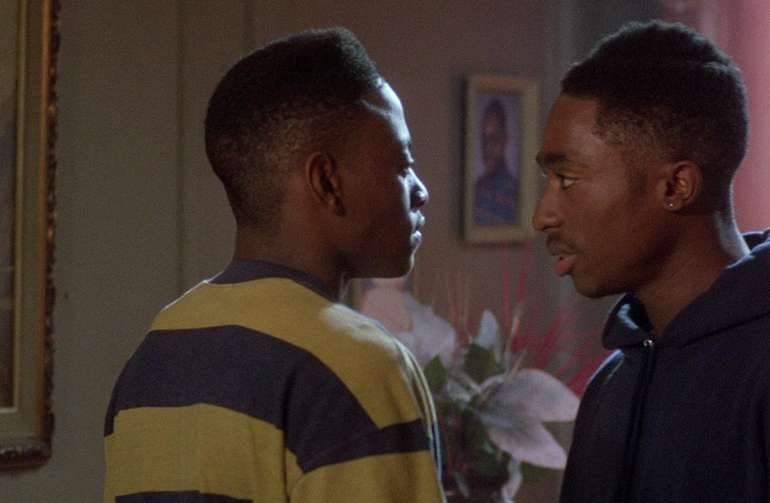
The film’s Feb. 15 screening will be followed by a discussion with poet and performance artist Boris “Bluz” Rogers and fellow poets and co-founders of arts collective God City John Hairston, Jr., Marcus Kiser, and Wally McNair. There will be a poetic response by Charlotte-based, nationally recognized slam poet Jordan Bailey, also known as Young Static.
Directed by Jules Dassin, who was blacklisted out of Hollywood during McCarthyism in the Cold War era, Uptight depicts the aftermath of the assassination of a public figure. Given the American political temperature in 1968, the year of its release, the film was a bold venture.
“This is a film that I want individuals to come in with the least knowledge about,” Dia says. “The embodied energy, regardless of race or culture, that lives within after a significant assassination is profound. These lives have meaning.”
A post-film discussion will feature Felix Curtis, curator of the Classic Black Cinema Series at the Gantt Center, and Tre’ McGriff, curator of the CineOdyssey Animation Festival.
The titular night in Regina King’s 2020 directorial debut One Night in Miami, is Feb. 25, 1964, when the film’s fictitious meeting takes place between Cassius Clay, Jim Brown, Sam Cooke and Malcolm X.
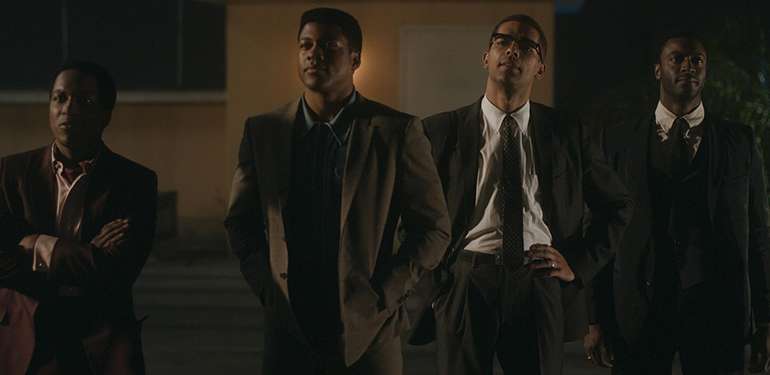
“Someone could look at [the film] and say, ‘We’re talking about a member of the Nation of Islam, two athletes and an entertainer,’ but these four amazing individuals this film is depicting are more than that,” Dia says. “That is the experience of many individuals that embody Blackness. We’re more than whatever pseudo labels are placed upon us.”
Stay for a post-film discussion with Dia, Dr. James Ford, Dr. Keith Cradle, Dr. Moses Fox III and Dr. Willie Griffin.
Carolina Theatre’s Black and Brilliant series offers six award-winning films
“Structurally, the bones of the Carolina Theatre have been in place on Tryon Street since 1927,” says theater spokesperson Jared Misner, “but we’re a very different theater in many ways.”
Those differences are illustrated by the Carolina Theatre’s Black and Brilliant series, where the once-segregated establishment welcomes all audiences for a program of six award-winning and -nominated movies that center Black storylines, characters and artists.
The program’s films were chosen by King after consultation with theater staff.
“We leaned into films that don’t center solely around the struggle of the Black experience, but on Black culture as a whole and how it influences and has influenced our society,” Klein says.
With Oscar season right around the corner, Klein also focused on films that had a connection with the upcoming Academy Awards, either through wins or nominations, culminating with Ryan Coogler’s genre-blending Sinners.
With 16 Oscar nods, Sinners has already made Oscars history, breaking the record for most nominations.
Released in 1971, Shaft is a groundbreaking crime thriller that introduced the iconic private detective John Shaft, played by Richard Roundtree. It’s a pivotal film that helped define the sound, style and cultural impact of the Blaxploitation genre.
Klein notes that Shaft also redefined the kind of leading man a Black actor could portray onscreen.
“The film also has that iconic score,” he says, noting that Memphis soul king Isaac Hayes’ “Theme from Shaft” won the Academy Award for Best Original Song, making Hayes the first Black artist to win in that category.
“Spike Lee is one of the century’s most influential filmmakers,” Klein says.
Do the Right Thing allows the Black and Brilliant series to reflect on and celebrate Black communities while also addressing inequities in those communities. The powerful themes in Lee’s film, including racial tension, injustice and activism, are at the forefront of many people’s minds right now and have been for the last several years, Klein maintains.
“It’s also about the Black community itself and how the film celebrates that community,” he says.
Klein feels Dreamgirls — director Bill Condon’s 2006 musical drama that traces the fame, fortunes and foibles of a 1960s Black “girl group” — is the perfect choice for Galentine’s Day.
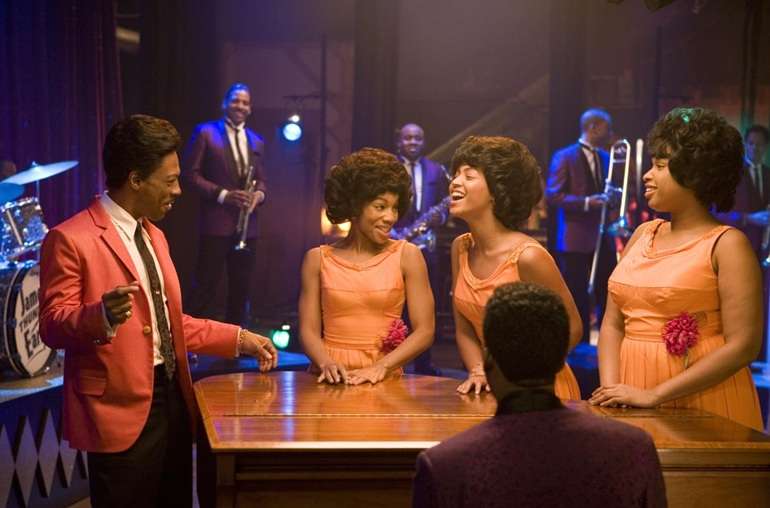
“It celebrates Black musical heritage — Motown, soul and R&B, and all of the complexities of making a career in music,” Klein says.
The film boasts major star power, with layered performances by Beyonce, Jamie Foxx and Eddie Murphy. Its Oscar connection comes through Jennifer Hudson, who won the Academy Award for Best Supporting Actress.
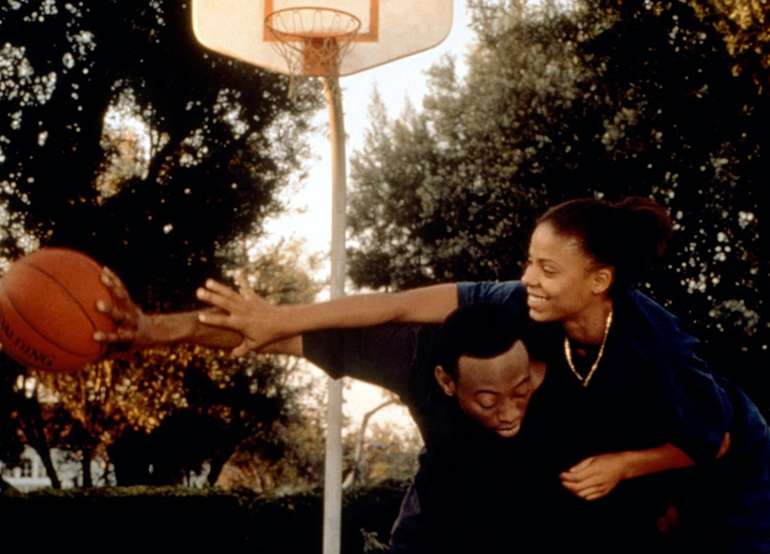
Written and helmed by Gina Prince-Bythewood, a Black woman making her directorial debut, this date-night film from 2000 tells the story of childhood adversaries and talented athletes who develop a love for the game of basketball and each other. Each must face their personal hurdles, as they pursue their dreams of success.
“It’s a tender love story that’s universal and relatable,” Klein says. “It deals with athleticism and gender roles [and] it’s a great example of beautiful storytelling.”
Feb. 15: The Princess and the Frog
This retelling of the classic German fairytale collected by the Brothers Grimm updates the story to Jazz Age New Orleans. The 2009 animated flick also introduced audiences to Disney’s first Black princess.
‘It’s an amazing milestone for representation in children’s media,” Klein says. “I love how it brings New Orleans culture into the story, and I also think it’s a great entryway for younger audiences into Black History Month as a whole.”
The film received three Academy Award nominations — one for Best Animated Feature and two for Best Original Song.
Set in 1932 Mississippi, Sinners follows twin brothers — both played by Michael B. Jordan — who return to their hometown to start over, only to discover that a great evil awaits them. The film, which blends realistic drama with supernatural horror, has been nominated for a record-setting amount of Academy awards, yet strangely none for Jordan himself.
“It’s just a remarkable tale,” Klein says. “I love how everyone tries to figure out what genre it is. People can’t quite describe it.”
What filmlovers can take away from both series
“We come to these films for entertainment,” says Dia of IPH’s and Carolina Theatre’s parallel series, but audiences are also being educated and affirmed.
“What better way to bring a spectrum of people together to do that than cinema?” Dia says. “When I’m sitting in the theater, I don’t know the political affiliations or religious affiliations of individuals I’m there with. All I know is that we’re having this collective experience.”
“You could probably watch all of these movies at home on your couch,” Misner adds. “But I think what our film series have shown consistently is that there’s still something about that live experience at a theater. When you jump-scare, cry or laugh with the audience, there’s something really special about that.”
The enduring value of the 11 films screened at both venues throughout Black History Month is that they’re truly timeless, but also foster community. Whether these series offer audiences the chance to reconnect with an old favorite or discover a new gem, there is a special magic of sharing the experience, sitting with friends and strangers, alone yet together in the dark.
Read more: The True Charlotte Crime Story Behind Channing Tatum’s New ‘Roofman’ Movie (2025)