2025 Point-in-Time Count: Homelessness in Charlotte Continues to Rise
Unsheltered homelessness in Charlotte reached a 15-year high in January

Mecklenburg County’s newly released One Number and Point in Time (PIT) Count reveals that unsheltered homelessness in the community has increased notably, emphasizing the need for dwindling services and resources.
As of April 30, there were 2,415 men, women and children experiencing homelessness in Mecklenburg County, according to the One Number benchmark, which is updated regularly at the Charlotte-Mecklenburg Housing & Homelessness Dashboard.
The annual PIT Count, coordinated by the Department of Housing and Urban Development (HUD), was conducted on Jan. 22, providing a snapshot of homelessness on a single night to estimate the number of people experiencing homelessness and understand their characteristics, needs and living situations.
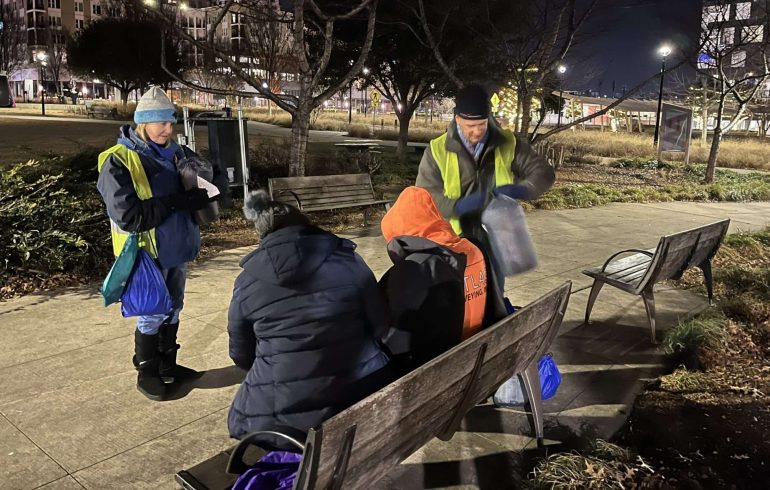
More than 200 volunteers and police officers canvassed Mecklenburg County to locate, identify and engage unsheltered folks and gather HUD-required demographic information.
Sharp Rise in Unsheltered Homelessness
According to the survey, 444 people making up 421 households were experiencing unsheltered homelessness during the PIT Count, an increase of nearly 16% from the previous year. Of the 444 people, 116 were newly identified this year, marking the highest unsheltered count since 2010 and more than doubling the pre-pandemic 2020 count.
Unsheltered homelessness refers to individuals living in locations not intended for human habitation like streets, cars, parks and encampments.
Read More: Baymont Hotel Displacement Upends Lives of Already Vulnerable Tenants
The amount of people dealing with “sheltered homelessness” — those who were staying in emergency shelters, transitional housing or safe havens during the PIT Count — reached 1,320 households, totaling 1,657 people, a 3.2% decrease from last year. According to the count, 308 of those people were under the age of 18.
The sheltered count gathered information from 33 publicly and privately operated shelters, transitional housing and safe haven programs run by 15 different agencies.
Though sheltered homelessness decreased from the prior year, the report said it was not from a decrease in need. The drop is instead attributed to a decrease in the number of available shelter beds, a startling snapshot of Charlotte’s larger housing crisis.
The numbers gathered in the PIT Count and One Number are also widely recognized as an undercount, the report noted.
Increased Number Comes Amid Rise in Housing Instability
Queen City Nerve reported on the Mecklenburg County Community Support Services’ annual State of Housing Instability and Homelessness (SoHIH) Report in January, which found the number of eviction filings increased 37% in the past year, leaving 13,000 Mecklenburg households at risk of losing their homes. Low-cost rentals and other housing options for low-income households are disappearing, accounting for just 8% of the total housing stock compared to 45% in 2011.

There is a 27,693-unit gap between affordable rental units for extremely low-income households who are at or below 30% of the area median income in Charlotte-Mecklenburg and how many people need them, Queen City Nerve reported.
“Addressing housing instability and homelessness typically requires a multifaceted approach that combines affordable housing initiatives, support services, mental health and addiction treatment, and employment opportunities, along with efforts to reduce discrimination and enhance tenant protections,” read a release from the county in January.
Individuals looking to help can donate food or clothing, volunteer at a shelter or food bank, contribute to a nonprofit assisting homelessness, and support government efforts in strategies to address affordable housing, according to a Mecklenburg County press release.
The county’s recently adopted Fiscal Year 2026 budget also includes funding to address homelessness and affordable housing by appropriating nearly $30.5 million toward several housing programs and emergency services.
“The Board is committed to addressing the ongoing issue of homelessness in our community,” Mecklenburg Board of County Commissioners Chair Mark Jerrell said in the press release. “The resources in the new fiscal year budget show our commitment to help as many of our unhoused residents as possible.”