ESSAY: A Call to Black Artists on the Experience of Homelessness and Belonging
The Home Within

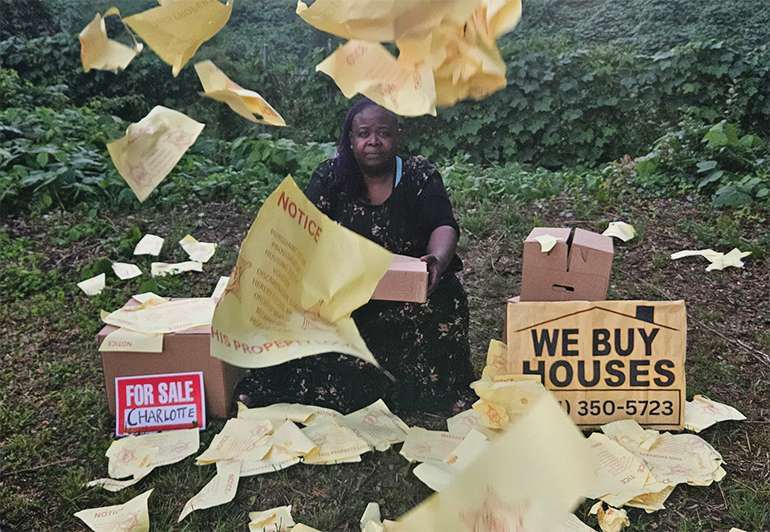
Have I loved the Black people in my home — or have I embraced the innate calling of mothering, a love that nurtures, protects, and builds?
I am a Black woman; the motherland. My honor is to nurture the Kingdom of Heaven upon this Earth, our bodies’ first home. But home, as both a human necessity and a cultural inheritance, is not always a refuge for the Black American soul.
On American soil, Black people experiencing homelessness do not just shout from the streets — but whisper through college classrooms, office hallways, museum galleries, and family cookouts. The experience exists beyond the absence of shelter; it is the absence of belonging.
The Experience of Homelessness as Emotional Displacement
For Black people, instability in housing is often more than economic displacement; it is an emotional and generational wound. It is the feeling of exile from spaces that should hold us, a longing for safety in a nation that has historically refused us rest.
As bell hooks wrote, “Homeplace was the one site where one could freely confront the issue of humanization, where one could resist.” But when home is compromised — by systemic erasure, by histories of violence, by generational rifts — where does healing begin?
The price of freedom for a Black person, no matter the era, comes with shame.
How dare you?
Why can’t you play your role?
We have learned that to seek autonomy is to risk exile from the very communities we hold dear. The Black family dynamic has been reshaped by external forces that sought to fragment us. White culture refined Black family structures until they lost the evolution of our Chiefdoms, the lineage of the Matriarch, the representation of cultural identity within the home and community.
This emotional wreckage takes generations to overcome. It is a form of systematic extinction if we cannot become one. Chasing financial autonomy while navigating individualistic messaging, we are often forced to choose between self-sufficiency and communal belonging.
When, then, do we arrive at the land of milk and honey? When do we stop running and find solace in a home that feels like our own?
Melanin and the Resilience of Blackness
“Home is where the heart is” rarely resonates for Black people. The notion of home is complicated, elusive — never a given. But Blackness itself holds a blueprint for resilience.
Melanin, gifted by our ancestors, carries sacred knowledge. Our skin absorbs the sun’s energy, transforming light into power, endurance, and life. We are uniquely built to withstand the elements, and yet we have been forced into the cold — historically, politically and emotionally. But our bodies remember.
Just as melanin alchemizes the sun, we must protect each other from the erasure of our collective spirit. As above, so below our skin.
To combat the crisis of homeless experiences, we must first heal the home within. This requires honoring our legacy and contributing to the collective. It means prioritizing healing, forgiveness, and mental health in our family relationships. It means boundaries with grace.
As James Baldwin once said, “Perhaps home is not a place but simply an irrevocable condition.” If that is true, then home is what we make of each other — how we hold space for love, and how we reimagine belonging.
According to the US Department of Housing and Urban Development, Black people make up about 12% of the US population but accounted for nearly 32% of all people experiencing homelessness in 2024. The racial disparity is undeniable, shaped by systemic inequities in housing access, wealth distribution, trauma, and incarceration rates.
Resolving housing insecurity is not just about providing shelter. It is about restoring dignity, reclaiming our narratives, and healing our communities from within.
Art has always been a vessel for truth, resistance, and transformation. I challenge Black artists to explore displacement, resilience, and restoration through their work and personal experience — not as a means of spectacle, but as a pathway to collective healing and belonging.
The challenge is to create and engage without exploitation, to go beyond calling attention to homelessness as an issue and instead forge deeper connections through personal narratives of survival, community, and home. In other words, how do we reach out and let our people know they are not alone in this feeling and experience despite how it manifests itself?
Black artists are uniquely positioned to shift this dialogue — to honor our community’s stories in ways that transcend the usual portrayals of addiction, suffering, and isolation. Instead, we can create works, collaborate, and open spaces that affirm our people’s presence, worth, and interconnectedness.
Whether through accessible programming, visual art, spoken word, music, or movement, let us cultivate a culture where art not only tells stories but also rebuilds the foundation of belonging.
I hope to see everyone back at the crib — not alone, but as a family united in belonging.
Dasia Hood is a spoken word artist, curator, and poet dedicated to reclaiming narratives through art and cultural storytelling. As the founder of Dark & Divine, she bridges creativity, social impact, and the lived experiences of Black resilience.