Duke Energy’s Political Donations Pay Off Through Rate Hikes
Why your bills have been rising lately


Like so many others living in the Charlotte area, local resident Katie Rothweiler was taken aback when she received an electric bill from Duke Energy that doubled anything she paid last winter. For a working artist living in a period of inflation, the fee was critical.
“Working class people are barely able to buy food for their families, and Duke is out here charging us incredibly high rates,” Rothweiler told Queen City Nerve. “My Facebook feed is full of people having to choose between their monthly needs because these rates keep rising.”
As residents of North Carolina, none of us are able to opt out of this. Duke Energy is what is known as a regulated monopoly, our only option for power and gas. And since we can’t go without these services, Katie and customers like her are delicately balancing their checkbook and asking, “What do we do?”
Meanwhile, the corporation flourishes, thanks in large part to its notably large donations to Republican candidates throughout North Carolina.
Duke Energy recently reported profits of $4.9 billion for 2025. These profits are up $400 million from the previous year. Duke Energy President Harry Sideris has stated that the increase in revenue would fund grid improvements and new power plants.
Brought on by a rate hike that has since been ruled illegal, though it will remain in effect due to the recent changing of the law, these revenue increases are expected to continue into 2030.
Electricity rates in North Carolina have increased more than 23% on average over the past five years, according to state filings. The North Carolina Energy Policy Task Force warns that they are likely to increase another 40-60% of the next 15.
The NC Court of Appeals ruled that Duke Energy broke the law in 2024 by implementing a rate increase to make up for shortfalls that had occurred in 2022, though the court simultaneously decided that Duke won’t have to provide refunds to customers for money they were improperly charged.
That’s because lawmakers changed the law in 2025, while the case was still pending, making Duke’s actions in reaching years back to find shortfalls in justifying rate hikes technically allowable going forward.
“They get caught and found guilty by a court of law, and we still get no refunds or assistance,” said Rothweiler.
I can’t get power or gas through anyone else, so I have to go through these companies because I can’t go without electric and gas,” she continued. “They know that we have no choice and so it seems like they do whatever they want to do. And North Carolina people are the ones who continue to be affected by it.”
How SB 266 protected Duke Energy from accountability
In July 2025, Gov. Josh Stein vetoed Senate Bill 266, called The Power Bill Reduction Act. That veto was overridden by lawmakers before the end of the month, with the help of Charlotte-area Democrats Carla Cunningham and Nasif Majeed, both of whom have seen thousands of dollars — and in Cunningham’s cases, tens of thousands — in donations from Duke Energy Corp PAC.
Both Cunningham and Majeed will also soon leave office after losing their respective primary races this week.
SB 266 took effect immediately upon the override vote.
Despite the misleading title, studies showed SB 266 will actually put North Carolina’s electricity sector and economic future at risk. The short-term savings would be likely to diminish deployment of wind and solar energy, reversing 2021’s House Bill 951, which pushed renewable energy investments to reduce strain on the power grid over the next 10 years.
While HB 951 allowed for investments in renewable energy, it also enabled multi-year rate hikes, in favor of Duke Energy.
Read more: Sustain Charlotte Returns Duke Energy Funding, Citing Role in Regulatory Rollbacks (2025)
SB 266 began as Senate Bill 261, the Energy Security and Affordability Act. The original bill was filed by NC Sen. Paul Newton, a Republican lawmaker and former president of Duke Energy, where he was employed for 25 years.
During his time as a lawmaker, he staunchly opposed setting any limitations on natural gas production in North Carolina.
Newton resigned from the NC Senate, where he represented Cabarrus County since first getting elected in 2016 and served as majority leader for Republicans and co-chair of the Senate Appropriations Committee, in March 2025, two weeks after the final draft of his bill was filed.
Duke Energy Corp PAC was a regular top contributor to Newton’s campaigns during his time in office, spending upwards of $50,000, per Transparency USA.
Sue Sturgis with the Energy & Policy Institute reported in November 2025 how Duke Energy has quietly become a leading funder for Republican candidates throughout the state. That includes a first-time donation of $100,000 to the North Carolina Republican Party Building Fund, which circumvented a rule that disallows companies contributing directly to political parties.
Nevertheless, Duke Energy’s expenditure reports listed the donation as going to the “North Carolina Republican Party,” which is just as accurate as listing the PAC fund they technically donated to.
And so, to summarize, the story of SB 266 is one that saw a former Duke Energy president sponsor a bill that morphed into another bill that retroactively took any responsibility away from the company for breaking the law by raising rates on its monopolized customers in 2024 — and the favor came from a Republican Party that is being largely fueled by Duke Energy donations.
Read more: Residents Protest Proposed Duke Energy Rate Hike in Charlotte (2023)
Shannon Binns, executive director of environmental advocacy group Sustain Charlotte, called the vote an “out-of-touch decision.”
“This vote releases Duke from any legal obligation to reduce climate pollution until 2050, despite overwhelming scientific consensus that we must act much sooner,” he said.
To be clear, historically, Duke Energy has contributed to both parties, but around 2008 their PAC began favoring Republican candidates over Democratic ones, with a gap of nearly six digits, according to data tracked by an organization called OpenSecrets.
It’s worth noting that Duke’s contributions do not violate any campaign finance laws, but they are certainly targeted to help the company, which holds a “regulated” monopoly over the state, dodge accountability from the people it serves.
What does Duke say?
In a response to Queen City Nerve’s inquiry, Duke Energy spokesperson Bill Norton emphasized that the North Carolina Utilities Commission ordered Duke to collect a $19.1 million shortfall due to fuel costs that had not yet been paid.
“The North Carolina Public Staff, the ratepayer advocate at the Utilities Commission, argued that [Duke Energy] shouldn’t be able to collect that $19.1 million,” Norton wrote. “Public Staff agreed that customers benefited from the fuel expenditures, but contended there was an expiration date on cost recovery. While the case was being appealed, SB 266 eliminated the expiration date on cost recovery, as the Court of Appeals noted.”
NC Utilities Commission members include William M. Brawley, John Gajda, Floyd McKissick, Jr., Tommy Tucker and Donald van der Vaart.
Chair Brawley is a former Republican member of the NC House of Representatives who voted for the 2016 budget that provided tax cuts to corporations over education funding.
Gajda worked for Duke Energy from 2001 to 2019. McKissick was disciplined by the NC State Bar for professional misconduct involving a conflict of interest after he was found to have improperly represented both sides in a 2000 dispute involving the estate decisions of an elderly Durham man.
Tucker is a former Republican state senator best known for telling a constituent, “I am the senator, you are the citizen, you need to be quiet.” He also came under fire for helping direct NC Rural Center funds to the development of a movie theater.
Lastly, van der Vaart was considered for a role in the Trump administration’s Environmental Protection Agency. He has worked in the energy sector and advocated for the rollback of EPA regulations.
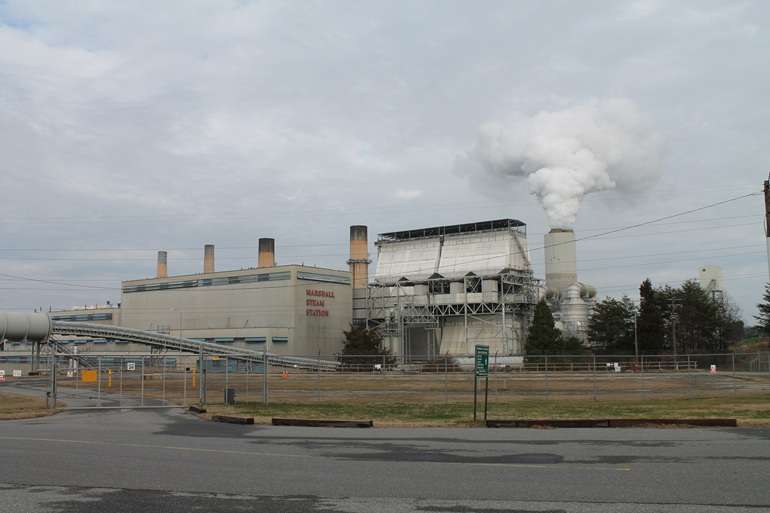
Port City Daily reported in 2024 that Brawley, Tucker, and McKissick voted in support of HB 630 in 2016, which changed the method used to classify coal ash sites as low-risk. The three former lawmakers have received the following contribution amounts from the Duke Energy Corp PAC: $31,100 (Brawley), $14,500 (McKissick), and $8,000 (Tucker).
So Duke Energy’s support of collecting shortfalls from customers comes from the Utilities Commission, which comprises members who have favored tax cuts to corporations, misdirected funds, and advocated against environmental protections alongside a former Duke Energy employee.
Carolina Forward, a think tank based in North Carolina, put it succinctly in a post that followed the February ruling: “Duke Energy spends a few million on buying lawmakers so it makes a billion dollars overcharging North Carolina consumers. Pretty good ROI.”
At the time of this writing, NC Attorney General Jeff Jackson, who brought the original rate hike case in front of the NC Utilities Commission in December, had not responded to a request for comment on whether any further action would be taken on the issue.
Duke invests in artificial intelligence
Meanwhile, Duke Energy has committed part of the windfall resulting from its rapidly rising revenues to funding proposed AI data centers, which will create new demand equaling around 1.5 gigawatts.
Concern about the potential for an “AI bubble” is growing, however. Even with close to $40 billion in corporate investment in generative AI from companies across the country, pilot failure is the new normal, reports Forbes.
According to MIT’s Media Lab, 95% of corporate initiatives involving AI have shown zero return.
As Forbes reported in late February, a record share of fund managers now think companies are overinvesting in artificial intelligence, “possibly indicating their rising concern not just about tech giants’ capital expenditures on data centers but also about enterprises’ spending on integrating AI into their existing IT infrastructure.”
Read more: Pushback Grows as Data Centers Proliferate in Charlotte Metro (2025)
With that in mind, Duke Energy may very well be pouring money into a train that’s going nowhere, which would no doubt end with residents who have no alternative to Duke footing the bill.
“There’s a real risk in North Carolina that we overbuild for a demand that doesn’t come online,” warns Matt Abele of the North Carolina Sustainable Energy Association.
As for Rothweiler, she and other residents are left without options.
“I never agreed to pay for these data centers,” she said. “I don’t want them and neither do the majority of working class people that I know. Surprising to no one, we weren’t asked. So, I ask again. What do we do?”