Council Quickies: Noble’s Involvement Raises Concerns for Dream Center Proposal
Council hears two supportive housing proposals as part of Housing Trust Fund slate

Charlotte City Council gathered Monday night to review what was discussed during a day full of committee meetings but also to hear from city staff about new affordable housing proposals that could be funded by the city’s Housing Trust Fund.
Those proposals included two supportive housing and shelter facilities, one of which faced backlash from one council member due to the involvement of restaurateur Jim Noble, a controversial figure for his outwardly anti-LGBTQ views and support for Donald Trump, among other things.
On the Agenda:
- Dream Center Campus Proposal
- Mecklenburg County Hotel Conversion
Dream Center Campus Proposal
Among the affordable housing projects proposed to Charlotte City Council on Monday night, which they’re scheduled to vote on during the Oct. 27 business meeting, were two developments categorized as “supportive housing and shelter capacity,” for which council has allocated $9 million.
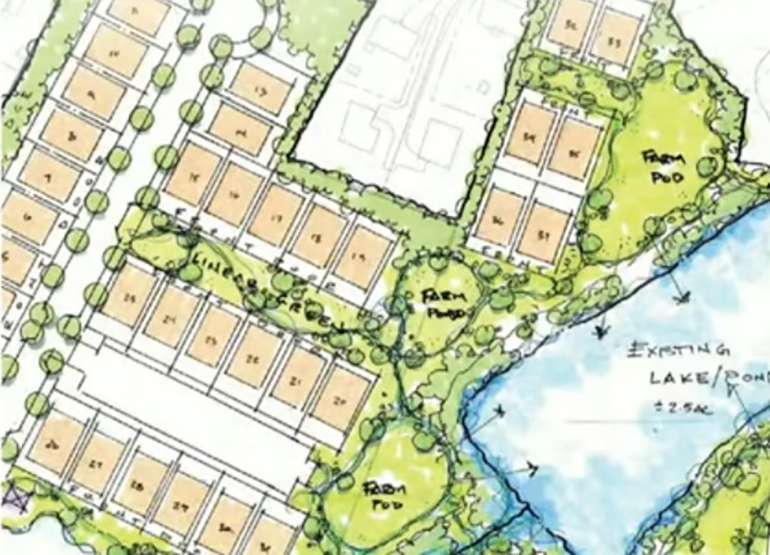
First came the proposed Dream Center Campus, comprising 32 transitional homes with six bedrooms in each, totaling 192 rooms meant for unaccompanied young adults, folks experiencing chronic homelessness, displaced families and individuals in reentry.
Charlotte Mecklenburg Dream Center (CMDC), a nonprofit founded by local restaurateur Jim Noble, is asking that the city pitch in $2 million for the construction of the 15-acre campus located on the north side of Freedom Drive between Toddville and Little Rock roads.
Built out in three phases, the campus will eventually include a playground, recreation facilities and green space. Onsite services will also include life- and job-skill training, with a teaching kitchen, community garden and woodworking area located on campus.
CMDC will also partner with Charlotte Works on workforce development opportunities for residents, working with local partners such as Precision Plumbing and Interstate Electric Company, Inc. Residents will also be offered daycare and telehealth services on the property.
During discussions after the presentation, council member LaWana Mayfield voiced her unequivocal opposition to the project due to Jim Noble’s involvement, citing a situation that occurred in 2022 in which a dispute between the restaurateur and the neighboring owners of Good Life at Enderly Park ended with the Good Life owners closing their business.
“We’re looking at a business that has created havoc in part of our community, a business that has targeted specifically African American businesses, and yes I’m talking about Noble, on Freedom Drive,” Mayfield said.
“When we identified our Corridors of Opportunities, the only African American business that was actually left and able to maintain on the Freedom Drive corridor was run out because of this one businessman,” she continued. “Now we fast forward a few years and you get to present something that at the end of the day is going to benefit you and your family; it’s a business deal. But the most vulnerable are the people who will be living in this space.”
Council member Malcolm Graham emphasized that he understood Mayfield’s misgivings but asked if they could be put aside for the time being in the interest of the urgent need for supportive housing.
Read more: Council Quickies: Policing on the Light Rail
“Putting that aside, this is what we need,” Graham said of the Dream Center Campus proposal. “Part of it goes directly to the issue that we’ve been discussing for the past three to five weeks, which is public safety … How do we get people off the streets into safe, clean, supportive housing?”
In responding to Graham, Mayfield made it clear that she will not budge in her opposition to the project: “There’s no version of any alternative universe where I’m going to support putting our most vulnerable in any connection with something that long term can hurt you even more.”
Mayfield has publicly clashed with Noble in years past due to his anti-LGBTQ stances. Queen City Nerve reached out to CMDC for a comment about Monday night’s presentation and the response from Mayfield. We will update this story with any updates upon response to that request.
Mecklenburg County Hotel Conversion
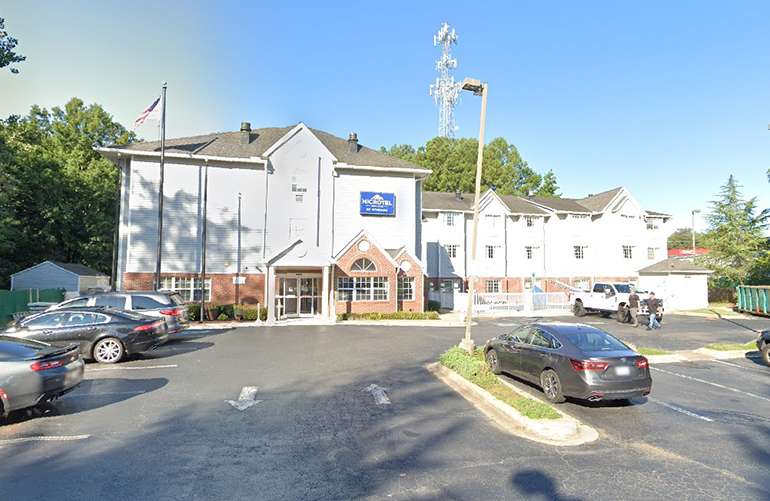
Monday night’s second supportive housing proposal involved a Mecklenburg County project that would convert an existing Microtel Inn & Suites in north Charlotte into a supportive housing facility with wraparound services for folks experiencing homelessness.
The county is requesting $4.25 million, or half of the total project cost, from the city. According to city staff, $5.5 million of the total cost will go toward acquisition while the other $3 million would go toward renovations. The county would be in charge of ongoing maintenance of the property after that.
The facility would include 62 single-bed rooms, a percentage of which would be reserved for direct referrals from direct outreach organizations that work on the ground with residents living in encampments and the like.
According to Rebecca Hefner with Housing & Neighborhood Services, the outreach teams regularly tell staff that many of those people living in encampments have no interest in going to a congregate shelter but would be open to staying in a noncongregate facility like this one, where they would have a room of their own.
“The need continues to be urgent,” Hefner said. “The number of people who are engaged in the homelessness system is 2,586 and is on the rise.”
The facility would offer onsite health care and mental health services, especially for people with severe and persistent mental illness, Hefner continued.
“This concept is directly connected to the conversations you all have been having about public safety and quality of life,” she said.
During discussions, council member Renee Johnson voiced her frustration with the seemingly overwhelming task of confronting the ongoing housing crisis, saying that she had recently met a man who was on a waiting list for 14 years before finally being placed in a local affordable housing development.
Johnson and Mayfield voiced their concern that the city labels things as “affordable” based on the average median income, though as that number rises the many seniors and others on fixed incomes still receive the same amount of money.
“[Supplemental Security Income] is $900 a month,” said Johnson. “People are hurting. I don’t know where people are supposed to live.”
Johnson said that during a recent trip to Boston she learned about the city’s inclusionary zoning policy, adopted in 2023, that mandates 13-20% of any new development be income-restricted.
“Imagine if 20% of all this explosive growth [in Charlotte] was required to be affordable, we could really put a dent into the deficit,” Johnson said.
Council will vote on these and other proposed affordable housing developments at its Oct. 27 meeting.