
CBHD Lobbies for NC Hemp as ‘Industry Killer’ Looms
Lobbyists looking for state action as federal law creates critical deadline

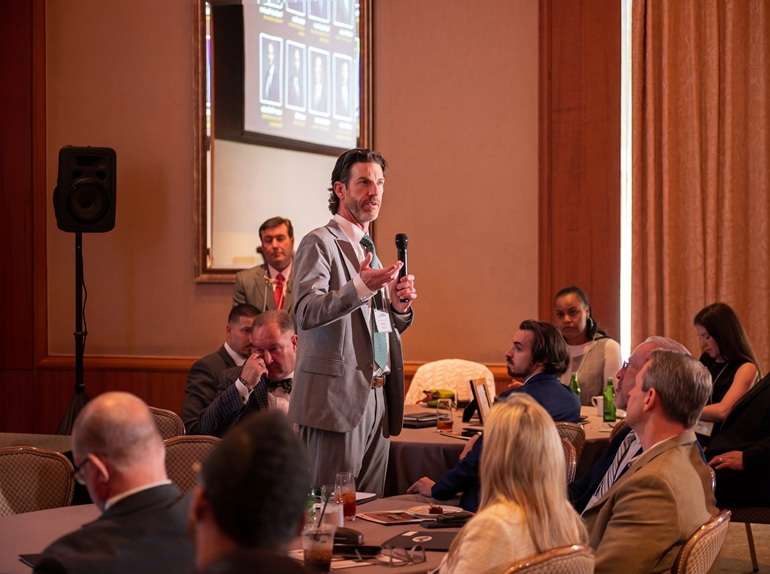
Look into the work of political lobbying organizations representing any industry in the United States and you’re likely to find a group of people fighting to strip away regulations, lower taxes on a given industry, and do whatever they can to keep the government out of their affairs.
Cultivating Breakthroughs in Healthy Development (CBHD) is not your average lobbying organization.
With a mission to educate and advocate for smart regulation of North Carolina’s hemp industry at a time when stigmas and misinformation have threatened its very existence, CBHD was formed to bring some clarity to an issue that has been hidden behind a smokescreen for so many legislators in the state.
Speaking for business owners, workers and others around the state who want to see their industry treated with the same respect as other goods and services, CBHD lobbies for child-resistant packaging, age restrictions, lab testing and free-market principles that they say can remove the stigma and weed out the bad actors in the trade.
“It’s almost impossible to believe that we are a group that’s going to the legislature to seek regulation and to pay excise taxes,” said Neal Orr, executive director of CBHD. “Hardly any group on the planet will say that.”
Though organizers began putting the group together in summer 2025, CBHD received its official licensing in November, just as lawmakers reached a deal to reopen the federal government that included a countrywide ban on the sorts of products that have driven the hemp industry in North Carolina over the last eight years.
The new regulation, which has been called “an industry killer,” lowers the amount of THC — the psychoactive ingredient in cannabis that gets the user high — allowed in products from 0.3% to 0.4 milligrams, outlawing many currently legal products and making it nearly impossible to grow hemp plants at all.
It’s scheduled to take effect in November 2026.
Read more: How the Deal to Reopen Government Could Kill the NC Hemp Industry (2025)
Though unexpected at the time CBHD began coming together in June 2025, the deal brought new urgency to the organization’s work.
“One of our biggest fears is that nothing happens [at the] federal or state [levels] this year,” said Orr. “And if that happens, then there’s no more CBHD. There’s no more industry, period. We’re all done.”
With the North Carolina General Assembly reconvening on April 21, CBHD is now lobbying for the passage of Senate Bill 265 (SB265), a bill that would enact age restrictions and standards for packaging and labeling to prevent underage usage of hemp products, implement mandatory third-party testing to ensure products meet all legal caps on THC levels, and establish a licensing system to ensure accountability among manufacturers, distributors and retailers.
The bill would also keep the state’s THC limit for hemp products at 0.3% rather than 0.4 milligrams, allowing companies to continue selling delta-8, delta-9, THC-A and other similar products that retailers say have kept the hemp industry afloat in recent years.
How did we get here?
CBHD formed out of the North Carolina Healthy Alternatives Association (NCHAA), a 501c3 that launched in 2022 with the simple goal of helping to get an actual definition of hemp into North Carolina statute as the state tried to get ahead of the expiration of a hemp pilot program that had been established following passage of the 2018 Farm Bill.
The Farm Bill was the catalyst for a new market for THC and other hemp-derived products. Since the bill went into effect, the hemp industry has grown exponentially, generating about $1.1 billion annually, according to a 2023 Whitney Economics report. The report also estimated that the hemp industry supported around 328,000 jobs in North Carolina, paying out more than $13 billion in wages.
The Farm Bill — or Agricultural Improvement Act of 2018 — redefined hemp as any part of the cannabis plant or its derivatives that contain no more than 0.3% delta-9 THC on a dry-weight basis. Under the bill, hemp was no longer considered a controlled substance and could be sold legally.
Delta-9 tetrahydrocannabinol (THC) is a cannabis-specific compound, or cannabinoid, that is considered the main psychoactive ingredient in cannabis.
The “loophole” that the Farm Bill’s language created allowed folks in the hemp industry to produce cannabis products that contained less than 0.3% delta-9 THC while not accounting for variations like delta-8, delta-10, THC-O, THCP, and HHC that totaled a THC concentration exceeding 0.3%.
On Oct. 24, 2025, 38 attorneys general from across the country, including NC Attorney General Jeff Jackson, signed a letter to Congress asking for clarification on the federal definition of hemp, claiming that the ambiguity of the law as it existed allows “bad actors” to exploit the law and “racket dangerous drugs to the American public.”
The letter stated “potent, psychoactive THC products” are “packaged and sold in ways meant deliberately to appeal to children.”
“In other words, industry actors have nefariously misinterpreted the Farm Bill’s legalization of low concentrations of hemp-derived delta-9 and the Bill’s silence regarding hemp-derived THC products other than delta-9 to claim that the Farm Bill allows them to produce and sell various synthetic cannabinoids regardless of the chemicals’ potency and psychoactive effects,” it read. “In this way, legal, nonintoxicating hemp is used to make Frankenstein THC products that get adults high and harm and even kill children.”
On Nov. 12, Donald Trump signed the government spending bill that would reopen the government into law. A six-page provision tucked into the 394-page bill aims to ban all intoxicating hemp products, potentially dooming the North Carolina cannabis industry when it goes into effect in November 2026.
From education to advocacy
Still active today as a nonprofit, NCHAA is limited in the ways it can involve itself in political advocacy. Operating wholly separate from NCHAA, CBHD was formed as a charitable solicitor, giving it wider berth to engage in politics and lobby lawmakers.
“Ultimately, it was decided that we need to start looking at another vehicle that can be a little more aggressive, a little more specific on the mission, and get involved politically versus just educationally,” said Orr.
Enter April Byrd. Having worked with NCHAA on formulating the state’s hemp definition in 2022, Byrd is now one of two lobbyists working with CBHD to push for the passage of SB265.
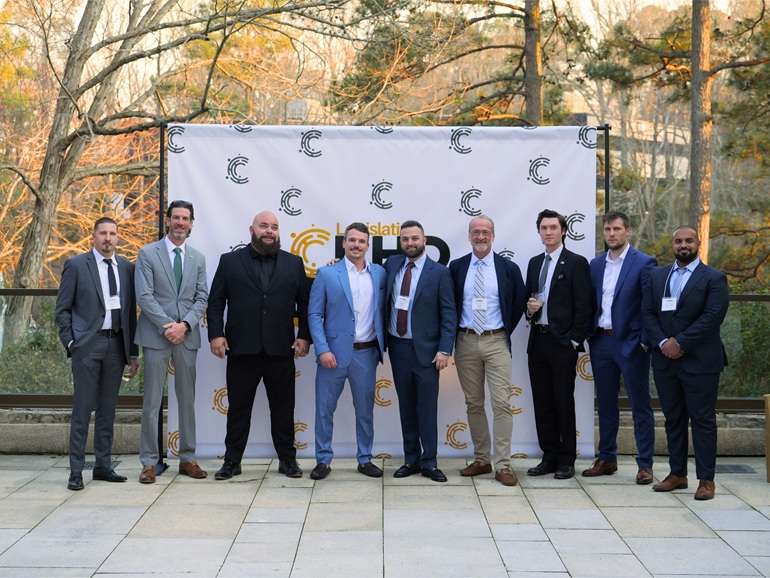
Byrd told Queen City Nerve that, while the hemp industry has grown exponentially since the 2018 Farm Bill, it’s still been threatened by outdated views on what hemp products are, with state legislators “still kind of stuck in that mindset of the ‘60s and ‘70s that it’s just a bunch of hippies smoking joints on the corner, not making a contribution to society.”
She insisted that this lack of understanding — intensified by statements such as the attorneys general’s letter that cited “Frankenstein THC products” that “kill children” — has made it harder to pass common-sense regulations that would help control the industry and mitigate harm.
“We’ve got a ton of regulations on the books in North Carolina with regards to how you can build a house; permits are required, inspections are required, certain materials can be used, certain materials cannot be used. It’s a regulated industry,” Byrd explained. “There are still bad actors in the housing industry. However, the bad actors are mitigated because of the regulations that are on the books.
“It’s kind of the same in this industry,” she continued. “You’re taking an industry that has grown really fast since the passage of the 2018 Farm Bill. There are a lot of innovators in this space that have developed products that have helped millions of people throughout the country. And at the same time, you’ve got bad actors that have just taken advantage and have put some illegal, noncompliant, bad products out in the marketplace that are unfortunately being accessed by kids.”
She said it was a wish to protect kids like her teenage nephews that inspired her to take on the work of NCHAA and later CBHD.
Byrd said that, as the NCGA prepares to reconvene and with seven months until the federal regulations take effect in states like North Carolina that have no clear laws on the books regulating hemp for themselves, she is cautiously optimistic about seeing something get done before November.
“There are tons of advocates throughout the state that are being more vocal, and I think that’s helped,” she said. “They’re becoming more comfortable reaching out to their legislators, to their House members and their senators. And then just the work we’ve done overall on educating members on a bipartisan basis on the need for these regulations. I’m more optimistic than I have been.
“I’m not a gambler, it’d be hard for me to place odds,” she continued, “but I’m cautiously optimistic that we probably are in the best position to see something happen than we have been in years past.”
Visit the CBHD website to learn more about the organization’s work and what’s included in Senate Bill 265. You can also sign a petition to support the legislation or watch the CBHD Legislative Leadership Summit livestream replay on the site.



While I support the hemp industry’s ability to continue and putting age restrictions and guardrails on the industry so that it can survive and thrive. The reality is most hemp products will be considered marijuana in November of this year on the federal level. With that, interstate commerce will come to an end, which will cripple the NC hemp industry- hopefully that end date dies or is pushed back. It is time to end federal prohibition and let states decide the logical steps forward for their state.
I also believe the legislation will be hard pressed to get past Sen. Rabon on the Rules Committee. Sen. Rabon has been a champion for medical cannabis for years and I stand by his words that if the House will not move a medical cannabis bill, he will not move a hemp regulation bill. Seriously ill people need access to much more potent forms of THC, with the proper certificates of analysis so that patients know exactly what they are ingesting. That is a moral imperative and Sen. Rabon should stand his ground.
I believe both industries can coexist and I agree with the Governor and the Cannabis Council that the THC molecule needs to be regulated. I also believe that both small and big business can coexist. North Carolina needs to move forward and the time is now!