Bojangles and the Threat Posed by Private Equity Pirates
It's Bo-time to pay attention

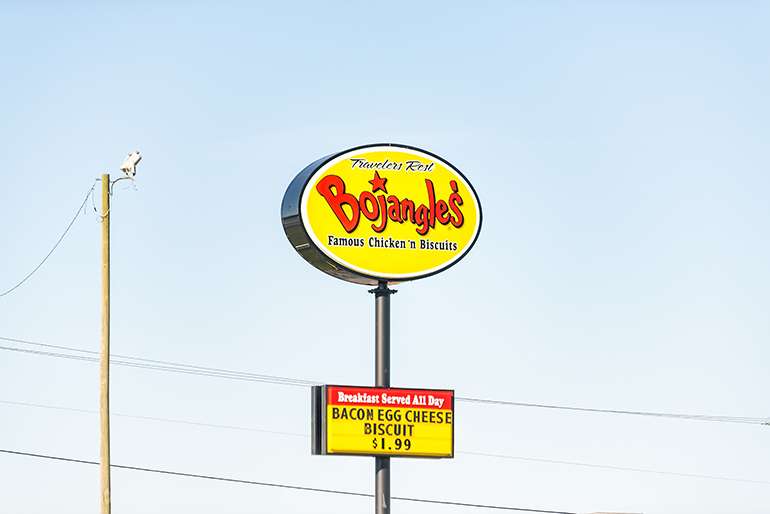
Outside of the Charlotte Hornets, there is perhaps no local brand more revered than Bojangles, the regional fast food chain that opened its first location at the corner of West Boulevard and South Tryon Street in 1978.
As local historians know, the restaurant was started by Jack Fulk in 1977. The restaurateur ran a few Hardee’s locations in the Wilkesboro area until, after experimenting with new biscuit recipes, he and business partner Richard Thomas got the idea to open a chicken restaurant.
The original store was a walk-in location with no seating. They opened their second location in 1978 and, by the time of Fulk’s retirement in 1985, the franchise had grown to 350 stores. When Fulks passed in 2011, the restaurant had around 500 locations.
In 2019, Bojangles was acquired by Durational Capital Management LP and The Jordan Group (TJC), two private equity firms. Their mission is to take the brand nationwide. As of 2024, the franchise has over 800 locations.
If the phrase “private equity” rings a bell and sends shivers down your spine, you’re right to trust your gut. Look no further than the recent bankruptcy of Red Lobster. In 2014, the original owner of the Red Lobster brand, Darden Restaurants, sold it to Golden Gate Capital, which got to work running it into the ground. Private equity has been behind the closures or diminishment of brands like Sears, Hooters, and Guitar Center.
Read more: Sam Ash, Gold Tone and the Importance of Neighborhood Music Shops
A common practice for private equity involves corporate raiding, also known as “asset stripping.” This occurs when an investor sells off assets from a company they have bought, and instead of investing the money back into the company, they take it for themselves, draining that company’s resources.
For example, when Golden Gate Capital bought Red Lobster in 2014, they sold off all the company’s real estate, which in turn forced the franchisees to rent the land. Those franchisees then struggled to pay rent thanks to COVID-19 struggles, inflation and other factors.
In an effort to push the brand nationwide, Bojangles has announced their expansion into supermarkets, where they’ll sell sauces, while many new locations will not serve bone-in chicken.
As reported by QSR Magazine in 2023, CEO Jose Armario told the publication, “This is going to sound weird or controversial … But I’d like to get out of the chicken business.”
They have stated that existing locations will continue to feature the full menu, but the abbreviated menu will be their new cornerstone moving forward into future markets.
The past history of how private equity forms have operated in these situations, however, already shows how it will all turn out. The company will move into new markets, trying to usurp market share from Raising Canes, Popeye’s, Church’s and Chick-fil-A.
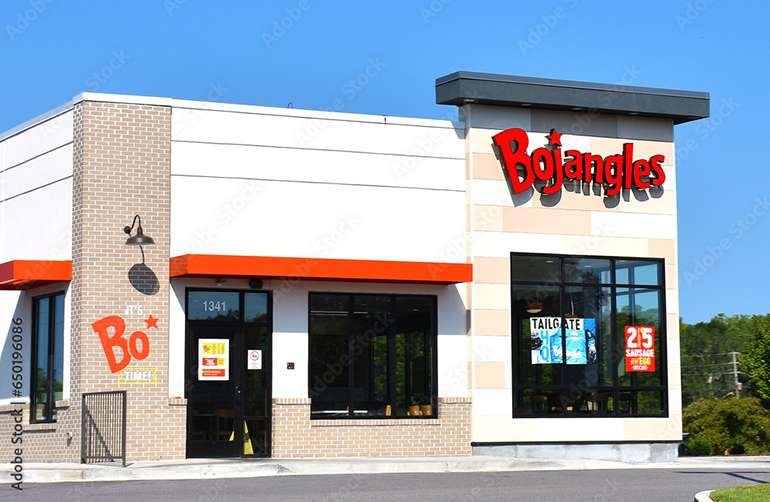
Folks familiar with Southern locations will say, “Wow, I love Bojangles, I didn’t know they had locations in California.” What they’ll experience is a lesser version of the franchise, paling in comparison to the Bojangles they tried while visiting their Southern family and friends — no bone-in chicken, less side options and, God forbid, no sweet tea.
They won’t realize this is but a fraction of the company they used to pine for.
The other issue is the corporate strategy of moving into markets that are already strongly held by Raising Cane’s — like putting a Walgreens across the street from a CVS. If this strategy fails and the wounded company retreats back to the South, then who’s to say that the business model won’t be carried out in the original stores?
Left with crippling debts by the quick expansion, they’ll be forced to raise their prices, cut their menu down, lay off employees and ultimately close store locations. Yes, this is all hypothetical, but history shows this is how private equity has always operated, leeching off of a brand image, draining all of its lifeforce, then moving on once they’ve made a quick buck.
In other industries, private equity firms have been buying up hospitals. Such firms own at least 386 hospitals nationwide, according to the Private Equity Stakeholder Project. If that’s not troubling enough, over the last decade private equity has spent nearly $1 trillion on private practices, including primary care, neonatal, cardiology, hospices and many others.
Oftentimes these firms will approach private practices with the idea that they will make the business more efficient, and while that is a cause we can all get behind, what happens in reality is that they begin aggressively billing patients and refusing to work with insurance companies, as reported by Washington Post earlier this year.
Private equity firms are looking to make a profit, of course, and often intend to invest for a period of 5 to 8 years. With this approach they’re looking to severely cut costs, often by reducing staff and selling real estate, as in the Red Lobster debacle. So often what we’re looking at is corporate flipping. And just like flipping in residential real estate, you make minor changes, throw a new coat of paint on it and sell it for a profit.
The examples go on and on, and only time will tell what the future holds for Bojangles in the long-term as a national brand and as a local mainstay.
I reached out to Stacey McCray, VP of communications, who would only tell me, “There are no plans to change the menu in our existing restaurants.”
If it takes me putting some Bo-Rounds under my pillow at night to keep the business boogeyman at bay, I’ll do it for the greater good.