Festival Retraces History of Black Agriculture in Charlotte
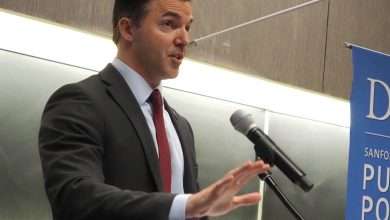
John W. Boyd Jr. set to be keynote speaker at African American Heritage Festival

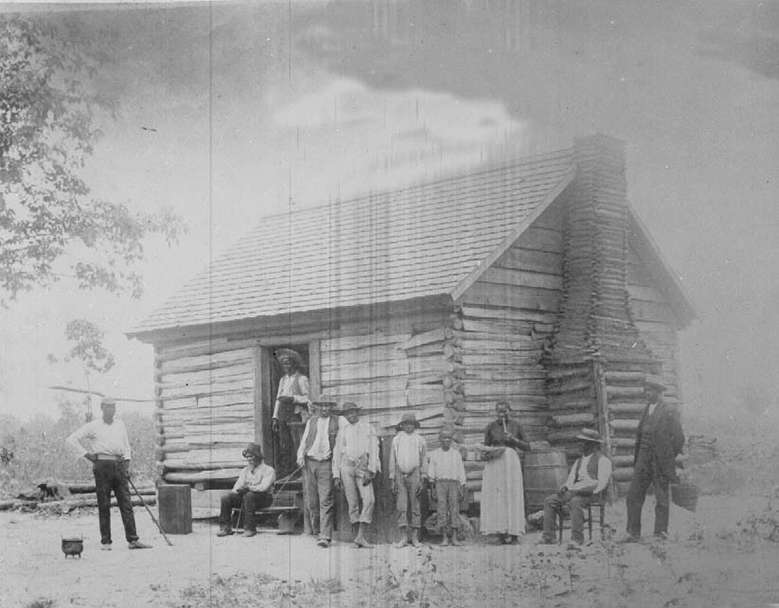
Every Black person in the United States is most likely two or three generations away from somebody’s farm, according to John W. Boyd Jr., a fourth-generation farmer and founder and president of the National Black Farmers Association (NBFA).
“Whether we wanted to be or not, that’s where our roots are, that’s where our history is,” he said.
After the Civil War, Black folks exiting the bondage of slavery were finally able to imagine a future living on the lands they cultivated, but the ongoing journey to realize those dreams has been hard-fought.
The United States Department of Agriculture (USDA), an agency created to aid farmers, has a long and painful history of racial discrimination and broken promises to Black farmers.
In his 40-year career, Boyd has worked with and fought for Black farmers experiencing discriminatory practices at the hands of the USDA. In 1995, he launched the NBFA, the largest nonprofit organization of its kind in the United States, primarily representing Black American farmers on a mission for land retention, civil rights advocacy and access to public and private loans.
People should know the rich history of Black farmers, Boyd emphasized, but it remains an aspect of American history too often ignored and untaught.
Scheduled for Feb. 22, the Charlotte Museum of History’s eighth annual African American Heritage Festival will dive deep into the history of Black farmers in Mecklenburg County and the greater Charlotte area to bring that lesson home.
Following a theme of “Black Country,” this year’s festival will center the Black experience in rural Mecklenburg County over time through guest speakers, panels, performances and other community-focused events.
Terri Wright, museum president and CEO, said that she and her staff members realized the dire lack of well-documented stories covering the theme during the research process leading up to this year’s festival.
Just because the stories are yet to be unearthed, however, doesn’t mean they’re not there, White said.

Boyd will serve as the keynote speaker for this year’s festival, laying out the history of Black farmers — their struggles and hard-won achievements. Most recently, that includes the historic $2.2 billion payout the NBFA secured in 2024 for Black farmers who experienced discrimination in farm lending from the USDA.
“Some of the payouts have been helpful, but it’s really small victories of what we really need to turn the corner in this country,” he said.
According to Boyd, there is a dire need for a new generation of Black farmers to keep the legacy alive in this country.
Although Mecklenburg County’s history surrounding Black farmers is still being researched, its future in revitalizing a lost legacy will remain.
This land is their land
“Land is absolutely everything,” Boyd’s grandfather told him when he was growing up. “It’s family, it’s clean drinking water, it’s timber to build your houses and food to put on your table.”
When that land gets taken away, as has happened to generations of Black family farmers in this country, it doesn’t come back, he said.
The way Black people have been historically treated in this country has for the most part been done under established law, Boyd pointed out, which is what folks are referring to when they reference “systemic” racism. Slavery, sharecropping, Jim Crow segregation and other racist systems put in place to disenfranchise Black folks made Black land theft a legal crime.
On Jan. 16, 1865, Union General William T. Sherman issued the Special Field Order No. 15, which confiscated roughly 400,000 acres of land stretching from Charleston, South Carolina, to the Saint John’s River in Florida. The order redistributed the land in 40-acre segments to newly freed Black families.
According to the New Georgia Encyclopedia, Sherman’s land distribution order served two purposes: It punished the Confederate farmers for their role in starting the Civil War by confiscating their land while simultaneously solving “a major new American problem: What to do with a new class of free Southern laborers.”
Months later, however, those Black families were forced off of their new land after President Andrew Johnson canceled the order in fall 1865, returning the properties to their white owners. The revocation of land was the start of a continued fight to keep Black people from inhabiting and gaining the rights to their own land.
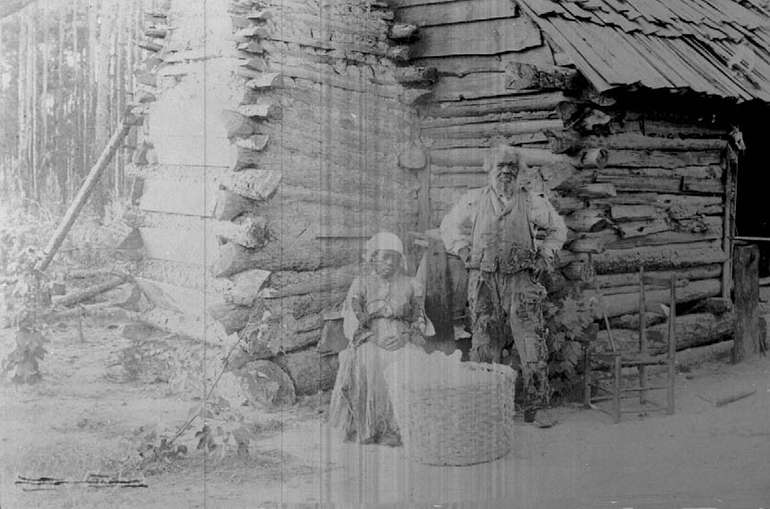
After President Johnson overturned the order, Black families immediately began the long fight to obtain their rightful land back. By the dawn of the 20th century, there were about 1 million Black farmers that owned nearly 20 million acres of land in the Unites States, Boyd said.
Now, Black farmers account for 1% of all producers and own roughly 3.5 million acres of land.
A large part of that significant shrinking can be majorly attributed to The Great Migration, in which around 6 million African Americans uprooted their lives in the rural South for the promise of higher wages, safety from racial violence and educational opportunities in the north and west, which took place roughly between the 1910s and 1970s.
While Boyd understands that Black families were simply doing what each believed was best for them at the given time of their respective move, he can’t help but ponder what was lost.
“[The Great Migration] hurt the Blacks that left the farm looking for what we thought was a better way of life when we really should have paid more attention to the land that we already had,” he insisted.
The land they had, however, was under attack by white farmers and a legal system that allowed them to exploit Black farmers.
“We had those two battles,” Boyd said. “Blacks looking for something better, and then whites using the laws to … steal the land from … Blacks.”
A number of methods were used to steal Black land and re-sell it for pennies on the dollar to white farmers, Boyd said. White developers would increase property taxes on Black-owned land and exploit improperly documented ownership — a consequence of Black people’s lack of legal access — to use loopholes permitting the forced removal of Black families off their land.
The USDA wasn’t any better.
While Ronald Reagan was in office in the late 1980s, he quietly gutted the USDA’s Civil Right Office in the name of budget cuts, denying countless farmers of color the right to resolve discriminatory practice complaints by the USDA.

Boyd said newly returning President Donald Trump’s policy director Stephen Miller is using the same playbook.
In 2021, Miller orchestrated a lawsuit against the USDA for reverse discrimination toward white farmers to block $4 billion in debt relief for Black, Native American and other farmers of color, plus $1 billion in settlements from discrimination lawsuits.
Miller’s efforts led to two judges issuing a temporary injunction blocking the debt relief, but in the end, the funding was approved.
“And that’s the difference between me and my style of leadership and what they did,” Boyd said. “I never sued white farmers and say that they shouldn’t get any money. I’ve never done that in my 42-year career. What I have said is, ‘If they get it and they get it on time, we want the same. We shouldn’t be excluded based on race.’”
While Boyd doesn’t want to underscore the significance of returning billions of dollars owed to Black and other farmers of color, what those farmers really need is their land back, he stated.
Discriminatory lending practices within the USDA have left farmers of color without the assistance they need to keep their farms afloat. While white farmers have received beneficial loans and debt relief, Black farmers’ homes and land were foreclosed on.
According to an NPR analysis of 2022 USDA data, the department granted direct loans to only 35% of Black farmers who applied compared to 72% of white farmer applicants.
“That’s what I’ve been trying to fix for four decades,” Boyd said. “At this point in my career, the victory is not complete without the land.”
Working to revitalize Black farmers’ legacies
The Charlotte Museum of History has historically been known as a colonial history museum, but about a decade ago the board decided to diversify its programming while still celebrating “all things 1700s.”
What started as a couple of programs during Black History Month morphed into the African American Heritage Festival, drawing in crowds of over 1,000 visitors to explore stories of Black history and aspects of Black culture in a rapidly changing city.
The museum’s most recent festivals have been focused on fundraising for the Siloam School Project, but that eight-year fundraising effort has now secured its funds, programming and tours for Mecklenburg County’s oldest standing African American schoolhouse.

White, who is the first Black president and CEO in the museum’s history, asked herself what the museum could turn its attention to for the next festival.
While collecting oral history for the Siloam project, White had met a man named Luther Reynolds, whom she calls Mr. Luther.
Well into his nineties, Reynolds lived in the area around Siloam School in what is now University City as well as its new location on the museum’s property in east Charlotte when the area was mainly dairy farmland. He detailed his and his friends’ efforts to build a rudimentary runway for the airport, which led White to ask why and how he would have been working on the airport over on the west side of the county.
“This man looked at us like we were the dumbest people on Earth and said, ‘Well, how else would they get the milk from the farm to the rest of the state? There was an airport up the street.’”
It took some digging, but White’s team found records of a small municipal airport right up the road from where the museum stands today.
It got White thinking; within the lifetimes of folks living in Mecklenburg County, the area went from rural farmland to the metropolis we are today. She devised the “Black Country” theme to explore how urbanization and city expansion has impacted the local farmers that once thrived on dairy and tobacco farming.
Despite the lack of physical documentation, oral histories from longtime residents like Reynolds are integral to putting the pieces together.
White said community elders in their mid-to-late 90s who lived through the changes often don’t believe their story is one worth sharing or that no one cares what it was like back then.
“But that’s exactly the kind of story we want to hear about,” she said.
Two-thirds of the state of North Carolina is still considered rural. While we still rely on agriculture and people who are connected to the earth, Mecklenburg has seen unique growth compared to other North Carolina counties.
“We’re trying to research and learn what is it that we have lost while gaining in these other areas,” White said. “There really isn’t a lot of hard, documented narratives that speak to specifically Mecklenburg County, but we know that they’re out there.”
Any documents or stories they find will be incorporated into the day-of festival programming. The information will be filtered through the performances, lectures and mini workshops throughout the day.
The next generation
While rural farmers of color continue to work to fight for their rightful land and funding, a new wave of urban farmers have been advocating for Black farmers and urban farming in Mecklenburg County.
Cheri Jzar of Deep Roots CPS Farm, a family-operated, Black-run urban farming business in northwest Charlotte, created the Growers Network to form a coalition of Mecklenburg County farmers to inform one another about resources and opportunities available to local farmers.
Read more: Deep Roots CPS Farm Builds Network of Urban Farmers
The coalition invites elected officials and other leaders to join them in workshops or other events to better understand the families and businesses their decisions impact.
Several urban farmers and co-ops will be at the African American Heritage Festival selling produce and other items from their farms, giving people the opportunity to support and purchase directly from Black farmers, White said.
While the next generation of local urban farmers work to serve their community, Boyd encourages them to get involved early in their careers to see how government regulations affect them and their livelihood. He also sees a need for strong policy thinkers who fight for what they believe in. That’s the key to change, he said.
There’s only so much individuals can do without the support of the government organizations meant to serve them. Boyd wants to see the USDA take steps to not only retroactively compensate and treat farmers of color fairly but make farming practices and lending programs equitable moving forward.
He said he would like to see the US Secretary of Agriculture formally state that the USDA is open for business for all people, including Black, Native American and Hispanic farmers. Since Jan. 20, Gary Washington, a Black man, has been acting as the secretary of agriculture, but only until Trump’s pick, a conservative white woman named Brooke Rollins, is confirmed by Congress.
Read more: Mariah Henry Cultivates a Shift in Culinary Thinking at The Urban Haven
As planting season approaches, Boyd said he is interested in seeing how the changes the Trump administration puts in place will affect North Carolina farmers, particularly his recent implementation of tariffs against China, Mexico and Canada.
NBFA notifies all of its 141,000 members of any policy changes that may affect them and any government programs that could help.
“This country is still government-driven, i.e. they still regulate all the programs,” Boyd said. “Everything is still running regulated by the government, and if we’re going to be a part of the agriculture fabric in this country, we’re going to have to learn how to get reintegrated with it, whether we like it or not. That’s the bottom line here.”
The African American Heritage Festival is scheduled for Feb. 22 from 11 a.m.-5 p.m. at the Charlotte Museum of History, 3500 Shamrock Drive. Admission is free.