New Report Shows Promise for Violence Interruption on Beatties Ford
Urban Institute evaluates Alternatives to Violence program’s results in the corridor

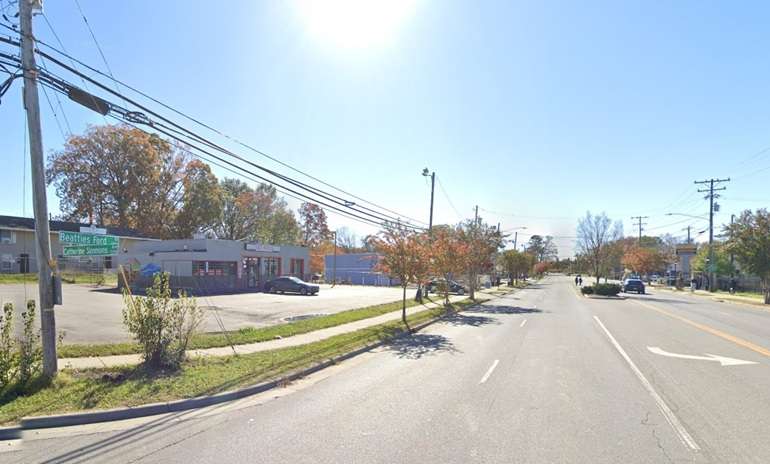
A new report published by UNC Charlotte’s Urban Institute Thursday shows promising results from the city’s first Alternatives to Violence program (ATV), which is believed to have played a role in the reduction of crime rates in the Beatties Ford Road corridor since its launch in 2021.
The report provides some promising news to close a year in which public safety has been at the forefront of people’s minds following high-profile crimes that have garnered national headlines.
A joint effort by UNC Charlotte Urban Institute, Youth Advocate Programs (YAP) and the City of Charlotte, the three-year evaluation report assessed the effectiveness of the city’s first violence intervention program.
Researchers conducted interviews with ATV staff members while analyzing crime data, case notes and community surveys to measure the program’s impact on participant behavior and community violence between 2021 and 2024. The resulting report found that, during that span, the violent crime rate declined, including a 63% drop in armed robberies.
While the report stops short of confidently linking ATV directly or exclusively to the drop in crime along the corridor, researchers do suggest a potential delayed effect of the program as playing a role in more positive outcomes.
The report also found that more residents along the corridor are rejecting violence as a way to solve problems than was reported in the first year of the program, stating that they feel more confident in peaceful, nonviolent approaches to conflict, which is one of the driving goals behind the ATV program.
With two other Alternatives to Violence programs having launched in other corridors around the city since the Beatties Ford program started — one on West Boulevard and another on Nations Ford Road — the report offers insight into potential best practices for violence interrupters around the city and provides recommendations that researchers feel could help amplify the impact of the programming.
ATV arrives in the West End
Long a haven for Black culture and Black-owned businesses, the Beatties Ford Road corridor, also known as Historic West End, has fallen prey to disinvestment and discrimination over the years, including through predatory lending and redlining. By 2019, the resulting lack of economic development and investment had led to disproportionately high rates of poverty, crime and violence.
During a Juneteenth celebration in June 2020, at least two gunmen opened fire on a crowd that had gathered along Beatties Ford Road, killing four and injuring several more. That tragedy, which followed a spike in homicides in the area and across the city from 2019 to 2020, was the catalyst for the ATV program.
In 2021, the city announced that it would launch its first Alternatives to Violence program along the Beatties Ford Road corridor, basing the local program on the model implemented elsewhere by YAP and Cure Violence Global.

ATV employs strategies to detect and interrupt violence before it occurs. By deploying violence interrupters in neighborhoods to mediate disputes and to minimize violence, the program offers alternative solutions to police intervention. It also works directly with at-risk youth known as participants to help with academic performance, potential employment opportunities and engaging in new experiences ranging from sports events to city council meetings.
The report analyzed average annual crime trends in the neighborhoods along the Beatties Ford Road corridor, starting in 2019 — two years before ATV’s implementation — to determine the program’s impact over time. As a control or baseline comparison, the Beatties Ford Road corridor’s crime rates were compared to crime data from neighborhoods that had seen similar crime activity in the years leading up to 2021 but did not have an ATV program.
The report found that, from an initial high of 42 incidents of violent crime per 1,000 residents during ATV’s first year (2021-2022), overall violent crime in the neighborhood stagnated during the second year (2022-2023) then declined to 39 per 1,000 residents in year three (2023-24), suggesting a delayed effect.
That delayed effect could be the result of a troubled start for the program, which saw the original site supervisor Belton Platt and his team removed due to a failure to consistently file mandatory paperwork. They were replaced with a new team in December 2021.
The evaluation shows ATV’s most noticeable impact in the neighborhoods’ robbery statistics.
“In the third year after the ATV program was introduced, neighborhoods in the Beatties Ford area experienced, on average, 3.6 fewer robberies per 1,000 residents for the year compared to similar neighborhoods that did not receive the program,” the report states.
In contrast, after an 82% decrease in homicides that involved a firearm — 1.13 incidents per 1,000 residents in 2019-2020 compared to 0.21 in 2022-2023 — gun murders rose 190%. The report’s authors express surprise at this reversal against overall trends in the neighborhood. However, the Beatties Ford crime rate is still 46% below the average that the neighborhood saw the year before the launch of the ATV program.
Read more: New Alternatives to Violence Team Launches on West Boulevard (2023)
According to Queen City Nerve’s own tracking, which is wholly independent of Urban Institute’s report, the service area for the Beatties Ford Road ATV program has seen two murders thus far in 2025, including the recent discovery of 31-year-old Frezja Baker’s body in her car in a Washington Heights church parking lot after a weeklong search.
Police have arrested a suspect in Baker’s murder, which is believed to be an incident of domestic violence.
The other murder occurred in February, when 20-year-old Emily Alvarez was found suffering from a gunshot wound inside a vehicle that had just wrecked on Vinton Street near the McCrorey Heights neighborhood. A juvenile was charged with Alvarez’s murder the following month.
Queen City Nerve tracked a single murder in the ATV coverage area in 2024 — the shooting death of 17-year-old Melakah Corbette on Pitts Drive in Washington Heights in February of that year.
The Urban Institute report also notes that fewer community members reported witnessing or experiencing violence in ATV’s third year. Self-reported injury due to violence also dropped from 22% in the first year to 11% in the third.
“Most other changes were not statistically significant and cannot be confidently attributed to the program,” the report reads.
Shifts in community awareness and perceptions of violence
The report also analyzes community attitudes and awareness about crime in the Beatties Ford neighborhoods. To measure those findings, researchers developed a survey that collected information about community members’ awareness of the ATV program, their familiarity with antiviolence work and their experiences with local violence.
The survey was given twice, once in the first year of ATV’s Implementation and again in the program’s third year.
“By year three, community members reported less violence, weaker norms around guns, and improved perceptions of safety compared to year one,” a release from the Urban Institute stated.
The number of respondents who said talking through a dispute is more effective than violence grew from 68% in year one to 73% in year three. The number of participants who felt guns were necessary to garner respect fell from 41% in year one to 25% in year three.
Read more: Alternatives to Violence Builds Momentum on Nations Ford Road
More survey participants in year one (70%) were worried about violence in Beatties Ford than year three respondents (63%).
In one area, the report finds that community perception runs counter to reality on the ground. A higher sample of year one individuals (52%) felt the community is safe compared to year three participants (only 45%). The report suggests that its contradictory findings may be due to more long-time residents responding to the survey in year one vs. more newcomers to the Beatties Ford area responding in year three.
Overall, in comparing survey responses from year three to year one, fewer community members identified domestic violence, child abuse, sexual violence, bullying and threats as prevalent forms of violence in Beatties Ford.
Both survey samples revealed that nearly three-quarters of respondents in both years were unaware of ATV or any groups working to curb violence in the Beatties Ford community. Furthermore, while 34% of community members were aware of the ATV program in year one, that percentage dropped to 21% in year three.
“While the prevalence and norms around violence seem to have improved in Beatties Ford, the awareness of ATV and anti-violence initiatives did not improve,” the report states.
To counter the lack of community awareness of the program, the report concludes with four recommendations that could strengthen the program and increase its visibility within the Beatties Ford community while also increasing the impact of the program on local crime rates.

The first recommendation is to establish a dedicated community resource center that would provide a centralized, consistent location for services, support and workshops rather than relying on venues outside of Beatties Ford Road.
When Queen City Nerve visited with ATV staff members in 2022, their most common practice was to simply set up a tent on a different part of Beatties Ford Road on any given day as a way to increase visibility. A resource center would provide a more consistent space for violence interrupters to reach community members.
The second recommendation, enhancing ATV’s branding, would improve the program’s visibility through more street marketing.
Listen: Leondra Garrett and Juan Hall with Alternatives to Violence on ‘Nooze Hounds’ (2022)
A third recommendation involved launching a student ambassador program, recruiting high school students to promote conflict resolution and mediation.
The fourth and final recommendation in the report is to increase the program’s profile and outreach with an ATV website that includes staff contacts and/or a hotline, as well as posting signs, flyers and brochures in community spaces.
ATV’s results matter, the report concludes, because they show that the program has made significant contributions in reducing violence within the Beatties Ford neighborhoods, and has established trust and support in the community.
“Improving program visibility within the corridor will be essential for expanding and tracking the future impact of the program,” UNC Charlotte Urban Institute says.
Ryan Pitkin contributed reporting to this article.